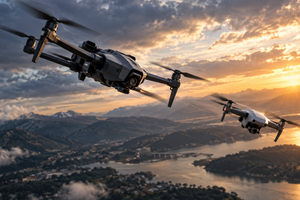
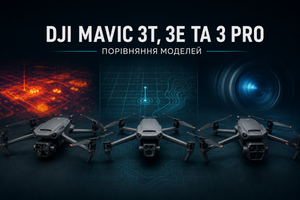
The DJI Matrice 4T and DJI Matrice 30T are professional quadcopters equipped with visible-light cameras, a thermal camera and a laser rangefinder. However, they have different priorities: the Matrice 4T stands out for its compact size and camera array, while the Matrice 30T offers IP55 protection and a wider operating temperature range.
Choosing between them means considering inspection conditions, imaging requirements and the equipment included. A newer platform does not necessarily replace its predecessor in every professional application.
DJI Matrice 4T vs Matrice 30T: Key Specifications
The table below compares the 4T and 30T versions specifically. Their specifications should not be confused with those of the Matrice 4E or Matrice 30: similar names do not mean identical equipment.
| Specification | DJI Matrice 4T | DJI Matrice 30T |
|---|---|---|
| Weight with battery or batteries | 1,219 g with standard propellers | 3,770 ± 10 g with two batteries |
| Maximum flight time stated by DJI | 49 minutes with standard propellers | 41 minutes |
| Wide-angle camera | 48 MP, 1/1.3-inch CMOS, 24 mm equivalent | 12 MP, 1/2-inch CMOS, 24 mm equivalent |
| Cameras for closer views | Separate 70 mm and 168 mm equivalent cameras, each with 48 MP | 48 MP zoom camera, 113–405 mm equivalent |
| Native thermal resolution | 640 × 512 pixels | 640 × 512 pixels |
| Water protection | The manufacturer states that the platform is not waterproof | IP55 |
| Aircraft operating temperature | −10 to +40 °C | −20 to +50 °C |
These figures come from the manufacturer's specifications for the Matrice 4 Series and Matrice 30 Series. Maximum flight times are measured under test conditions and do not represent guaranteed working time.
Cameras: Separate Focal Lengths vs Optical Zoom
The Matrice 4T has three visible-light cameras with different fields of view. Switching between them provides both overview images and closer views. The Matrice 30T combines a wide-angle camera with a zoom module featuring a variable focal length.
This distinction matters when inspecting buildings or industrial structures, where framing, visible detail and the quality of the original file are important. The highest digital or hybrid zoom figure alone does not determine image detail. Digital magnification cannot replace a lens's optical capabilities.
For a meaningful image comparison, assess original files captured under similar lighting, with the subject appearing at a similar size in the frame. Megapixel count alone is not enough to judge overall camera quality.
Thermal Cameras: Why 640 × 512 Does Not Mean Identical Images
Both platforms have thermal cameras, but their optics, fields of view and processing modes also need to be compared. Matching native resolution does not make their images identical.
You may also see 1280 × 1024 pixels listed for enhanced-resolution modes. This is the resolution of the processed output and should not be presented as the sensor's native resolution. For inspections, it is important to distinguish the original thermal data from its software-enhanced representation.
The Matrice 4T also has an auxiliary NIR light. It operates in the near-infrared spectrum and serves a different purpose from the thermal camera. This illumination does not turn a visible-light camera into a temperature-measuring instrument.
Aircraft Protection and Operating Conditions
For a professional platform, weather limitations may matter more than camera differences. DJI explicitly states in its Matrice 4 Series FAQ that these drones are not waterproof. Protection features found on other DJI models should therefore not be assumed to apply to the Matrice 4T.
The Matrice 30T has an IP55 rating, but this does not make it suitable for immersion or unrestricted operation in all types of precipitation. DJI also warns that protection may deteriorate over time. Permissible operating conditions must be determined from the manual and the condition of the individual aircraft.
Flight Time and Battery Management
Comparing 49 minutes with 41 minutes only shows the stated maximums under the manufacturer's test conditions. In actual use, some charge must be reserved for a safe conclusion to the flight, while payload, temperature and wind affect energy consumption.
The Matrice 30T uses two TB30 batteries. The manufacturer provides self-heating and hot-swapping support when the prescribed procedure is followed. This refers to servicing the aircraft on the ground, not replacing batteries in flight.
The Matrice 4T uses batteries and a charging hub designed for its series. When comparing packages, check both the number of batteries and the exact charging equipment: charging time depends on its power output and the selected mode. TB30 batteries are not interchangeable with Matrice 4 batteries.
How to Determine Which Platform Meets Your Requirements
When to Consider the Matrice 4T
When compact transport, low weight and multiple visible-light cameras are important for inspections. Planned work must remain within the platform's temperature and weather limitations.
When to Consider the Matrice 30T
When technical requirements call for IP55 protection, a wider operating temperature range or a variable-focal-length zoom camera. The additional weight of the equipment must be manageable for the team.
Suitability for surveying should be assessed separately. RTK support does not guarantee the accuracy of a finished map or model. DJI positions the Matrice 4E for geospatial applications, while its Matrice 30 documentation cautions against expecting guaranteed mapping accuracy.
What to Check in the Package
- The exact aircraft version and remote controller model.
- The number of batteries and the complete list of charging equipment.
- Compatibility with the accessories and software you need.
- The included transport equipment and service terms.
Compare packages that include an equivalent set of required equipment. An offer with one battery and an offer with extra batteries and a charging station are not equivalent simply because both include an aircraft.
To check a specific offer, review the DJI Matrice 4T Enterprise specifications and package contents. Other platforms are listed in the SKYHUB quadcopter catalogue.
Professional equipment selection should account for its intended purpose and whether its purchase and use are permitted. Before operating, check current flight restrictions and any approvals required for the specific area of Ukraine.
FAQ: DJI Matrice 4T and Matrice 30T
Is the DJI Matrice 4T a complete replacement for the Matrice 30T?
No. The platforms differ in design, cameras and permitted operating conditions, so a replacement should be evaluated against specific technical requirements.
Can the Matrice 4T be used in the rain?
DJI states that the Matrice 4 Series is not waterproof. You should not plan to operate the Matrice 4T in the rain.
Does the stated 49-minute flight time guarantee 49 minutes of work?
No. This is the maximum figure for the Matrice 4T with standard propellers under DJI's test conditions; actual flight time depends on operating conditions and the required battery reserve.
Does a 1280 × 1024 thermal image mean the sensor has the same resolution?
No. The thermal sensor's native resolution must be distinguished from the image dimensions produced by a software-enhanced resolution mode.
Should I compare the aircraft price or the cost of the complete package?
For budgeting, compare the complete equipment you need: aircraft, remote controller, batteries, charging equipment and required accessories. Differences in package contents can significantly affect the comparison.