A 3D printer for the Armed Forces is a practical tool for quickly producing technical parts, mounts, housings, adapters, protective elements, holders, and prototypes. When a specific component is difficult to find, deliver, or adapt in time, 3D printing helps technical teams, volunteer workshops, and military units respond faster to real operational needs.
For military and field-related tasks, the key factor is not just having a printer, but choosing a model that can reliably produce functional parts using suitable materials. A properly selected 3D printer helps adapt equipment to real working conditions, reduce dependence on ready-made components, and accelerate small-batch production.
Important: a 3D printer for technical and field tasks should not be selected by price alone. Reliability, print stability, compatibility with engineering plastics, build volume, serviceability, and availability of consumables are much more important in real use.
Why Military Units and Technical Teams Use 3D Printers
3D printing is widely used for applied technical tasks where speed, flexibility, and customization matter. It allows teams to produce small batches of parts, test a design before larger-scale production, adapt mounts to specific equipment, and replace plastic elements that are difficult to purchase separately.
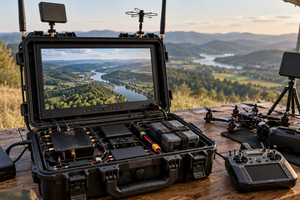
A 3D printer is often useful when working with drones, antennas, communication equipment, electronic housings, battery-related accessories, mounting components, and field support items. It does not replace industrial manufacturing, but it is highly effective when a fast, customized, and easily adjustable solution is required.
What Tasks Can 3D Printing Help Solve
A 3D printer is especially useful when the part requires a specific shape, limited production volume, or fast design changes. This is important for technical teams and volunteer workshops, where equipment often needs to be adapted to specific conditions.
- manufacturing mounts for equipment, cameras, antennas, lights, and modules;
- printing housings for electronics, cable guides, plugs, and protective covers;
- creating adapters, holders, fixing elements, and installation components;
- replacing plastic parts that are hard to source quickly;
- prototyping before producing a stronger or larger batch of parts;
- adapting accessories for a specific drone, antenna, battery, or mounting system.
This makes 3D printing valuable not only for saving time, but also for improving the usability of equipment. If a standard mount does not fit correctly, the digital model can be adjusted and printed again. This workflow is especially useful for repair teams, engineers, and volunteers working with non-standard requests.
How to Choose a 3D Printer for Technical and Field Tasks
The right 3D printer depends on the types of parts that will be printed most often. For simple holders, prototypes, and test models, a printer that works reliably with PLA and PETG may be enough. For stronger functional parts, it is better to consider equipment that supports ABS, ASA, nylon, polycarbonate, carbon-fiber composites, and other engineering-grade materials.
If the printer will be used regularly, pay attention to a closed chamber, rigid frame, automatic calibration, stable extruder, proper cooling, and easy maintenance. For field workshops and volunteer production, it is also important that spare parts, nozzles, build plates, and consumables are easy to find and replace.
| Selection Criterion | Why It Matters | What to Look For |
|---|---|---|
| Build volume | Defines the maximum part size without splitting and gluing | Choose a larger build area for bigger housings, mounts, and protective parts |
| Material compatibility | Affects strength, heat resistance, durability, and outdoor performance | PETG, ABS, ASA, PA, PC, and composites are better for demanding parts |
| Closed chamber | Improves stability when printing temperature-sensitive materials | Recommended for ABS, ASA, nylon, and engineering plastics |
| Mechanical stability | Reduces print failures during long production cycles | Rigid frame, quality rails, accurate filament feeding, and stable calibration |
| Print speed | Important for batch production | High speed should not compromise precision, layer adhesion, or repeatability |
FDM or Resin 3D Printer: Which Is Better
For most practical technical tasks, FDM 3D printers are usually the preferred choice. They print with filament, support a wide range of materials, and are suitable for functional parts such as housings, mounts, holders, adapters, and fixing elements. FDM printers are also easier to maintain, and the consumables are available in different strength and durability grades.
Resin printers provide higher detail and smoother surfaces, but they are more often used for small precise parts, master models, and applications where surface quality is the priority. For intensive technical use, durable parts, and workshop production, FDM is generally more practical.
FDM 3D Printer
Suitable for strong parts, housings, mounts, and components designed to withstand load. A practical option for most applied technical tasks.
Resin 3D Printer
Useful for highly detailed and small precise parts, but requires careful post-processing and is not always convenient for intensive technical use.
Materials for Technical 3D Printing
The material should be selected according to the actual conditions in which the finished part will be used. The same model printed from PLA and ASA will behave differently under heat, moisture, sunlight, vibration, and mechanical stress. That is why it is important to evaluate not only the printer itself, but also the materials it can print consistently.
- PLA — suitable for prototypes, mockups, and simple low-load parts;
- PETG — a versatile material for stronger and more durable parts;
- ABS — useful for functional parts but requires stable printing conditions;
- ASA — better suited for outdoor use and UV exposure;
- nylon — used for durable components that require wear resistance;
- carbon-fiber composites — used where rigidity, lower weight, and dimensional stability are required.
What to Check Before Buying
Practical Selection Checklist
- define which parts will be printed most often: mounts, housings, adapters, repair elements;
- check whether the printer supports the required materials, not only basic PLA;
- consider the build volume, especially if larger parts are needed;
- look for a closed chamber if engineering plastics will be used;
- evaluate the availability of spare parts, consumables, and service support;
- check how quickly the printer can be prepared for stable work;
- do not choose a model by maximum speed alone — stability is more important for technical parts.
For technical units and volunteer workshops, predictable operation is critical. If a printer requires constant manual adjustment, loses calibration, or prints engineering materials inconsistently, it will slow down the workflow. It is better to choose a model with a margin of reliability than to spend time correcting failed prints.
How 3D Printers Help Volunteer Workshops
Volunteer workshops often produce small batches of parts where each item must match a specific request. A 3D printer allows them to start production quickly, test design variations, adjust geometry, and deliver finished parts to the people who need them. This is especially useful when a custom part is required for a specific piece of equipment.
Another advantage is scalability. If a part performs well, it can be produced in larger quantities using several printers. The digital model can also be easily updated: size, wall thickness, mounting points, shape, and reinforcement elements can be adjusted without rebuilding the whole production process.
Common Mistakes When Choosing a 3D Printer
The most common mistake is choosing a 3D printer only by price or declared print speed. For technical parts, stability, repeatability, and material compatibility are more important. Another mistake is ignoring the real size of the parts. If the build area is too small, the part must be split into pieces, which increases production time and may reduce strength.
Consumables should also be considered in advance. Even a high-quality printer will not provide reliable results if the wrong material or incorrect print settings are used. For parts intended for outdoor use, material selection should account for temperature, moisture, sunlight, vibration, and mechanical load.
Where to Buy a 3D Printer for Technical and Field Use
For technical and field-related tasks, it is important to choose not just a device from a catalog, but equipment that matches the real use case. One buyer may need a 3D printer for small mounts, another for electronic housings, and another for regular work with engineering plastics. Before purchasing, it is worth comparing budget, expected tasks, materials, and reliability requirements.
In the 3D printers category on SkyHub, you can choose equipment for technical, volunteer, and applied production tasks. The SkyHub team can help compare specifications, material compatibility, build volume, maintenance needs, and select a model for specific operating conditions.
How SkyHub Helps You Choose a 3D Printer
When selecting a 3D printer, it is important to consider not only the specifications listed on the product page, but also the actual tasks: what parts need to be printed, which materials are required, how often the printer will be used, and who will maintain it.
SkyHub helps compare available models and choose a printer that is useful in real work, not just on paper. This is especially important for technical teams, volunteer workshops, and specialists who need reliable equipment without unnecessary trial and error.
FAQ About 3D Printers for Technical and Field Tasks
Which 3D printer is better for technical tasks?
For most practical tasks, an FDM 3D printer with reliable mechanics, sufficient build volume, and support for PETG, ABS, ASA, or other engineering plastics is a good choice. If strong outdoor-use parts are needed, a closed chamber is recommended.
Can 3D printers be used for drone-related parts?
Yes, 3D printing is often used for mounts, protective elements, holders, housings, and auxiliary accessories for drones. The material and print settings must be selected according to the expected operating conditions.
Which filament is better for durable parts?
PLA is suitable for prototypes and simple items. PETG is a better choice for stronger parts. ASA is often used for outdoor applications, while nylon and composite materials are selected for higher strength and wear resistance.
Do you need experience to work with a 3D printer?
Basic 3D printing can be learned relatively quickly, especially if the printer has automatic calibration and user-friendly software. Printing with engineering materials requires more practice and more accurate parameter settings.
What is more important: speed or print quality?
For technical parts, stability and quality are more important. High speed is useful for batch production, but it should not lead to weak parts, poor layer adhesion, or failed prints.