
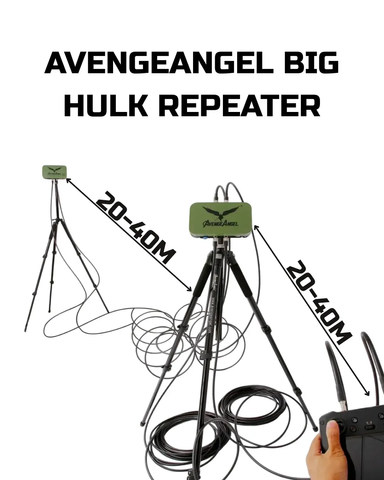
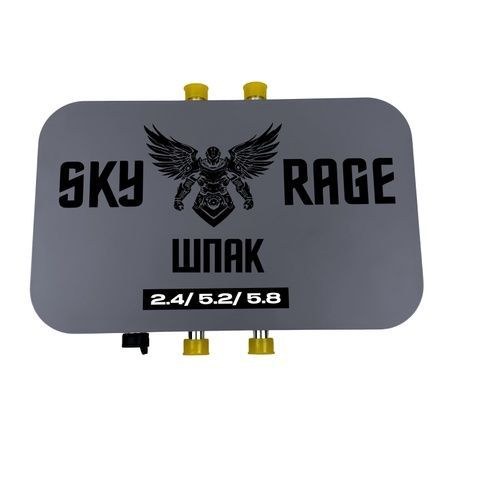
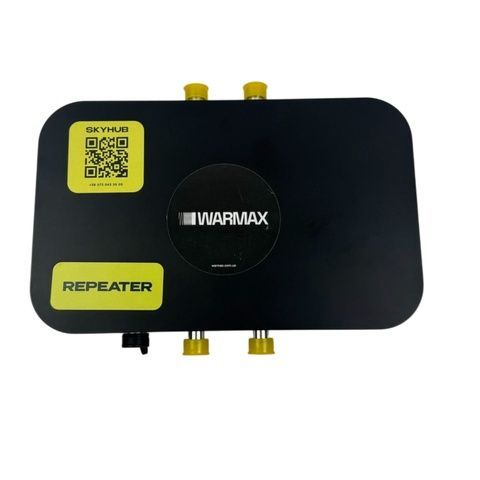
|
Quantity
|
Out of stock
|
||
|
|
|||
|
|
|||
Repeaters for military communication are used in situations where stable signal transmission is essential: field operations, remote positions, mobile teams, temporary command points, logistics routes, and areas with difficult terrain. If you need to buy a repeater for professional or military-related communication tasks, the decision should be based not only on price, but also on frequency range, output power, antenna compatibility, coverage requirements, power supply options, and operating conditions.
A correctly selected repeater helps extend the communication range, reduce dead zones, and improve the stability of signal transmission between devices. In practical use, such equipment may work with radio stations, mobile communication systems, field antennas, cables, power units, and additional accessories. The key point is to build a balanced system, where every component matches the task.
Buy a Repeater for Stable Communication
The main function of a repeater is to receive a signal, amplify it, and transmit it further. This is important when direct communication is unstable due to distance, buildings, terrain, forest areas, weak signal levels, or technical limitations of the equipment. In field conditions, a repeater can make communication more predictable and reduce the risk of losing the channel at critical moments.
Before choosing a model, it is important to define the exact purpose of the device. A repeater may be needed for two-way radios, for strengthening a GSM signal, for supporting 4G mobile internet, or for building a local communication system. Each scenario requires a different technical approach, including the correct frequency range, antenna type, power level, and installation method.
Important: a repeater should not be selected only by its maximum power rating. High power without properly matched antennas, quality cables, correct placement, and suitable frequency support will not guarantee stable performance. The effectiveness of the system depends on how well all components work together.
Main Types of Repeaters
Repeaters differ by purpose, supported frequencies, power, design, installation format, and operating conditions. For military, field, and professional use, the priority is usually given to equipment that can be deployed quickly, integrated with existing devices, and used in demanding environments.
| Repeater Type | Main Application | What to Check |
|---|---|---|
| Radio repeater | Extending the range of two-way radio communication | Frequencies, radio compatibility, power supply, antennas |
| GSM/4G repeater | Improving mobile signal or internet coverage | 4G support, operator frequencies, coverage area |
| Field communication kit | Fast deployment in mobile or temporary locations | Autonomy, housing protection, accessories, mobility |
How to Choose a Repeater
Choosing a repeater should start with the communication task, not with the cheapest available model. A device suitable for a fixed location may be inconvenient for mobile field use. Another model may work well with radios but be unsuitable for strengthening a GSM signal or supporting 4G. That is why it is important to understand what equipment is already in use and what result the repeater must provide.
Frequency Range
Frequency range is one of the most important technical parameters. The repeater must operate in the same range as the equipment it is intended to support. If the device does not match the required frequencies, even high output power will not solve the problem. For radio communication, the parameters of the radios must be checked. For mobile communication, the operator’s frequencies and supported 4G bands are important.
Power and Coverage Area
Output power affects the potential communication range, but it is not the only factor that determines performance. The actual coverage area depends on antenna height, cable quality, terrain, obstacles, weather conditions, and correct system setup. For field applications, stable operation and reliability may be more important than maximum power figures.
Compatibility with Existing Equipment
Before purchasing a repeater, it is necessary to check compatibility with radios, antennas, power sources, cables, connectors, and other system components. This is especially important when the repeater is added to an existing communication setup. A well-matched system reduces technical risks and makes deployment faster and more predictable.
What to Check Before Buying
- whether the frequency range matches your equipment;
- what real coverage area is required for the task;
- whether the repeater will be used in a fixed or mobile setup;
- what power source will be available during operation;
- whether additional antennas, cables, connectors, or mounts are required;
- how quickly the system must be deployed in the field.
Repeater Price: What Affects the Cost
The search query repeater price may look simple, but the actual cost depends on several technical and practical factors. Two devices may look similar at first glance, while differing significantly in supported frequencies, output power, filtering quality, signal stability, housing protection, cooling, and included accessories. For this reason, it is more accurate to compare not only the price, but also the device’s suitability for the intended use.
Device Type
Radio repeaters, GSM/4G signal boosters, and field kits are designed for different tasks. A repeater for two-way radios is usually evaluated by operating frequencies, channel stability, power, and compatibility with radio stations. For mobile signal improvement, GSM signal support, 4G band compatibility, and the ability to provide stable coverage in the required area become more important.
Technical Specifications
The price is influenced by frequency range, output power, receiver sensitivity, filtering quality, cooling system, housing protection, long-term stability under load, and resistance to demanding conditions. For military and field-related tasks, reliability is especially important because the equipment may be exposed to temperature changes, dust, moisture, vibration, and transportation loads.
Kit Configuration and Accessories
A repeater may be supplied as a standalone unit or as part of a complete kit with antennas, cables, power units, mounting elements, and adapters. Complete kits usually cost more, but they simplify deployment and reduce the risk of component incompatibility. If part of the equipment is already available, it may be more practical to select only the repeater or specific accessories.
Where to Buy a Repeater
Buying a repeater requires a technical approach, especially when the equipment is intended for military, volunteer, emergency, or professional communication tasks. It is important not only to choose a device from a catalogue, but also to understand whether it matches the required frequencies, coverage area, installation format, and existing equipment.
SkyHub offers repeaters and related communication equipment for different practical scenarios: strengthening radio communication, improving signal coverage, building a more stable field communication channel, and completing systems with antennas and accessories. Expert support helps match device specifications with real operating conditions, so the final choice is based on technical requirements rather than random selection.
Repeater Selection for Your Specific Task
If you need a repeater for two-way radios, GSM signal improvement, 4G support, or a field communication setup, the selection should be based on technical parameters, operating conditions, and compatibility with your current equipment.
The catalogue includes communication equipment, antennas, and additional accessories. If necessary, specialists can help clarify specifications, compare available options, and build a configuration that matches the real requirements of the task.