

|
Quantity
|
Out of stock
|
||
|
|
|||
|
|
|||
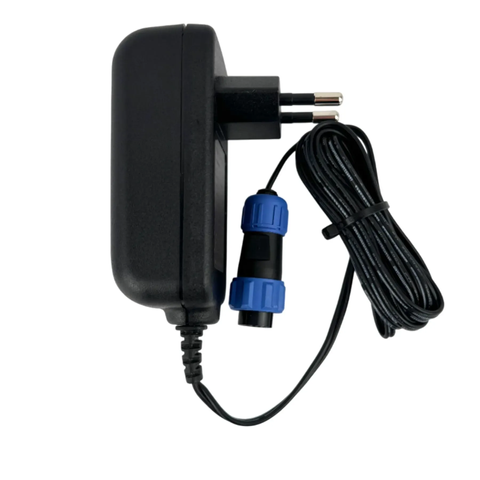
A power supply for an antenna is a key component that provides stable voltage to an active antenna, antenna amplifier, repeater module, or other equipment that requires external power. Its quality directly affects signal stability, reception performance, interference level, connection safety, and the service life of the entire antenna system.
For military personnel, radio operators, technical teams, and users of radio-controlled systems, reliable antenna power is not a secondary detail. Unstable voltage, an underpowered adapter, or poor compatibility can lead to signal loss, equipment overheating, amplifier instability, and reduced communication efficiency. That is why an antenna power unit should be selected by technical parameters, operating conditions, and equipment requirements rather than by appearance or connector similarity alone.
How to choose a power supply for an antenna
Before choosing a power supply, it is important to understand what type of device will be connected: an active antenna, amplifier, repeater, receiver module, or another radio component. Incorrect voltage or insufficient current may cause unstable operation, reduced performance, or electronic damage.
The first parameter to check is the operating voltage. Different antennas and amplifiers may require different values, so the antenna power supply must match the manufacturer’s technical requirements. If the equipment is designed for a specific voltage, using an adapter that is only “close enough” is not recommended.
Key factors to consider
- Output voltage — it must match the requirements of the antenna or amplifier.
- Output current — the unit should have enough power reserve for stable operation.
- Connector type — the plug should fit securely without unreliable adapters or loose connections.
- Voltage stabilization — helps protect equipment from voltage drops and fluctuations.
- Operating conditions — for field use, housing durability and resistance to load are especially important.
- System compatibility — critical when the antenna works together with an amplifier, repeater, or additional radio equipment.
If you need a power supply for an antenna amplifier, it is better to choose a model with current reserve. Continuous operation at the limit increases adapter heating and reduces its lifespan. This is especially important for stationary solutions where the equipment may operate for long periods without being switched off.
Types of antenna power supplies
An antenna power supply can differ by design, purpose, output capacity, and connection method. For simple home applications, a standard adapter may be enough. However, military, tactical, and professional use requires higher reliability, stable voltage, and precise compatibility with the connected equipment.
| Power supply type | Features | Typical use |
|---|---|---|
| AC power adapter | Connects to the mains and is suitable for stationary use. | Base stations, indoor installations, fixed antenna systems. |
| Stabilized power supply | Maintains stable output voltage and reduces the risk of failures. | Antenna amplifiers, sensitive radio equipment. |
| Compact adapter | Takes up little space and is convenient for transport and quick setup. | Field use, mobile kits, temporary communication points. |
| High-capacity power unit | Designed for stable operation under increased load. | Amplifiers, repeaters, professional antenna systems. |
For an active antenna or amplifier, the presence of power is not enough — power quality matters as well. A weak or unstable adapter can create additional interference, reduce reception quality, and cause intermittent shutdowns. Therefore, a charger or power supply for an antenna should be selected according to the actual load, not only by matching the connector.
Buy a power supply for an antenna
If you need to buy a power supply for an antenna, start with compatibility. The unit should match the specific antenna, amplifier, or radio device in voltage, current, polarity, and connector type. Universal adapters may not always be suitable, because the same plug does not guarantee safe or correct operation.
For complex antenna systems, it is important to evaluate not only the power unit itself but also the related components: antennas, adapters, cables, mounts, connectors, and accessories. This helps reduce connection errors and supports stable equipment performance in real operating conditions.
A practical approach to selection
The safest approach is to check the complete technical chain: antenna type, amplifier requirements, cable length, connector format, operating voltage, current consumption, and expected usage conditions.
This is especially important for mobile, tactical, and field systems where equipment may face unstable power sources, fast deployment requirements, and increased load during operation.
Where to buy an antenna charger at a reasonable price
An affordable power supply should not mean a random adapter with unclear specifications. For antenna systems, predictable operation is essential: stable voltage, secure connector, sufficient output power, and load compatibility. This is particularly important for equipment used in field kits, mobile communication systems, technical setups, and locations with unstable mains power.
Before purchasing, it is recommended to confirm the parameters of the connected equipment and choose a power unit with suitable characteristics. If the system includes several components, the full chain should be checked: antenna, amplifier, cable, adapters, connectors, and power source. This approach helps avoid unnecessary expenses and connection problems after installation.
Frequently asked questions about antenna power supplies
These answers explain when an antenna needs a separate power source, how to identify a faulty unit, and what to check before connecting the equipment.
What is a power supply for an antenna used for?
It supplies voltage to an active antenna or amplifier. Without power, such devices cannot properly amplify the signal or operate in the required mode. Passive antennas may not need a separate power unit, but for active systems it is an essential component.
Can an antenna work without a power supply?
A passive antenna can work without a separate power source. An active antenna or an antenna connected through an amplifier requires a compatible power supply. Without it, the signal may be weak, unstable, or completely absent.
How can you tell if an antenna power supply is faulty?
Common signs include sudden signal degradation, intermittent shutdowns, overheating, unstable amplifier operation, signal loss after switching on, or no response from the connected equipment.
It is also important to check the cable, connectors, and the antenna itself. In some cases, the problem is not the power supply but a damaged connection, oxidized contacts, or incorrect polarity.
Choosing the right power supply for your antenna
A correctly selected power supply helps ensure stable operation of the antenna, amplifier, and connected equipment. When choosing a unit, voltage, current, connector type, operating conditions, and system compatibility should all be considered.
A careful selection process reduces the risk of connection errors, unstable operation, overheating, and signal loss. If the equipment parameters are unclear, it is better to verify the technical specifications before connecting the system.