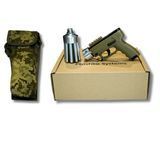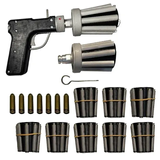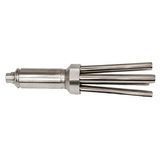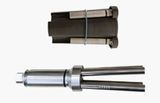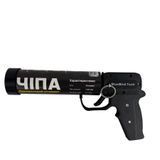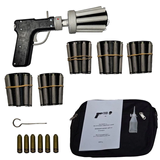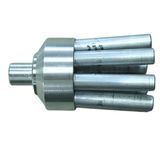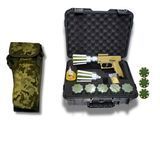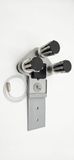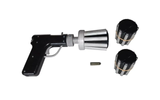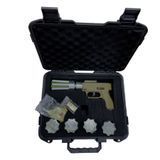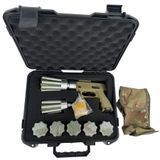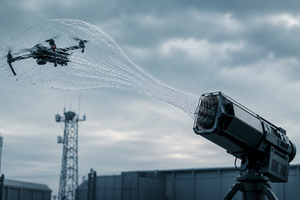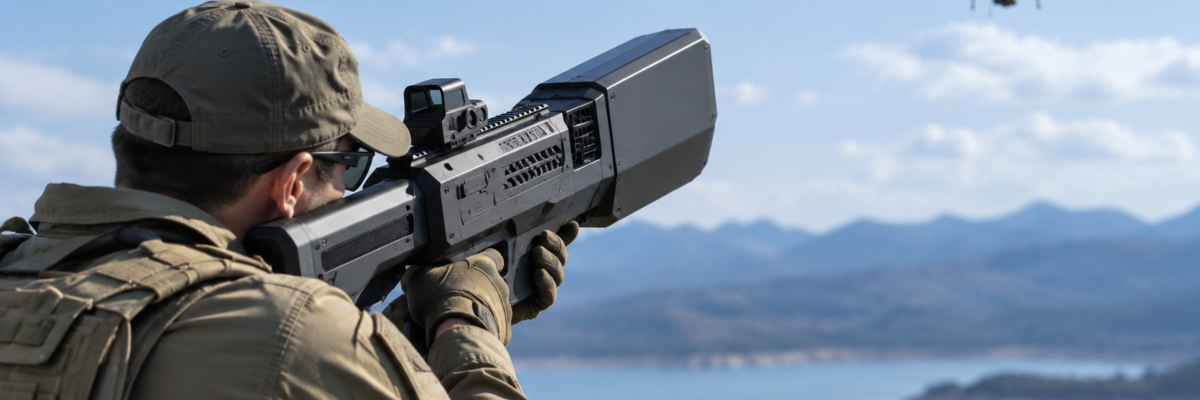
Anti-drone gun is a common term for a portable directional counter-UAV device. In most cases, the term refers to electronic warfare equipment designed to affect certain radio channels used by a drone. Similar search terms include “drone gun,” “counter-drone gun,” and “anti-drone rifle.”
However, this term does not describe one universal type of equipment. Directional electronic warfare systems, UAV detectors, and mechanical net launchers perform different tasks and should not be treated as interchangeable devices.
To understand the subject correctly, it is important to distinguish between three processes: detecting a UAV, identifying its presence or direction, and actively countering it. A single device may perform only one of these functions, so a rifle-like form factor alone says very little about the actual capabilities of the system.
The effectiveness of any counter-UAV solution also depends on the architecture of the specific drone, its control method, level of autonomy, and operating conditions. There is no universal “anti-drone gun” that works equally against every UAV.
What Is Commonly Called an Anti-Drone Gun?
In general and commercial terminology, an anti-drone gun usually means a portable directional device that resembles a long rifle or a compact system fitted with directional antennas. Its purpose is not to physically fire at the target but to provide electronic countermeasures against specific wireless systems used by the UAV.
A more accurate description is a specialized counter-UAV device or portable electronic warfare system. The word “gun” primarily describes the form factor and directional method of use rather than the underlying technical principle.
Detection Systems
These devices detect the presence of a UAV or related signals. Detection itself does not mean that the system actively affects the aircraft.
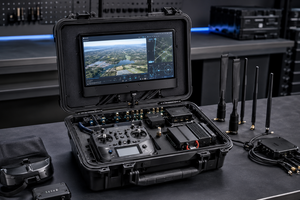
Directional EW Systems
These systems are designed to provide electronic countermeasures against certain channels or systems used by a UAV within the capabilities of the specific device.
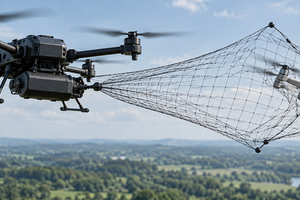
Mechanical Interceptors
These solutions use a physical interception method, such as a net, and operate on a fundamentally different principle from electronic warfare systems.
How Does an Anti-Drone Gun Work?
The operating principle of an electronic anti-drone gun is based on directional interference with radio systems used by a UAV for communication, control, or navigation. The exact set of supported functions depends on the model and its technical architecture.
The result of such interference cannot simply be described as “switching off the drone.” The UAV’s response depends on its software logic and design. Depending on the platform, a drone may continue following a predefined algorithm, change its operating mode, activate a manufacturer-defined safety procedure, or show no meaningful response to the specific countermeasure.
An anti-drone gun is not a universal solution against every UAV. Before evaluating any system, it is necessary to understand what types of platforms it is designed for and what limitations are explicitly stated by the manufacturer.
Why Different Drones Respond Differently to Countermeasures
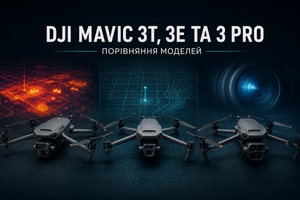
Modern UAV platforms differ not only in size and purpose. Their control methods, video links, navigation systems, software autonomy, and fallback algorithms may also vary significantly.
For example, a radio-controlled platform and a UAV capable of continuing part of its route autonomously place different requirements on a counter-UAV system. Another separate category includes drones whose data transmission does not rely on a conventional radio control link. For such platforms, electronic interference with the control channel may not address the intended task.
For this reason, when evaluating anti-drone equipment, it is more useful to examine confirmed operating capabilities and limitations than to rely on marketing claims about a “universal anti-drone gun.”
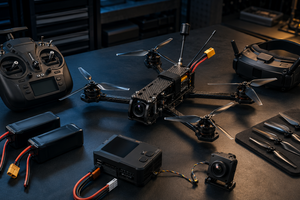
The main types of unmanned platforms can be explored in the quadcopters and FPV drones section. Understanding the differences between UAV platforms helps explain why one countermeasure cannot perform equally well against every type of drone.
Anti-Drone Gun vs. Net Launcher: What Is the Difference?
A net launcher and an electronic anti-drone gun use different counter-UAV principles. A net launcher creates a physical obstacle using a deployed net, while a directional EW system affects certain radio systems used by the drone.
| Criterion | Electronic Anti-Drone Gun | Net Launcher |
|---|---|---|
| Operating principle | Electronic countermeasures | Physical interception with a net |
| Dependence on radio links | Significant: capabilities depend on the UAV architecture and the countermeasure system itself | The interception principle itself is not based on disrupting radio communication |
| Main limitation | Not every UAV depends on the systems targeted by a specific device | Requires physical contact between the net and the aircraft |
| Legal and organizational considerations | The legality of operating electronic countermeasure equipment must be checked separately | The intended purpose of the device and applicable restrictions for specific operating conditions must be considered |
If a mechanical interception method is required, relevant products are available in the drone net launcher category. You can also explore handheld net launchers, which use a portable form factor but operate on a different principle from electronic anti-drone guns.
What Can Be Included in a Counter-UAV System?
A complete counter-UAV solution does not necessarily consist of a single portable device. Depending on its purpose, the system may combine several functional layers.
- Detection. The system identifies signs indicating the presence of an unmanned aircraft.
- Observation and identification. Available tools are used to confirm the object and assess the situation.
- Countermeasure. Specialized equipment suitable for the specific user and application is used.
- Organizational procedures. These define personnel authority, operating rules, and safety requirements.
This is why comparing two systems only by appearance or a single advertised specification can be misleading. The devices may belong to completely different classes and perform different functions within a broader C-UAS, or Counter-Unmanned Aircraft System, architecture.
Main Limitations of Anti-Drone Guns
When evaluating equipment, understanding its limitations is especially important. This helps provide a realistic assessment and avoids the assumption that one device can counter every drone in the same way.
- Different UAV architectures. Drones can use different control, navigation, and data transmission methods.
- Autonomy. Some UAV functions may continue without constant external commands.
- No suitable radio link. Certain communication methods differ fundamentally from conventional radio control.
- Operating conditions. Real-world system performance depends on the surrounding electromagnetic environment, nearby objects, and other factors.
- Regulatory restrictions. Electronic warfare equipment should not be treated as ordinary consumer electronics; legal requirements and permitted conditions of use must be considered.
What to Consider When Choosing Anti-Drone Equipment
Specialized counter-UAV equipment should be evaluated using official documentation rather than only the model name or marketing description. Several groups of parameters are useful for an initial comparison.
Purpose
Determine whether the device is a detector, an electronic countermeasure system, a combined solution, or a mechanical interceptor.
Supported Threat Types
The manufacturer should specify what classes of unmanned systems the equipment is intended for and what limitations apply.
Documentation and Origin
Check the technical description, markings, package contents, and documentation relating specifically to the model or modification being considered.
Legal Status
Before purchasing or operating the equipment, verify whether the specific type of system may legally be used by the intended user and under the expected conditions.
Specifications from one model should not automatically be applied to another, even if the devices look similar. Their intended purpose, hardware, supported functions, package contents, and operating requirements may differ.
A Drone Detector and an Anti-Drone Gun Are Not the Same Thing
One common mistake is to treat detection and countermeasures as a single function. A detector is primarily intended to provide information about the presence of a UAV or related signals. By itself, it does not necessarily affect the aircraft.
An anti-drone gun, when referring to a directional electronic warfare device, belongs to the active countermeasure category. Detection and countermeasure functions may operate together in combined systems, but the presence of one function does not automatically mean the other is included.
Can an Anti-Drone Gun Be Considered Universal Protection?
No. Counter-UAV protection must be built around the specific type of threat and usually requires a combination of detection, identification, organizational procedures, and an appropriate response system.
It is especially important to distinguish between radio-controlled, autonomous, and alternative data-link platforms. Claims that a device can reliably affect “all drones” without clearly stated conditions and limitations should be treated critically.
What to Check Before Considering a Specific Model
- the exact purpose and type of equipment;
- the manufacturer’s official technical description;
- the list of declared functions and limitations;
- the contents of the specific package or configuration;
- operating conditions and safety requirements;
- the legal basis for purchase and use.
Legal and Safety Considerations
Directional electronic countermeasure systems are specialized equipment. The legality of their purchase, transfer, testing, and operation must be assessed separately for the specific device, user, and operating conditions.
Before using such equipment, check the current requirements of Ukrainian law, the rules governing radio equipment and radio-frequency spectrum use, as well as the internal procedures of the organization, unit, or facility for which the system is being selected.
The fact that a device is available for sale does not automatically mean that it may legally be operated under any conditions. Specialized equipment requires professional selection and verification of the legal basis for its use.
Key Takeaways
An anti-drone gun is not a single universal technical standard but a common name for portable directional counter-UAV systems. In most cases, the term refers to electronic warfare equipment, but actual capabilities depend on the specific model and the architecture of the target UAV.
Net launchers belong to a different category because they rely on physical interception and should not be compared with electronic warfare systems based only on their portable form factor. Drone detectors, in turn, perform a detection function and are not automatically a substitute for active countermeasure systems.
When selecting specialized equipment, first determine the required function: detection, electronic countermeasures, or physical interception. Then compare the capabilities of the specific model with its documentation and the applicable restrictions.
If mechanical interception is being considered, you can compare drone net launchers available at SKYHUB. Electronic warfare systems require separate professional selection based on their intended purpose and the legal conditions for their use.
FAQ: Frequently Asked Questions About Anti-Drone Guns
What is an anti-drone gun?
An anti-drone gun is a common term for a portable directional counter-UAV device. It most often refers to electronic warfare equipment, although the exact functions depend on the design and model.
Can an anti-drone gun stop any UAV?
No. Effectiveness depends on the UAV architecture, control method, autonomy, and the capabilities of the specific countermeasure system. There is no universal device that works against every type of UAV.
How is an anti-drone gun different from a net launcher?
An electronic anti-drone gun affects certain radio systems used by a UAV, while a net launcher relies on physical interception with a net. These are different technologies with different limitations and operating requirements.
Can an anti-drone gun be used freely in Ukraine?
The legality of operation depends on the type of equipment, its functions, the user, and current requirements governing radio equipment and radio-frequency spectrum use. The relevant legal basis should be verified before purchasing or operating specialized equipment.