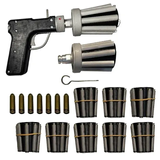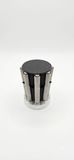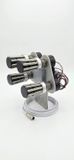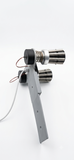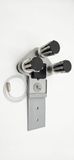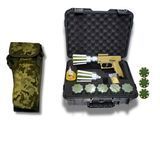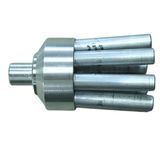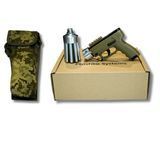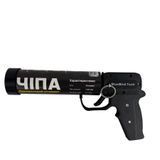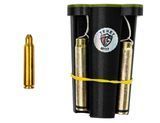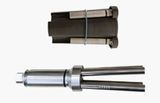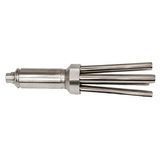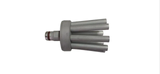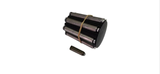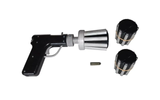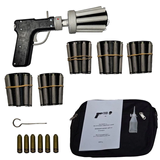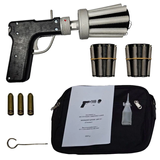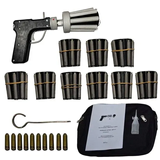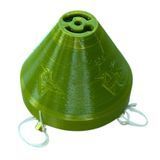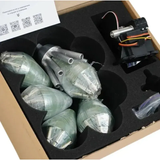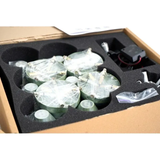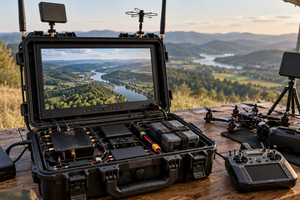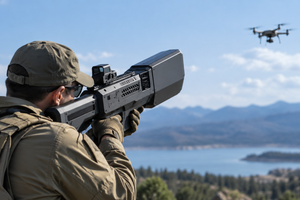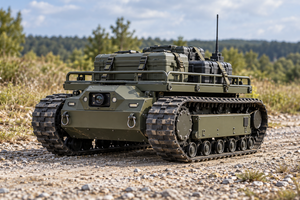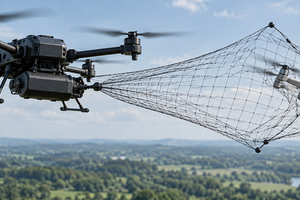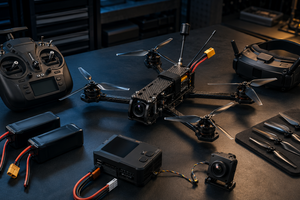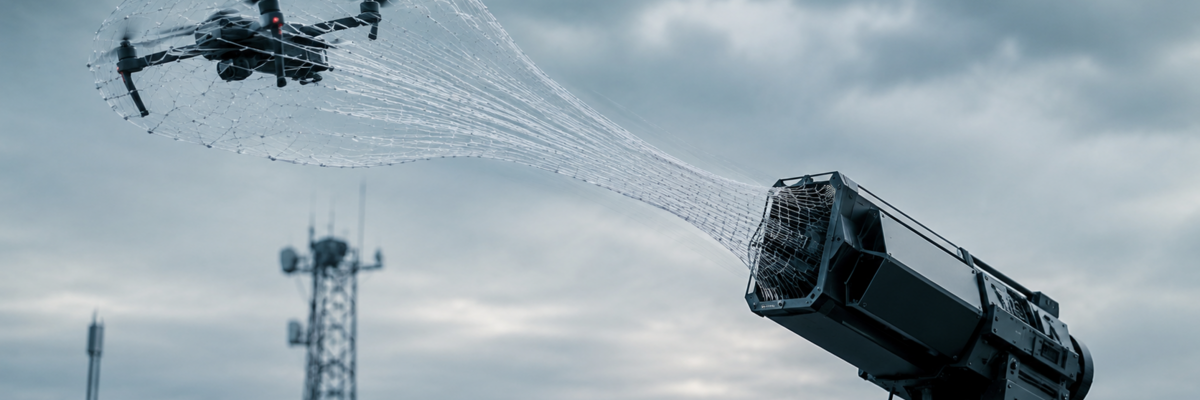
A net launcher is a physical interception tool designed to restrict the movement of small unmanned aerial vehicles using a special net. Unlike radio-electronic suppression, this type of solution does not affect communication or navigation channels. It works as a mechanical barrier at the close protection layer. In this article, we explain where such devices are discussed, what limitations should be considered, and why a net launcher should not be evaluated separately from drone detectors, EW systems, communication equipment, autonomous power supply and engineering support.
What is a net launcher in simple terms?
A net launcher is a device that launches a net to physically intercept a drone within a close visual-response zone. Its purpose is not to jam a signal, but to create a mechanical obstacle that limits further UAV movement. This is why such solutions are usually considered part of close-range C-UAS control, where the device itself matters less than its role within a complete detection, alerting and response architecture.
A net launcher should not be treated as a universal replacement for EW equipment or drone detection systems. It is one element of a layered protection concept. It may be relevant when a physical response method is required without creating additional radio interference, but its use must always comply with applicable law, internal procedures and safety requirements.
What is a counter-drone net launcher used for?
The main purpose of a net launcher is to physically restrict the movement of a small UAV within a limited response area. In civil, security and defence-related contexts, such tools are usually discussed as part of the protection of critical infrastructure, temporary equipment locations, restricted areas, training ranges, logistics hubs and other sites where uncontrolled drone approach may create operational or safety risks.
The practical value of this type of tool becomes clear only when it is integrated with other components: detection, visual confirmation, organisational procedures, personnel training, maintenance and documentation. Without this system-level approach, even a technically functional device may fail to solve the task or may create additional risks for people and equipment.
Where a net launcher fits within UAV protection
A net launcher belongs to the final response layer, when an object has already been detected, classified and is within a zone where physical interception may be legally and operationally acceptable. Therefore, the decision should not be based on a single parameter. It should be assessed across the full chain: detection, alerting, compatibility with existing systems, preparation of authorised personnel, operating conditions and service support.
- Drone detectors help identify suspicious UAV activity earlier and reduce dependence on visual observation alone.
- EW systems address radio-electronic influence tasks where such use is permitted and technically justified.
- Communication equipment supports coordinated actions between responsible teams and prevents chaotic decision-making.
- Autonomous power supply keeps equipment operational in field, mobile or unstable power conditions.
- Engineering support reduces the risk of incompatibility, incorrect configuration and mistakes during deployment.
Key limitations that should not be ignored
A net launcher is not a universal solution against every UAV type. Its relevance depends on the scenario, environment, personnel readiness, risk assessment and compatibility with the wider security system. Legal restrictions are also important: any physical drone interception must be carried out only by authorised persons and under permitted conditions.
Important: when evaluating such tools, the decision should not be based only on the product name or general claims in the description. The key factors are intended purpose, certification or permitted-use status, compatibility with existing equipment, service support, training, documentation and clear rules for safe use.
How to evaluate a solution before implementation
For military units, volunteer foundations, B2B customers and technical specialists, it is important to assess not only the net launcher itself, but also the task it is expected to support. A wrong decision at the selection stage can lead to unnecessary costs, incompatibility with previously purchased equipment and unrealistic expectations from a single tool.
Common mistakes when evaluating physical interception tools
The main mistake is to assess a net launcher separately from the broader counter-UAV task. In practice, the customer needs not just a separate catalogue item, but a working combination of equipment, documentation, consultation and service support.
- Choosing by name only. Devices with similar purpose may differ in operating conditions, maintenance requirements and user limitations.
- Ignoring compatibility. If the tool is not connected to detection and alerting procedures, the available response time may become critically limited.
- Lack of procedures. Without rules for storage, inspection and authorised access, the risk of mistakes increases.
- Purchasing without consultation. For units and organisations, specifications alone are not enough; documentation, service, configuration and permitted use also matter.
- Expecting universality. No single tool covers all scenarios, so it should be considered as part of a layered system.
SkyHub’s role: not just a catalogue, but an engineering link between solutions
SkyHub operates as a Ukrainian defence tech platform where technical tasks are handled as a complete system: selection, supply, compatibility checks, related equipment configuration, service support and documentation. For the customer, this matters because in counter-UAV projects a wrong choice can affect not only the budget, but also the stability of the entire protection architecture.
If the task involves physical interception tools, drone detectors, EW systems, antennas, communication equipment, autonomous power supply or drone-related kits, a specialist needs to understand the full context: where the equipment will be used, what systems are already available, which restrictions apply and what documentation is required. You can review the relevant category in the net launchers section on SkyHub.
When to request a consultation
A consultation is useful before procurement if the customer already has part of the equipment, needs compatibility with an existing system, has to prepare a kit for a unit, or requires documents for a foundation, organisation or B2B supply. This approach helps avoid random purchasing decisions and build a solution around a real task instead of general product claims.
- Describe the task and operating conditions without unnecessary tactical details.
- Specify which detection, communication, EW or power supply tools are already in use.
- Clarify requirements for documents, configuration, service support and delivery across Ukraine.
- Agree on acceptable options with legal and operational limitations in mind.
Frequently asked questions about counter-drone net launchers
What is a net launcher?
A net launcher is a physical interception tool for small UAVs that uses a net to restrict drone movement. It is considered a close-range protection element, not a replacement for drone detectors, EW systems or other security tools.
Can a net launcher replace EW systems?
No. EW systems and net launchers solve different tasks. EW systems are related to radio-electronic influence, while a net launcher is a physical close-range interception tool. In a proper system, they belong to different protection layers.
Who can benefit from information about net launchers?
This information is useful for military units, volunteer foundations, technical specialists and B2B customers who evaluate C-UAS solutions as a system: detection, communication, power supply, EW, service and documentation.
What should be checked before selecting such a solution?
It is important to assess the intended purpose, compatibility with existing equipment, legal status, maintenance conditions, documentation and training requirements for authorised personnel. Choosing only by name or a general description often leads to mistakes.
Can a net launcher be used without training?
No. Any physical interception tool requires authorisation, briefing, understanding of limitations and compliance with safety rules. Its use must follow applicable procedures and legislation.
Need to evaluate a solution within a C-UAS system?
Describe the task, existing equipment and documentation requirements. A SkyHub specialist can help assess compatibility between detection tools, communication systems, EW equipment, power supply and physical interception components without unnecessary or unsuitable items.
Clarify availability, configuration, service support and delivery conditions across Ukraine to select a solution aligned with the specific task and applicable restrictions.
Prepared by: Military Expert