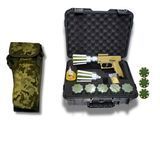
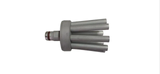
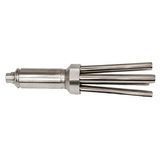
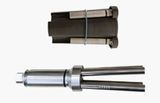
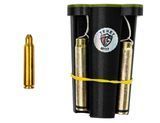
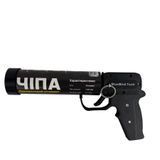
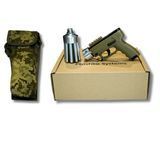
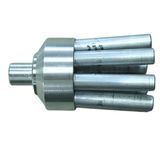
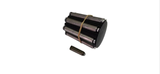
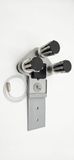
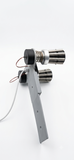
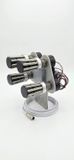
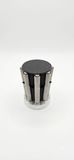
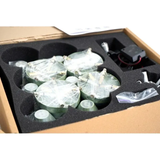
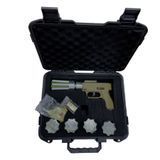
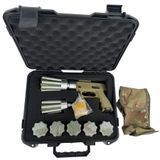
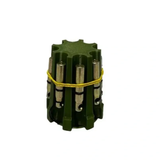
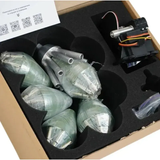
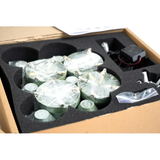
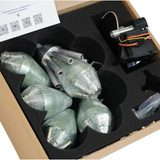
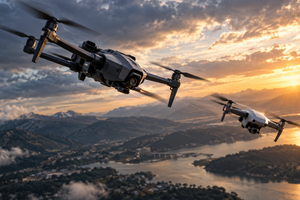
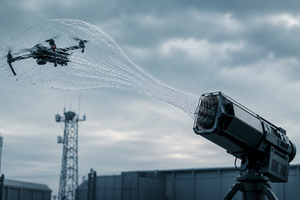
A net gun on an interceptor drone is an onboard device that launches a net to physically capture another unmanned aircraft. The carrier drone transports the device through the air, while the net prevents the intercepted aircraft from continuing its flight. How the captured drone is retained or brought down depends on the design of the particular system.
Net-equipped interceptor drones vary considerably: some are aircraft fitted with a dedicated module, while others are integrated systems with their own detection and automated tracking capabilities. A net gun alone does not provide autonomy, universal compatibility, or a safe landing for the captured drone.
What Defines a Net-Equipped Interceptor Drone?
The term “interceptor drone” describes an aircraft’s purpose, but it does not specify its interception method. This article focuses on net capture, without discussing other interception methods or providing equipment operating instructions.
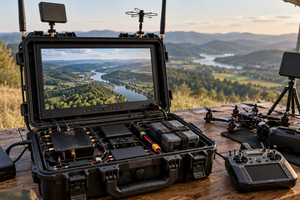
Three elements need to be distinguished: the aircraft, the net gun, and the control or observation equipment. Their capabilities are connected, but they are not interchangeable. A camera does not necessarily recognise objects automatically, and fitting an onboard module does not give the carrier drone autonomous search capabilities.
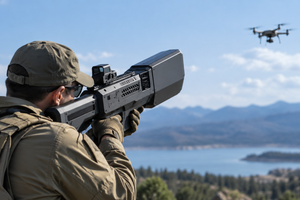
The phrase “drone net gun” can refer either to a device used against drones or to a module designed to be carried by one. To avoid confusion, look for an explicit statement that the device is intended for airborne use. The general principle and other equipment formats are covered in the article on the purpose and limitations of counter-drone net guns.
How Aerial Net Capture Works
The principle is mechanical: a deployed net entangles parts of the drone and can obstruct its propellers. The capture itself does not require radio jamming or access to the intercepted aircraft’s software.
However, contact with the net and a safe conclusion to the interception are different outcomes. If the system simply disrupts the drone’s flight, the aircraft may fall. Tethered retention, transport of the captured drone, or a slowed descent must be features of the system’s design and supported by its documentation.
Capture with Retention
In some systems, the net is connected to the interceptor by a tether. The ability to retain and carry a captured drone is limited by the capabilities of the entire system, not just the strength of the net.
Capture with a Slowed Descent
Some solutions include a parachute component. Its presence cannot be assumed from the term “net gun”: it is a separate feature of a particular configuration.
One example of the first approach is DroneCatcher by Delft Dynamics. The manufacturer describes a multicopter equipped with a net gun that can transport a captured drone on a tether. For the DroneHunter F700 by Fortem Technologies, the manufacturer lists different net-based devices, including tethered capture and a parachute-equipped configuration. These are design examples from specific products, not standard features of all airborne net guns.
Airborne Modules, Handheld Net Guns, and Integrated Systems
A similar capture principle does not make these solutions interchangeable. The main differences concern the equipment included and the functions provided by the developer.
| Criterion | Handheld Net Gun | Airborne Module | Dedicated Integrated System |
|---|---|---|---|
| Placement | Held by an operator. | Designed for a compatible aircraft. | The interceptor forms part of an integrated system. |
| Observation and Control | Determined by the handheld device’s design. | Depend on the carrier drone and its specified equipment. | May include dedicated sensors and software. |
| Automation | Does not provide autonomous aerial interception. | Does not become available simply by fitting the module. | The manufacturer specifies which functions are automated. |
| What to Check in an Offer | The device’s intended use, package contents, and documentation. | Confirmed compatibility and whether the carrier drone is included. | The full system contents, limitations, training, and servicing. |
Ground-based equipment is discussed in more detail in the overview of handheld net gun types and models. The specifications of these devices cannot automatically be applied to airborne versions, even when they belong to the same product series.
Capabilities and Limitations of Net-Equipped Interceptor Drones
Mechanical Capture Does Not Make the Entire System Immune to Interference
The net acts physically on the aircraft. However, the interceptor itself may rely on radio communications, satellite navigation, and other electronic systems. The statement “a net gun does not jam signals” therefore does not mean that the carrier drone is independent of communication or navigation quality.
Capture Does Not Guarantee an Undamaged Aircraft
A drone may be damaged when it contacts the net or subsequently falls. Even a system designed to retain the aircraft cannot guarantee that its battery, equipment, and payload will remain intact. A claim of “safe interception” should be assessed alongside an explanation of how the system handles the captured object.
Capabilities Depend on Test Conditions
The intercepted drone’s dimensions, weight, and design, together with weather and observation conditions, affect whether a system is suitable. A single demonstration video documents the particular event shown; it does not establish universal effectiveness against all drones.
A manufacturer’s stated capture success rate is meaningful only when accompanied by the test methodology: the number of trials, aircraft types, conditions, and definition of success. Net contact, termination of flight, and a controlled descent are different criteria.
The key limitation: a net gun provides physical intervention, but it does not, by itself, provide detection, reliable object identification, or control over the consequences of capture. These functions need to be assessed separately.
What to Check in an Airborne System Description
When reviewing an offer, comparing documentation and package contents is more useful than choosing by a single maximum specification. The following questions help clarify exactly what the supplier is offering:
- What product is included? A standalone module, a module with consumables, or a system that includes the aircraft and control equipment.
- Which carrier configurations have confirmed compatibility? Naming a brand or product family is insufficient if the exact model and version are not specified.
- Which functions are automated? A camera, object recognition, tracking, and autonomous flight are separate capabilities that each require confirmation.
- What happens after capture? Retention, a slowed descent, or only mechanical disruption of flight.
- What evidence supports the claims? Documentation and test results should relate to the configuration under consideration, rather than a similar model.
- How are servicing and training arranged? Check the availability of manufacturer-specified consumables, service support, and training requirements for responsible personnel.
Compatibility affects the carrier drone’s flight characteristics and safety. It cannot be established solely from visual similarities between devices or whether a module can physically fit. Independently modifying a handheld net gun is not a substitute for a confirmed airborne configuration.
Understanding Listings in the SKYHUB Catalogue
The SKYHUB catalogue includes Ptashka listings designated for FPV platforms, as well as variants labelled for Mavic / Autel / Matrice 4. These names help distinguish the products’ intended applications, but they do not confirm compatibility with every aircraft in the listed families or imply automated interception capabilities.
The wording “system + cartridges” should not be interpreted as a package that includes a drone. Before comparing prices, clarify whether the carrier aircraft is included, what control equipment is provided, and which services are covered. A module with consumables and a complete system represent different scopes of supply.
The SKYHUB net gun catalogue provides product descriptions and stated package contents. For a professional assessment of a particular solution, clarify its intended use, documentation, and confirmed compatibility.
The purchase and use of specialised equipment must comply with applicable restrictions in Ukraine. Selection requires specialist assessment; a product’s presence in a catalogue does not, by itself, establish that its use is permitted in particular circumstances.
FAQ: Net Guns on Interceptor Drones
Is the drone included with an airborne net gun?
Not necessarily. An offer may include only the airborne module and consumables; check the package contents to confirm whether the aircraft and control equipment are included.
Can a net-equipped drone detect other drones autonomously?
Only if the particular system includes the necessary detection equipment and functions. A net gun alone does not give a drone automatic recognition or autonomous interception capabilities.
Will the captured drone remain undamaged?
An undamaged recovery is not guaranteed: damage can occur during capture and the subsequent descent. Tethered retention or a parachute component is available only in certain systems and does not eliminate every risk.
Is an interception video enough to assess a system’s effectiveness?
No, a single video shows only one particular event. An assessment requires information about the tested configuration, conditions, number of attempts, and criteria for a successful capture.