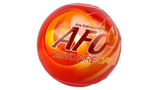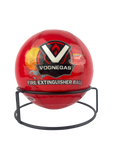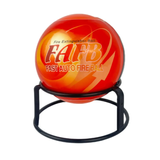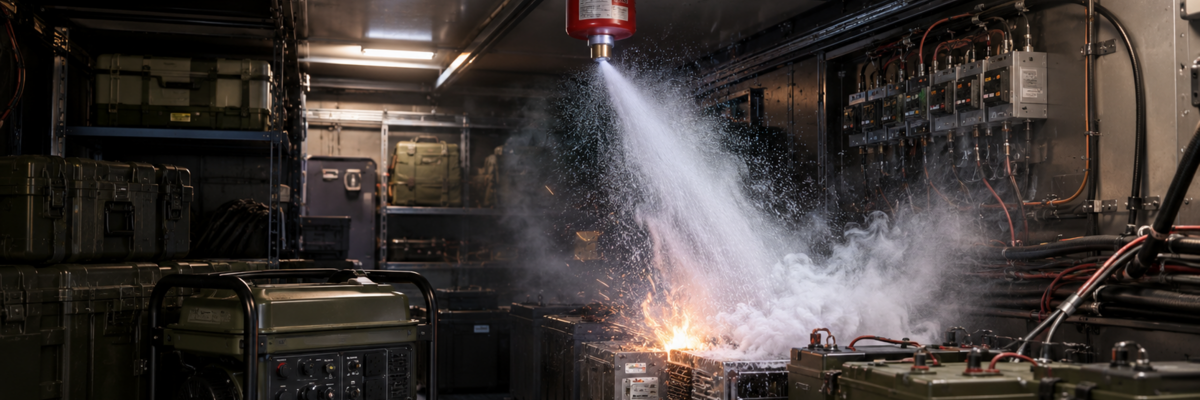
An automatic fire extinguisher is an autonomous fire suppression device designed to activate without human intervention when a critical temperature, flame, or other signs of ignition are detected. For military, technical, warehouse, generator, workshop, and control-point environments, this type of protection is especially important because a fire can start suddenly, while immediate access to the ignition source is not always possible.
The main purpose of automatic fire suppression is to localize risk directly at the source before the situation escalates. It does not replace standard fire safety procedures, but it adds an important layer of protection where response time is critical. In areas where batteries, generators, charging stations, cable lines, electronic devices, and fuel-related materials are used, even a small ignition can lead to equipment loss, operational downtime, or damage to the protected area.
An automatic fire extinguisher is a practical solution for locations that require autonomous protection: without permanent supervision, without delays caused by searching for a manual extinguisher, and without the need to approach a dangerous zone.
Where Automatic Fire Extinguishers Are Used
Automatic fire extinguishers are used not only in standard indoor spaces. They are also relevant for military vehicles, mobile technical points, storage areas, repair zones, server cabinets, generator rooms, and equipment storage facilities. In the military and tactical segment, this is particularly important because equipment often operates under high load, dust, vibration, temperature fluctuations, and limited ventilation.
In practice, an automatic fire extinguisher can be used to protect:
- technical rooms and small warehouses;
- electrical panels, server areas, and communication equipment zones;
- generator rooms, charging stations, and battery storage areas;
- workshops, repair zones, and mobile maintenance points;
- vehicle compartments and equipment installation areas;
- enclosed spaces where manual fire suppression may be difficult.
How Automatic Fire Suppression Works
The operating principle depends on the specific design of the device. In most cases, automatic activation occurs when a heat-sensitive element reacts to a critical temperature, a thermal bulb breaks, a temperature lock is triggered, or an integrated release mechanism is activated. After activation, the extinguishing agent is discharged into the protected area to suppress the ignition source.
Depending on the model, the device may use powder, aerosol, gas-based, or another type of extinguishing agent. The correct choice depends on what needs to be protected: electronics, cables, fuel-related materials, technical cabinets, rooms, or equipment compartments.
Types of Automatic Fire Extinguishers
Before choosing a device, it is important to understand that there is no universal solution for every environment. One type of automatic extinguisher may be suitable for a technical cabinet, another for a small room, and another for a vehicle compartment or storage area with combustible materials.
| Device type | Typical application | Key features |
|---|---|---|
| Powder automatic fire extinguisher | Warehouses, workshops, technical areas, vehicle compartments | Effective for different fire classes, but requires careful cleaning after discharge |
| Aerosol fire suppression module | Enclosed spaces, electrical equipment, technical cabinets | Compact format suitable for limited spaces |
| Gas-based fire suppression | Server rooms, electronics, sensitive technical equipment | Leaves minimal residue, but requires accurate protected-volume calculation |
| Autonomous module with thermal activation | Unattended sites, mobile technical zones, equipment compartments | Activates without external power supply or operator involvement |
What to Consider When Choosing an Automatic Fire Extinguisher
The selection process should start not with the price, but with an assessment of the protected object. A formal approach may result in installing a device that does not provide the required level of protection. This is especially important for military, volunteer, technical, and warehouse facilities where electronics, batteries, fuel, cables, and expensive equipment may be located in the same area.
Key selection criteria
- Protected volume. A cabinet, room, and vehicle compartment require different fire suppression solutions.
- Potential fire source. Electrical equipment, batteries, fuel materials, plastic, wood, and textiles require different approaches.
- Activation temperature. It must match the operating conditions to avoid false activation or delayed response.
- Installation method. The device may need to be mounted on a ceiling, wall, inside a cabinet, or inside a separate compartment.
- Compatibility with equipment. For electronics, it is important to choose a solution that minimizes the risk of additional damage after discharge.
- Clear specifications and certification. For critical facilities, this is part of safe and reliable operation.
Why Automatic Fire Protection Matters in Military and Technical Environments
In military and field conditions, equipment often operates under high load. Generators power devices in unstable environments, batteries are charged intensively, cable lines may overheat, and equipment is often installed in compact spaces with limited airflow. Even when fire safety rules are followed, the risk of local ignition cannot be fully eliminated.
An automatic fire extinguisher helps save critical response time. It does not wait until someone notices smoke, finds a manual extinguisher, and approaches the fire source. The device reacts directly in the protected zone, which is especially valuable at night, when personnel are absent, or when access to the area is limited.
Common Mistakes When Buying an Automatic Fire Extinguisher
Buyers often focus only on the name of the device or the cylinder capacity, but this is not enough. Automatic fire suppression must match the specific task. If the device is designed for a small enclosed volume, it will not effectively protect a large room. If the extinguishing agent is not suitable for electronics, the discharge may cause additional equipment damage.
- choosing a device without calculating the protected volume;
- installing the unit where it does not cover the potential ignition source;
- ignoring the activation temperature;
- using an unsuitable extinguishing agent near electronic equipment;
- failing to consider humidity, dust, vibration, and temperature fluctuations;
- not performing regular visual inspection of the device condition.
How to Select the Right Solution for Your Task
For a technical cabinet with electronics, compact autonomous fire suppression solutions are often the most practical option. For a generator room, repair area, or storage facility with consumables, a more powerful module may be required. For a vehicle compartment, vibration resistance, secure mounting, and correct activation temperature are especially important.
If the object is complex, it is better not to choose a device based only on a photo or price. The area, height, type of equipment, ventilation, power supply, storage conditions, and possible fire classes should be considered. This approach helps select not just an extinguisher, but a functional element of the overall safety system.
Automatic Fire Extinguishers at SkyHub
SkyHub offers solutions for protecting equipment, facilities, and auxiliary technical infrastructure. If an automatic fire extinguisher is needed for a warehouse, technical zone, generator room, workshop, vehicle compartment, or military-related object, it is important to define the operating conditions and fire risk level in advance.
Specialists can help compare the specifications, select a suitable model for a specific object, and take into account practical details such as protected volume, equipment type, mounting conditions, activation temperature, and operating environment.
FAQ About Automatic Fire Extinguishers
Can an automatic fire extinguisher be used for electrical equipment?
Yes, but the device must use a suitable extinguishing agent. For server areas, electrical panels, charging stations, and technical equipment, the effect of discharge on electronics must be considered.
Is an automatic fire extinguisher needed if a manual extinguisher is already available?
Yes. These devices perform different functions. A manual extinguisher requires human presence, while an automatic extinguisher activates independently in the risk zone.
Where should an automatic fire extinguisher be installed?
The installation point depends on the potential ignition source. In most cases, the device is placed in the upper part of the protected zone, inside a technical volume, or near equipment with increased fire load.
How do you determine the required protection volume?
The area, height, enclosure level, materials, equipment type, and specifications of the selected device must be considered. For complex objects, it is better to select the solution after a technical consultation.