


|
Quantity
|
Out of stock
|
||
|
|
|||
|
|
|||
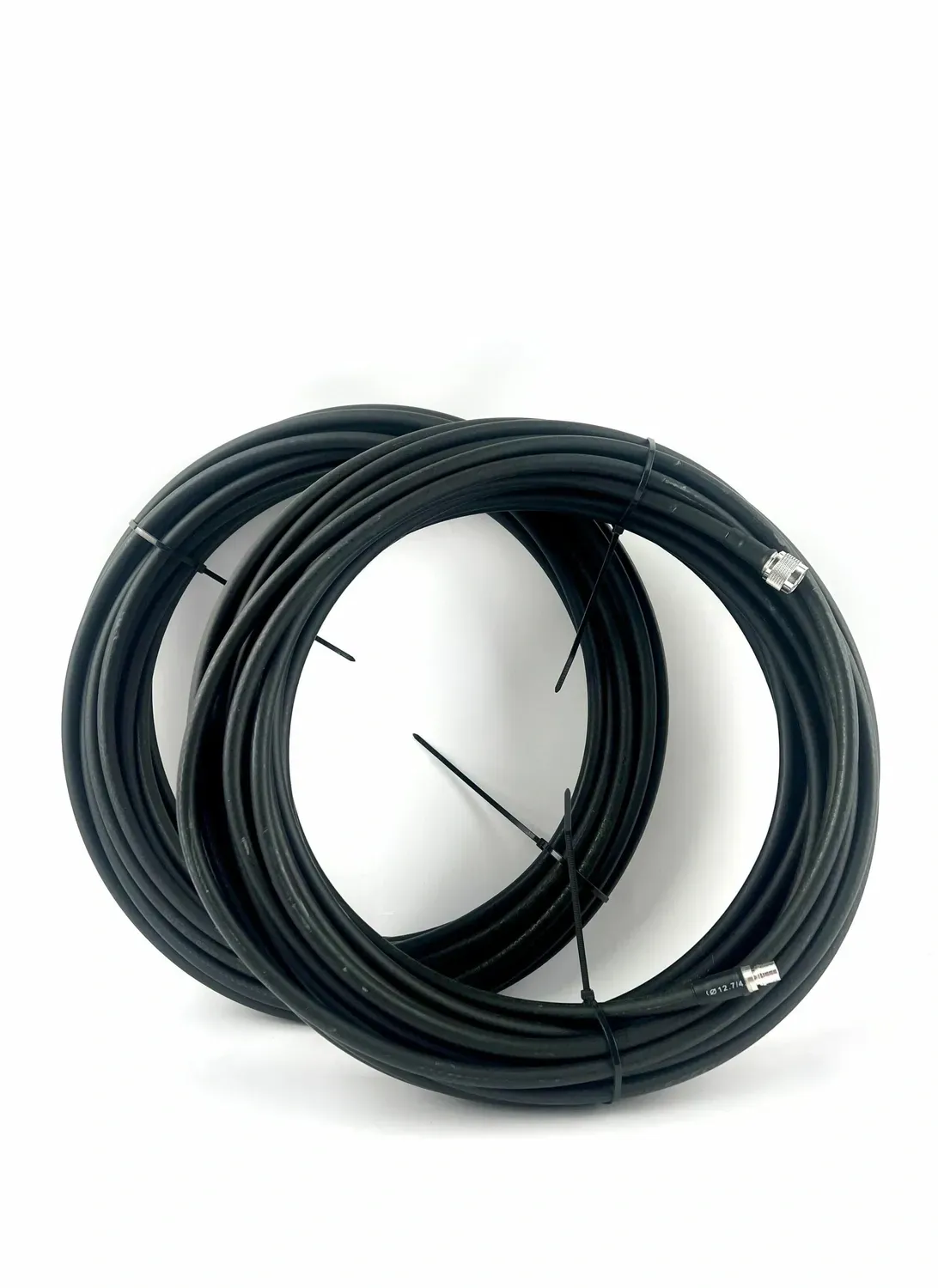
WL-400 QMA Tactical Cable Set – N-Type (2x20m): Professional Extension for UAVs and Electronic Warfare
In modern warfare, the operator's position is a priority target for enemy electronic reconnaissance (SW) assets. The WL-400 Coaxial Cable Set (2 pcs., 20 meters) with QMA – N-Type connectors is designed to ensure maximum crew safety. A 20-meter range allows the operator to remain in a protected shelter (dugout or basement), while moving the antennas a safe distance from the control center without losing signal quality.
Why is the Italian CAVEL WL-400 cable the standard on the front lines?
At a range of 20 meters, the quality of the conductor determines whether you get a clear picture and stable control or lose the drone due to signal attenuation. The CAVEL WL 400 (Italy) cable belongs to the premium Low Loss segment. Thanks to the use of a patented gas-foamed dielectric, it provides the lowest loss factor in its class.
- Low Loss: The signal travels 20 meters with minimal decibel loss, which is critical for 2.4/5.8 GHz systems and non-standard control frequencies.
- High Frequency Range: Stable operation at frequencies up to 11 GHz covers all tactical communication and UAV control bands.
- Ideal SWR (no more than 1.25): Prevents transmitter overheating and amplifier (booster) failure due to reflected power.
- Field Resistance: The cable jacket is resistant to UV radiation, moisture and extreme temperatures, maintaining flexibility even in extreme cold.
Technical and tactical characteristics of the kit
The kit consists of two identical cable assemblies 20 meters long, which allows for the operation of MIMO antennas (video link + control) at a considerable distance from the operator.
| Parameter | Characteristic value |
|---|---|
| Cable type | WL-400 (Low Loss,group G37) |
| Manufacturer | CAVEL (Italy) |
| Wave impedance | 50 Ohm ±2 |
| Frequency range | 0 - 11 GHz |
| VSWR | ≤ 1.25 |
| Outer diameter | 10.3 mm |
| Connector type | QMA (Male) & N-Type (Male) |
| Length of one cable | 20 meters |
| Quantity in the kit | 2 pcs. (total 40 meters) |
Compatibility and standards of the G37 group
The WL-400 cable is a full-fledged and more reliable Italian analogue of popular cables. It is fully compatible with equipment using G37 cables:
- LMR-400 (industry standard);
- RG-8/U (improved version);
- SLL-400 / SLL-400-SFP / SLL-400-FP.
Expert advice: The "CAVEL WL 400 ZHN 50 Ohm LOW LOSS"" marking on the cable is your guarantee of quality. In combat conditions, where life depends on the stability of the connection, choosing an Italian brand with 50 years of history is the only right decision.
Advantages of the QMA tactical connection — N-Type
- QMA Quick-Lock: Allows you to connect the cable to the remote control or control station in one movement without screwing the threads, which is critical when quickly changing positions.
- N-Type (Male): Classic, reliable connector for connecting to most tactical antennas and amplifiers (AvengeAngel, Alientech, etc.).
- Tightness: Professional crimping using adhesive-based heat shrink guarantees stable operation during rain and snow.
Conclusion: Reliability, tested by time and battle
WL-400 QMA Cable Set - N-Type 20m (2 pcs.) — this is professional equipment for aerial reconnaissance, communications units and electronic warfare. By choosing Italian quality CAVEL, you get a stable signal where other cables hopelessly fade.
FAQ: Six questions about the WL-400 kit (20 m, QMA - N-Type)
1. Why was the WL-400 cable chosen for a distance of 20 meters?
20 meters is the limit where a regular thin cable loses up to half its power. WL-400 is a Low Loss cable with a thick central core. It provides minimal attenuation, allowing the remote control to "see" drone as clearly as if the antenna was nearby.
2. Why are two 20-meter cables included?
For MIMO 2x2 technology to work. Most modern antennas use two channels simultaneously. A pair of identical cables guarantees the same signal characteristics, which is critical for the stability of video and control.
3. What is the logic behind using QMA and N-Type connectors?
This is a hybrid solution: QMA (Quick-lock) connects to the remote control with one “click” (speed), and N-Type (powerful thread) screws onto the external antenna, ensuring complete tightness in the wind and rain.
4. Operator safety when extending the antenna 20 meters?
This is a matter of survival. A distance of 20 meters allows the pilot to remain in cover while the antenna is working outside. The enemy is targeting the antenna, so this distance saves lives in case of a retaliatory strike against the signal source.
5. Physical features of the WL-400 cable installation?
The cable is thick (10 mm) and rigid. It should not be bent too much (the bending radius should be at least 15 cm). At the same time, it is very durable: the sheath is not affected by the sun and friction, which makes it durable in field conditions.
6. Should amplifiers (boosters) be used?
At 20 meters, there are always losses. For maximum range, it's recommended to install active boosters directly in front of the antennas. In this setup, the WL-400 cable acts as an ideal highway for transmitting the signal from the remote control to the amplifier.
FAQ: Six questions about the WL-400 kit (20 m, QMA - N-Type)
1. Why was the WL-400 cable chosen for a distance of 20 meters?
20 meters is the limit where a regular thin cable loses up to half its power. WL-400 is a Low Loss cable with a thick central core. It provides minimal attenuation, allowing the remote control to “see” the drone as clearly as if the antenna was right next to it.
2. Why are two 20-meter cables included?
For 2x2 MIMO technology to work. Most modern antennas use two channels simultaneously. A pair of identical cables guarantees the same signal characteristics, which is critical for the stability of video and control.
3. What is the logic behind using QMA and N-Type connectors?
This is a hybrid solution: QMA (Quick-lock) connects to the remote control with one "click" (speed), and N-Type (strong thread) screws onto the external antenna, ensuring complete tightness in wind and rain.
4. Operator safety when extending the antenna 20 meters?
This is a matter of survival. A distance of 20 meters allows the pilot to remain in cover while the antenna is operating outside. The enemy is taking bearings on the antenna, so this distance saves lives during a retaliatory strike against the signal source.
5. Physical features of laying the WL-400 cable?
The cable is thick (10 mm) and rigid. It should not be bent too much (the bending radius should be at least 15 cm). At the same time, it is very durable: the sheath is not afraid of the sun and friction, which makes it durable in field conditions.
6. Do I need to use amplifiers (boosters)?
At 20 meters, there is always a loss. For maximum range, it is recommended to install active boosters directly in front of the antennas. In this connection, the WL-400 cable acts as an ideal highway for transmitting a signal from the remote control to the amplifier.
FAQ: Six questions about the WL-400 kit (20 m, QMA - N-Type)
1. Why was the WL-400 cable chosen for a distance of 20 meters?
20 meters is the limit where a regular thin cable loses up to half its power. WL-400 is a Low Loss cable with a thick central core. It provides minimal attenuation, allowing the remote control to “see” the drone as clearly as if the antenna was right next to it.
2. Why are two 20-meter cables included?
For 2x2 MIMO technology to work. Most modern antennas use two channels simultaneously. A pair of identical cables guarantees the same signal characteristics, which is critical for the stability of video and control.
3. What is the logic behind using QMA and N-Type connectors?
This is a hybrid solution: QMA (Quick-lock) connects to the remote control with one "click" (speed), and N-Type (strong thread) screws onto the external antenna, ensuring complete tightness in wind and rain.
4. Operator safety when extending the antenna 20 meters?
This is a matter of survival. A distance of 20 meters allows the pilot to remain in cover while the antenna is operating outside. The enemy is taking bearings on the antenna, so this distance saves lives during a retaliatory strike against the signal source.
5. Physical features of laying the WL-400 cable?
The cable is thick (10 mm) and rigid. It should not be bent too much (the bending radius should be at least 15 cm). At the same time, it is very durable: the sheath is not afraid of the sun and friction, which makes it durable in field conditions.
6. Do I need to use amplifiers (boosters)?
At 20 meters, there is always a loss. For maximum range, it is recommended to install active boosters directly in front of the antennas. In this connection, the WL-400 cable acts as an ideal highway for transmitting a signal from the remote control to the amplifier.
It provides minimal attenuation, allowing the remote control to "see" the drone as clearly as if the antenna was right next to it.
2. Why are two 20-meter cables included?
For MIMO 2x2 technology to work. Most modern antennas use two channels simultaneously. A pair of identical cables guarantees the same signal characteristics, which is critical for the stability of video and control.
3. What is the logic behind using QMA and N-Type connectors?
This is a hybrid solution: QMA (Quick-lock) connects to the remote control with one "click" (speed), and the N-Type (powerful thread) screws onto the external antenna, ensuring complete tightness in the wind and rain.
4. Operator safety when extending the antenna 20 meters?
This is a matter of survival. A distance of 20 meters allows the pilot to remain in cover while the antenna is working outside. The enemy is targeting the antenna, so this distance saves lives in case of a retaliatory strike against the signal source.
5. Physical features of the WL-400 cable laying?
The cable is thick (10 mm) and rigid. It must not be bent too much (bending radius of at least 15 cm). At the same time, it is very durable: the jacket is resistant to sun and friction, making it durable in field conditions.
6. Do I need to use amplifiers (boosters)?
At 20 meters, there is always loss. For maximum range, it is recommended to install active boosters directly in front of the antennas. In this connection, the WL-400 cable acts as an ideal highway for transmitting the signal from the remote control to the amplifier.
It provides minimal attenuation, allowing the remote control to "see" the drone as clearly as if the antenna was right next to it.
2. Why are two 20-meter cables included?
For MIMO 2x2 technology to work. Most modern antennas use two channels simultaneously. A pair of identical cables guarantees the same signal characteristics, which is critical for the stability of video and control.
3. What is the logic behind using QMA and N-Type connectors?
This is a hybrid solution: QMA (Quick-lock) connects to the remote control with one "click" (speed), and the N-Type (powerful thread) screws onto the external antenna, ensuring complete tightness in the wind and rain.
4. Operator safety when extending the antenna 20 meters?
This is a matter of survival. A distance of 20 meters allows the pilot to remain in cover while the antenna is working outside. The enemy is targeting the antenna, so this distance saves lives in case of a retaliatory strike against the signal source.
5. Physical features of the WL-400 cable laying?
The cable is thick (10 mm) and rigid. It must not be bent too much (bending radius of at least 15 cm). At the same time, it is very durable: the jacket is resistant to sun and friction, making it durable in field conditions.
6. Do I need to use amplifiers (boosters)?
At 20 meters, there is always loss. For maximum range, it is recommended to install active boosters directly in front of the antennas. In this connection, the WL-400 cable acts as an ideal highway for transmitting the signal from the remote control to the amplifier.
and the N-Type (heavy-duty thread) screws onto the external antenna, ensuring complete tightness in the wind and rain.
4. Operator safety when extending the antenna 20 meters?
This is a matter of survival. A distance of 20 meters allows the pilot to remain in cover while the antenna is working outside. The enemy is targeting the antenna, so this distance saves lives in case of a retaliatory strike against the signal source.
5. Physical features of the WL-400 cable laying?
The cable is thick (10 mm) and rigid. It must not be bent too much (the bending radius must be at least 15 cm). At the same time, it is very durable: the jacket is resistant to sun and friction, making it durable in field conditions.
6. Do I need to use amplifiers (boosters)?
At 20 meters, there is always loss. For maximum range, it is recommended to install active boosters directly in front of the antennas. In this connection, the WL-400 cable acts as an ideal highway for transmitting the signal from the remote control to the amplifier.
and the N-Type (heavy-duty thread) screws onto the external antenna, ensuring complete tightness in the wind and rain.
4. Operator safety when extending the antenna 20 meters?
This is a matter of survival. A distance of 20 meters allows the pilot to remain in cover while the antenna is working outside. The enemy is targeting the antenna, so this distance saves lives in case of a retaliatory strike against the signal source.
5. Physical features of the WL-400 cable laying?
The cable is thick (10 mm) and rigid. It must not be bent too much (the bending radius must be at least 15 cm). At the same time, it is very durable: the jacket is resistant to sun and friction, making it durable in field conditions.
6. Do I need to use amplifiers (boosters)?
At 20 meters, there is always loss. For maximum range, it is recommended to install active boosters directly in front of the antennas. In this connection, the WL-400 cable acts as an ideal highway for transmitting the signal from the remote control to the amplifier.