


|
Quantity
|
Out of stock
|
||
|
|
|||
|
|
|||
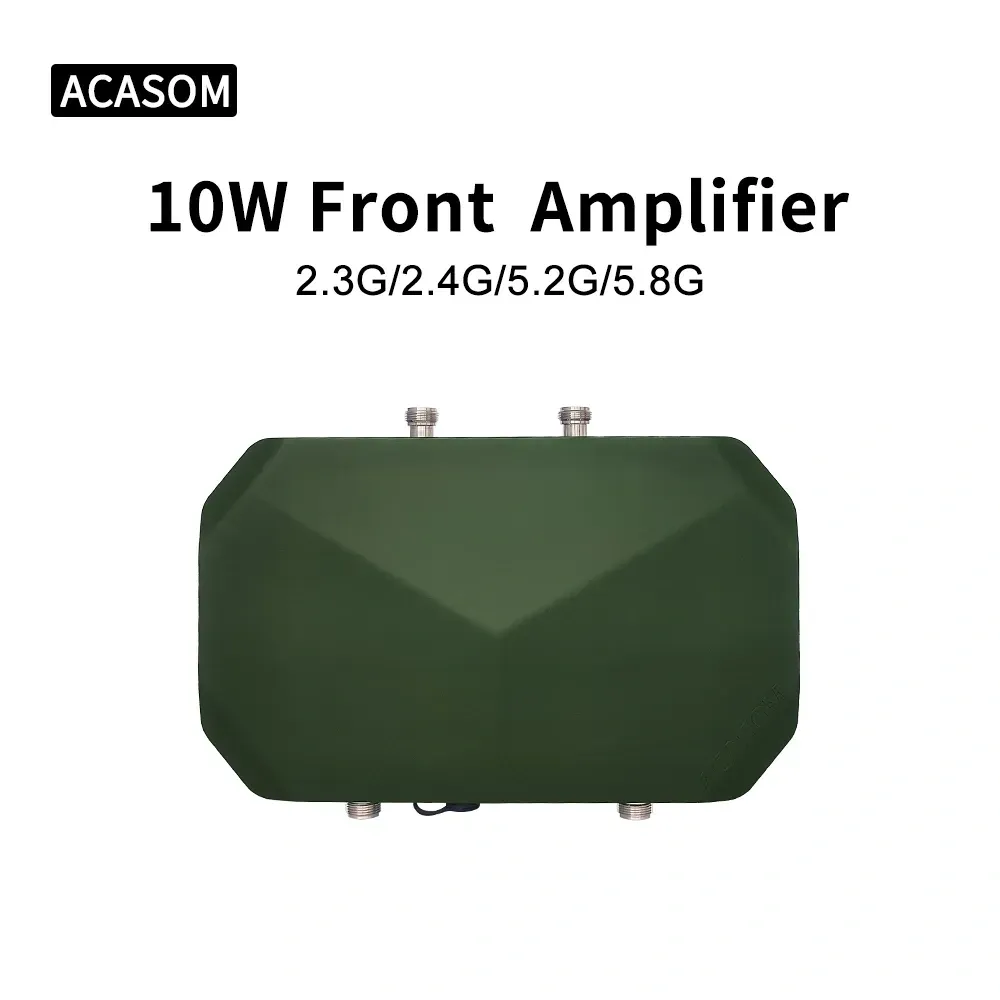
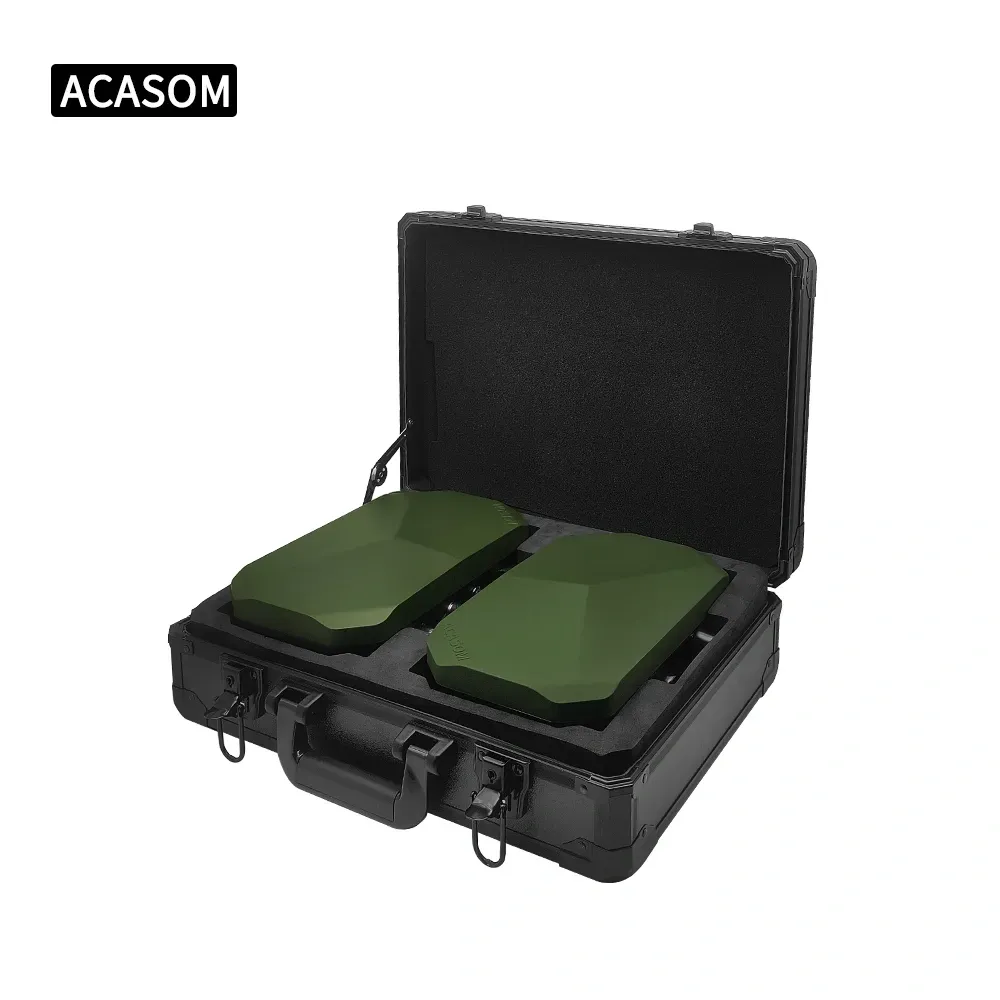
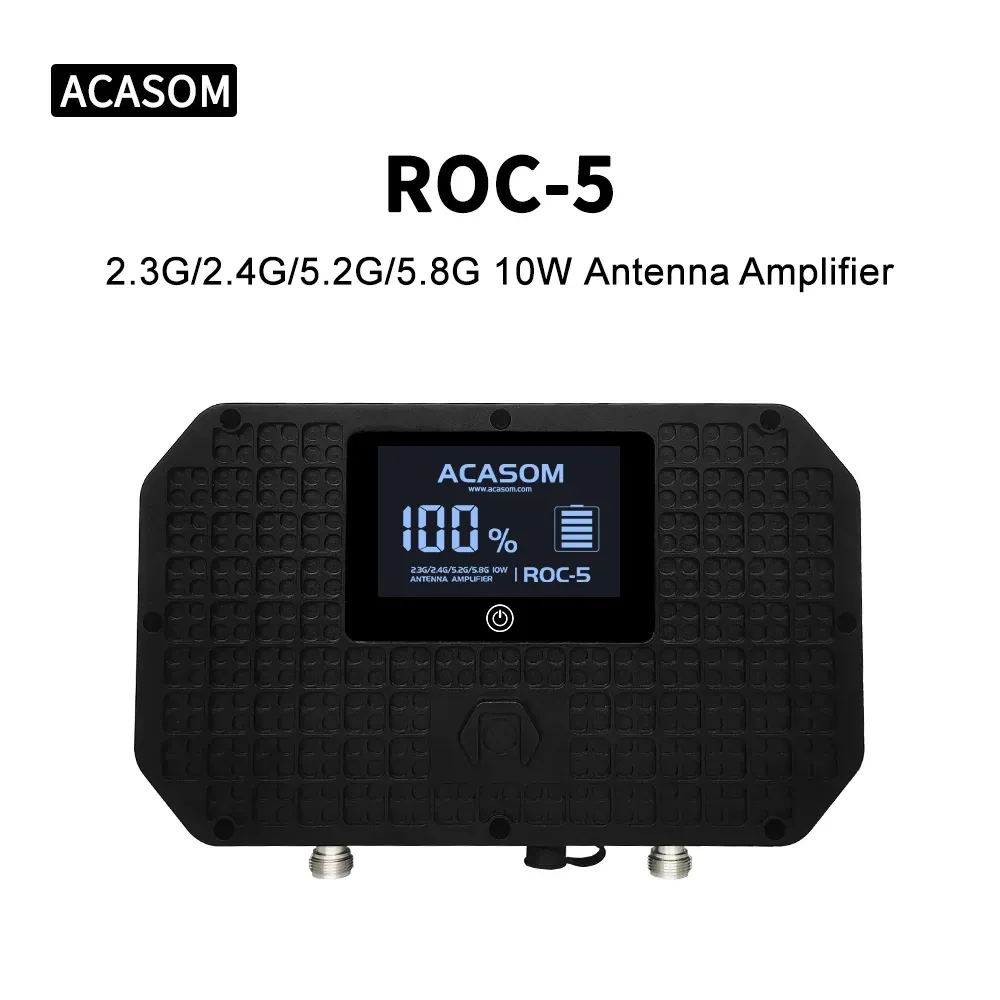
ACASOM ROC-5 Remote Antenna (20W): Tri-Band Gain and Autonomy with Solar Panel
In modern warfare, where communication stability determines mission success, ACASOM ROC-5 becomes an indispensable tool for aerial reconnaissance units. This is not just an antenna, but an intelligent active amplifier with a power of 10-20 W, equipped with its own solar generation. The system is designed to ensure maximum flight range of UAVs (DJI Mavic 3, Matrice, Autel, FPV) and effectively counter enemy electronic warfare systems.
Why ACASOM ROC-5 — The choice of professional UAV crews?
The ROC-5 model operates in an extended frequency spectrum, allowing the operator to maneuver between bands to bypass jamming. The presence of a built-in battery and a folding solar panel makes the system completely independent of stationary power sources and generators at positions.
- Tri-band flexibility: Support for 2.4G, 5.2G, and 5.8G frequencies allows you to work with any digital data transmission protocols.
- Ultimate power: An output power of 40 dBm (10 W per channel) provides "penetration" Electronic warfare zones at distances inaccessible to standard equipment.
- Energy independence: A complete 50 W solar panel allows you to maintain the system's charge directly at the takeoff point.
- Response speed: A TX/RX switching delay of less than 1 μs ensures perfect controllability without video stream delays.
Technical and tactical characteristics (TTX) of ACASOM ROC-5
The system is housed in an anodized aluminum case according to the IP68 standard, which guarantees operability in the most extreme weather conditions.
| Parameter | Characteristic value |
|---|---|
| Operating ranges | 2.3-2.4 GHz; 2.4-2.5 GHz; 5.0-5.3 GHz; 5.7-5.9 GHz |
| Maximum Power | 40 dBm (10W P1dB) |
| Receive Gain (RX) | 12 - 16 dB (depending on configuration) |
| Transmit Gain (TX) | 19 - 20 dB |
| Noise Figure | < 2.2 dB (high sensitivity) |
| Battery capacity | 6000 mAh (16.8 V) |
| Battery life | Up to 4 hours (without recharging from the panel) |
| Case protection class | IP68 (completely sealed) |
| Case material | Aluminum alloy |
Autonomous power supply system: 50 W solar panel
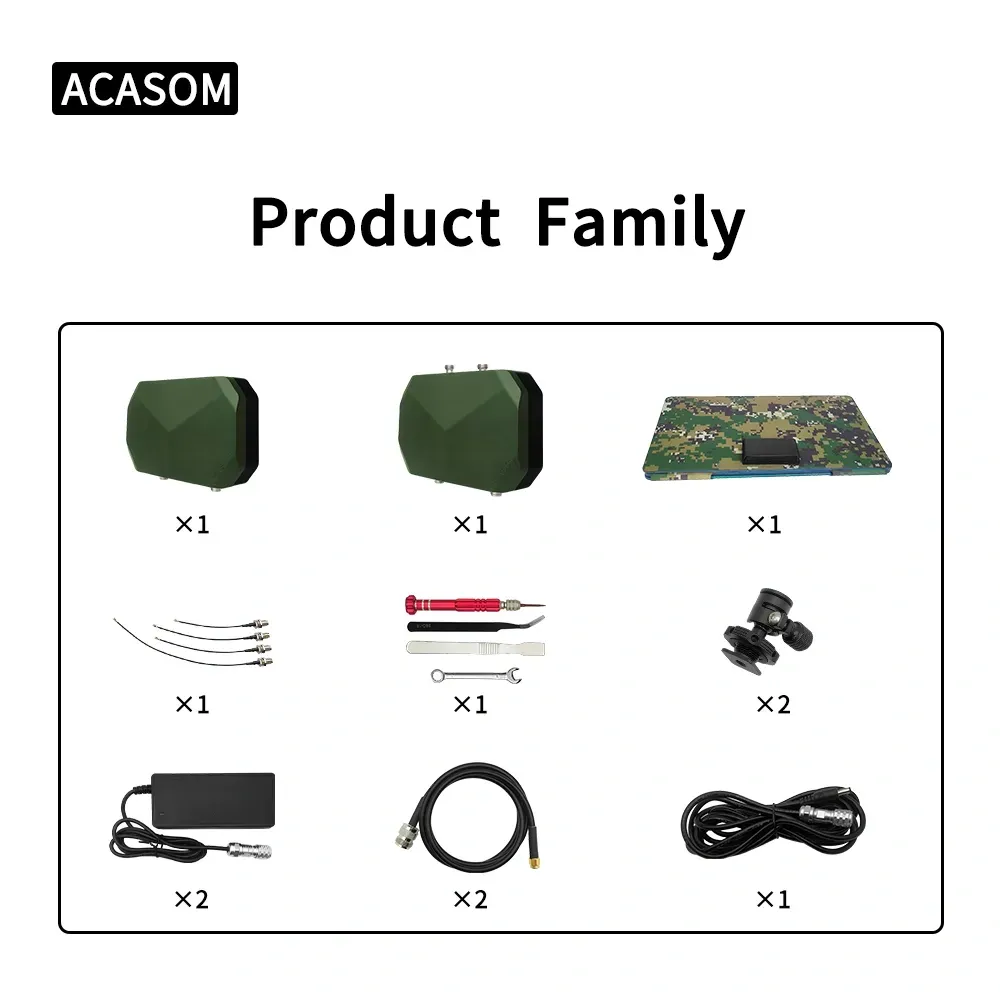
A unique feature of the kit is the folding solar a panel that turns the antenna into an autonomous station. This is critical for teams operating away from main supply lines.
Solar panel features:
- High efficiency: An efficiency of at least 20% ensures a stable current even in partly cloudy conditions.
- Multiport: USB PD3.0, Type-C QC3.0 and DC 5.5×2.1 allow you to charge remote controls, tablets and radios.
- Mobility: The panel weighs only 1.23 kg, and the folding design allows you to easily attach it to a backpack or armored vehicle.
- Power: A maximum voltage of 18 V at a current of 3 A ensures rapid recovery of the antenna's built-in battery.
Structural and tactical Advantages
ACASOM ROC-5 is designed for long combat missions. Every element of the system is aimed at endurance and efficiency.
- Operating temperatures: From -30°C to +70°C. The aluminum housing effectively dissipates heat from powerful amplifiers, preventing overheating.
- Low noise figure (<2.2 dB): Allows you to isolate a weak signal from a drone over long distances in interference-rich airwaves.
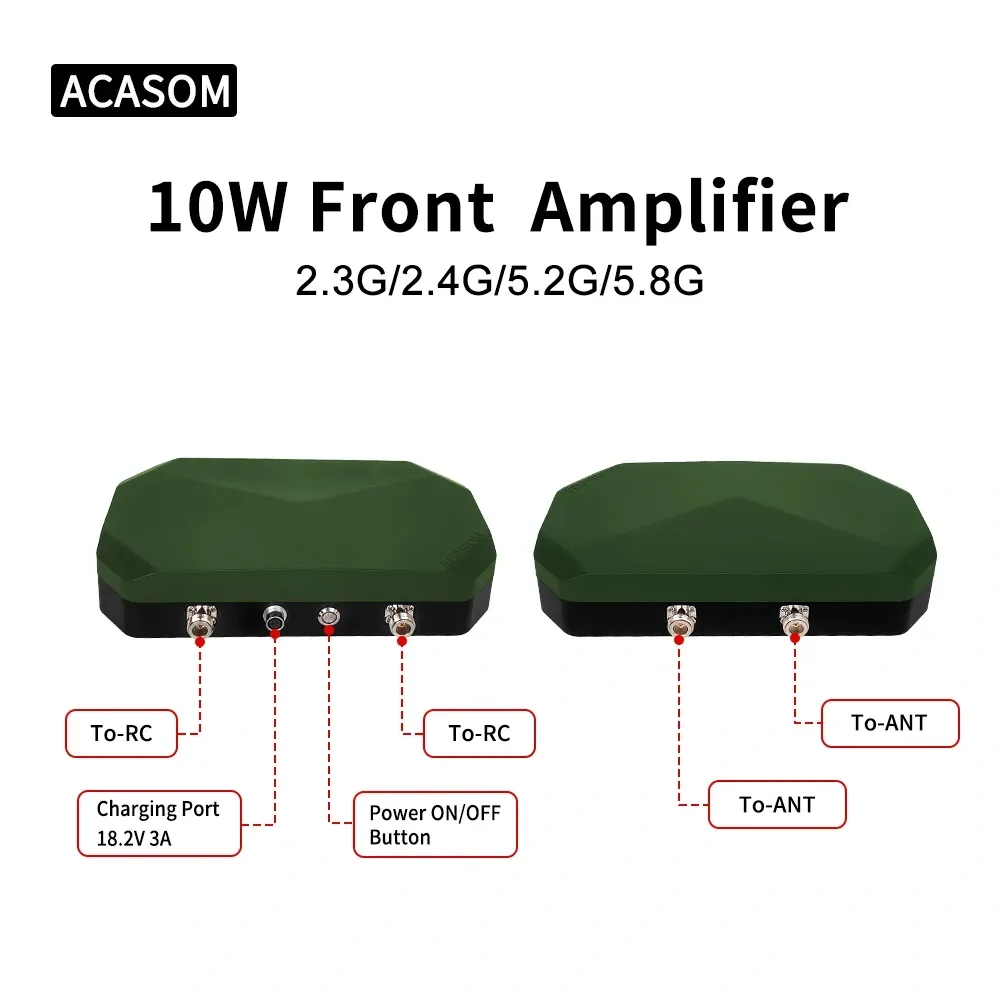
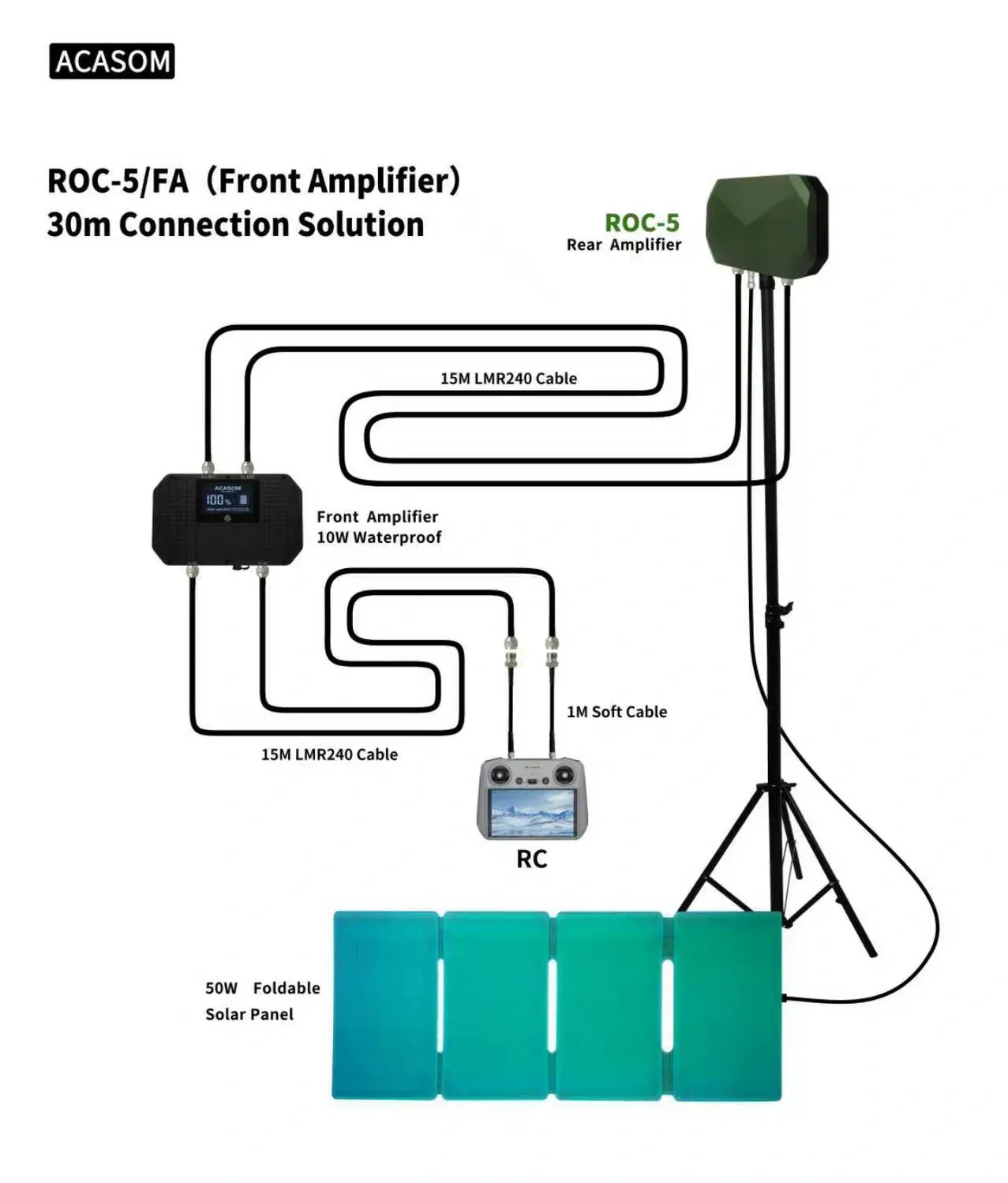
- Professional switching: The use of IP68 aviation connectors and N-Female connectors eliminates signal loss at the connections.
- Weight and dimensions: Weighing up to 1.7 kg, the antenna can be easily mounted on a mast or tripod in minutes.
Expert advice: To achieve maximum communication range in an EW zone, use the 5.2 GHz frequency range (5150-5350 MHz) - it often remains less noisy than the standard 2.4 GHz.
Conclusion: Technological dominance in your hands
The ACASOM ROC-5 (20W) remote antenna with a solar panel is the ultimate solution for autonomous aerial reconnaissance. The combination of high output power, IP68 protection and solar charging capability makes this system the best choice for units operating on the front lines and behind enemy lines.
Tactical FAQ: Six questions about the ROC 5 active antenna
1. Why does the name "ROC 5" mean a new level of stability?
This is the fifth generation of gain systems. The main difference of the ROC 5 is its ultra-fast switches between receive and transmit modes. This minimizes data loss. Video will not "crash" into squares at a critical moment, even if the enemy's electronic warfare is very active.
2. What does 20 watts of power give in practice?
Power 20 watts (43 dBm) is your "electronic battering ram". ROC 5 amplifies the remote control signal tens of times, allowing you to literally "burn" a path through forest belts or buildings. It's like a powerful studio light where others use a phone flashlight.
3. Why does ROC 5 support the 5.2 GHz frequency?
The 5.2 GHz range is your "hidden fairway". Most scanners look for interference on 2.4 or 5.8 GHz. Operating at 5.2 GHz with 20 watts of power, you remain less visible to radio reconnaissance and bypass interference from civilian Wi-Fi networks.
4. How does the remote antenna design save the operator?
Using cables (10-20 m), you move the radiation point to a roof or mast, while you yourself remain in shelter. Since 20 watts is a strong signal, the enemy can hit the source. Thanks to the remote antenna, the hit will be on the antenna, and you will be safe in shelter studying anatomy.
5.Will the EcoFlow Delta 2 battery last all day?
Yes, and there's still enough power to charge the ASUS TUF. The ROC 5 consumes about 80-100 W. Your EcoFlow station will last 10+ hours of continuous operation. This is complete autonomy in the field for an entire shift.
6. The main danger when working with this kind of power?
Risk of backwave (high SWR). If the cable is damaged or poorly screwed in, 20 W of power will return to the amplifier and burn it out in seconds. Check the connectors as strictly as the sterility of instruments in a clinic. First the antenna - then the power supply.