


|
Quantity
|
Out of stock
|
||
|
|
|||
|
|
|||
VRX 1.2GHz RX1264 SPI Video Receiver: The Ultimate Solution for Ultra-Long-Range FPV Missions
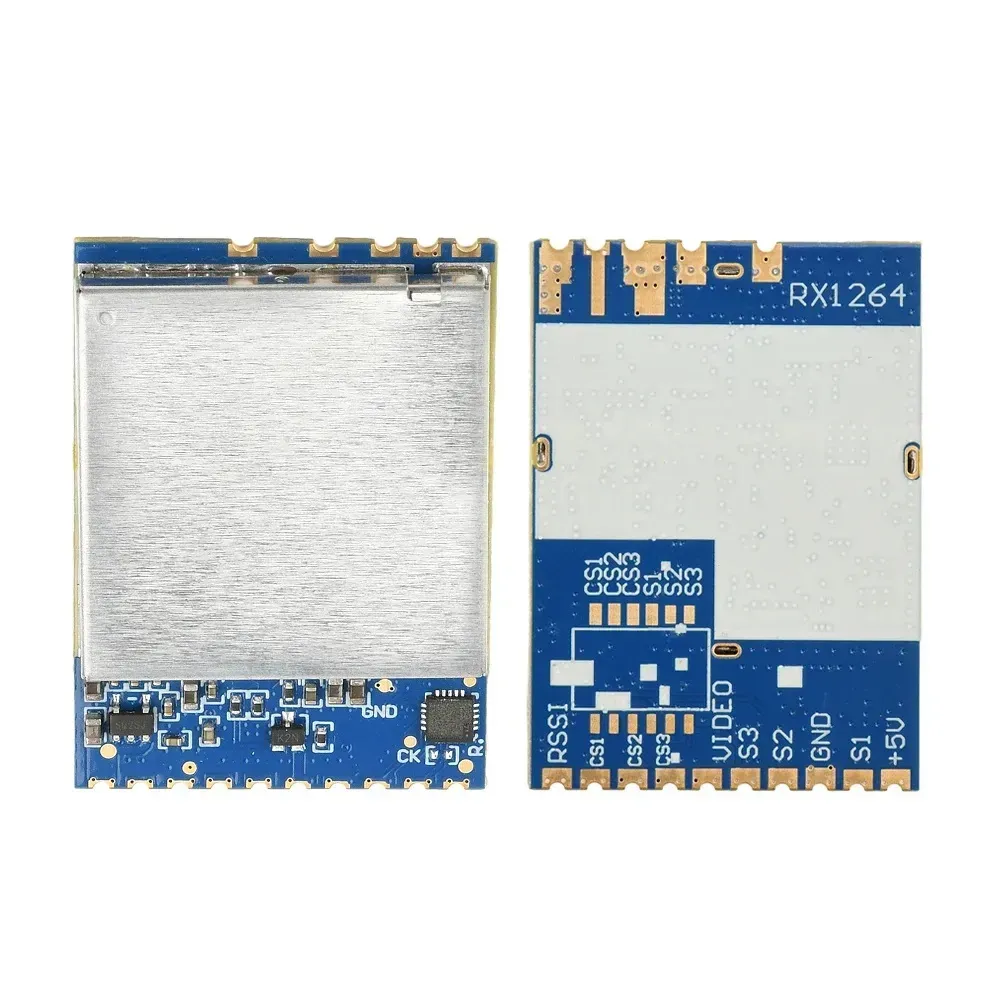
In today's aerial reconnaissance and strike environments, standard 5.8 GHz frequencies are often vulnerable to interference and terrain. The VRX 1.2GHz RX1264 SPI Video Receiver is a professional-grade module operating in the low-frequency range, providing stable video communications where other systems fail. With phenomenal sensitivity of -95 dBm and support for control via SPI, this receiver is the number one choice for building long-range ground stations and repeaters.
Using the 1.2 GHz band allows the signal to significantly more effectively bypass obstacles (trees, buildings, hills), which is critical for operators working from closed positions or at extreme distances.
Key advantages of the RX1264 SPI receiver
The RX1264 model is designed for integration into complex control systems where every unit of sensitivity and frequency stability are crucial.
- Extreme sensitivity (-95 dBm): Allows you to receive a clear analog signal even at a significant distance from the UAV or when using low-power transmitters for stealth.
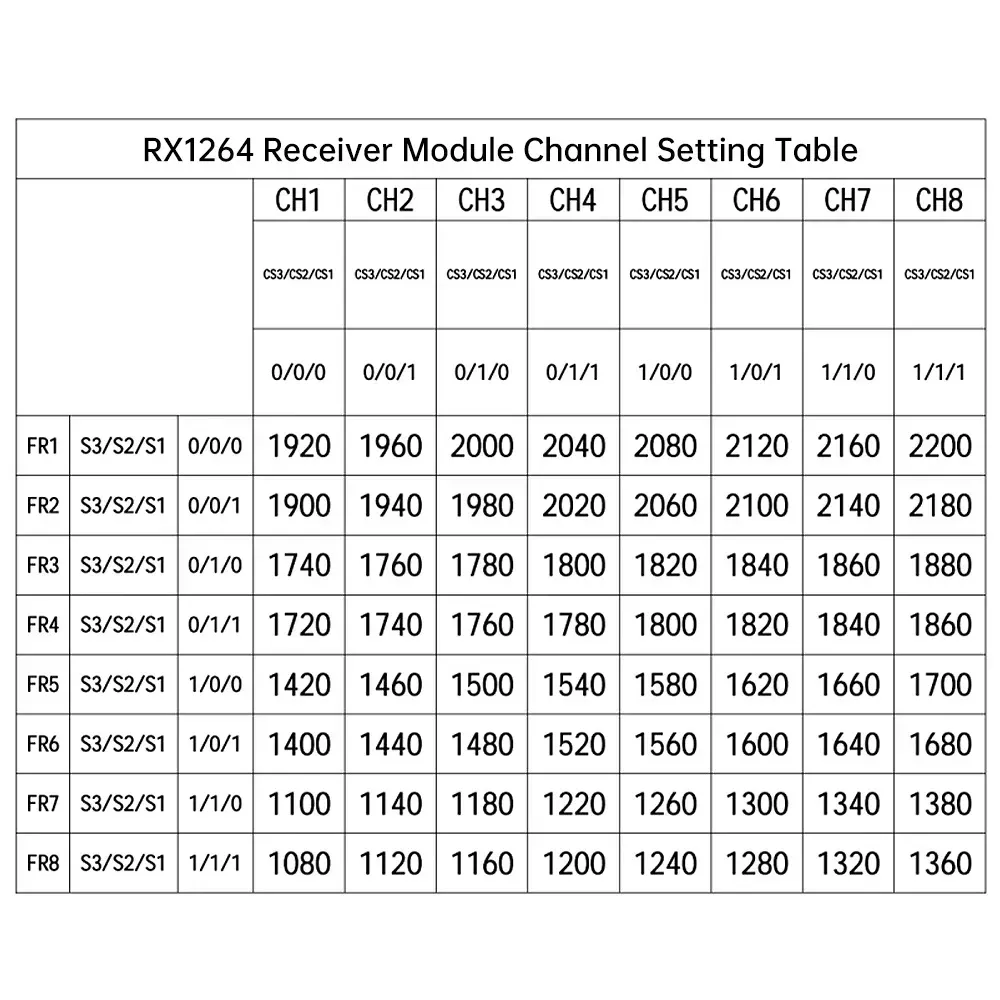
- Wide frequency range (1080-2200 MHz): Flexibility in channel selection allows you to quickly switch to “clean” frequencies that are not jammed by other communication systems or enemy electronic warfare.
- SPI Control: Digital frequency control directly from the flight controller or custom ground station allows for precise tuning without frequency drift.
- Module Form Factor (PCB): Compact, lightweight design is ideal for custom engineering builds and installation inside rugged ground station cases.
VRX 1.2GHz RX1264 Technical and Tactical Characteristics
The RX1264 parameters are optimized to ensure maximum range for aerial reconnaissance and kamikaze attack drones.
| Parameter | Characteristic value |
|---|---|
| Model | RX1264 |
| Device type | Video receiver (VRX) |
| Frequency range | 1080 - 2200 MHz (Ultra-wide) |
| Sensitivity | -95 dBm (High-precision reception) |
| Control interface | SPI (Digital Control) |
| Signal Type | Analog Video |
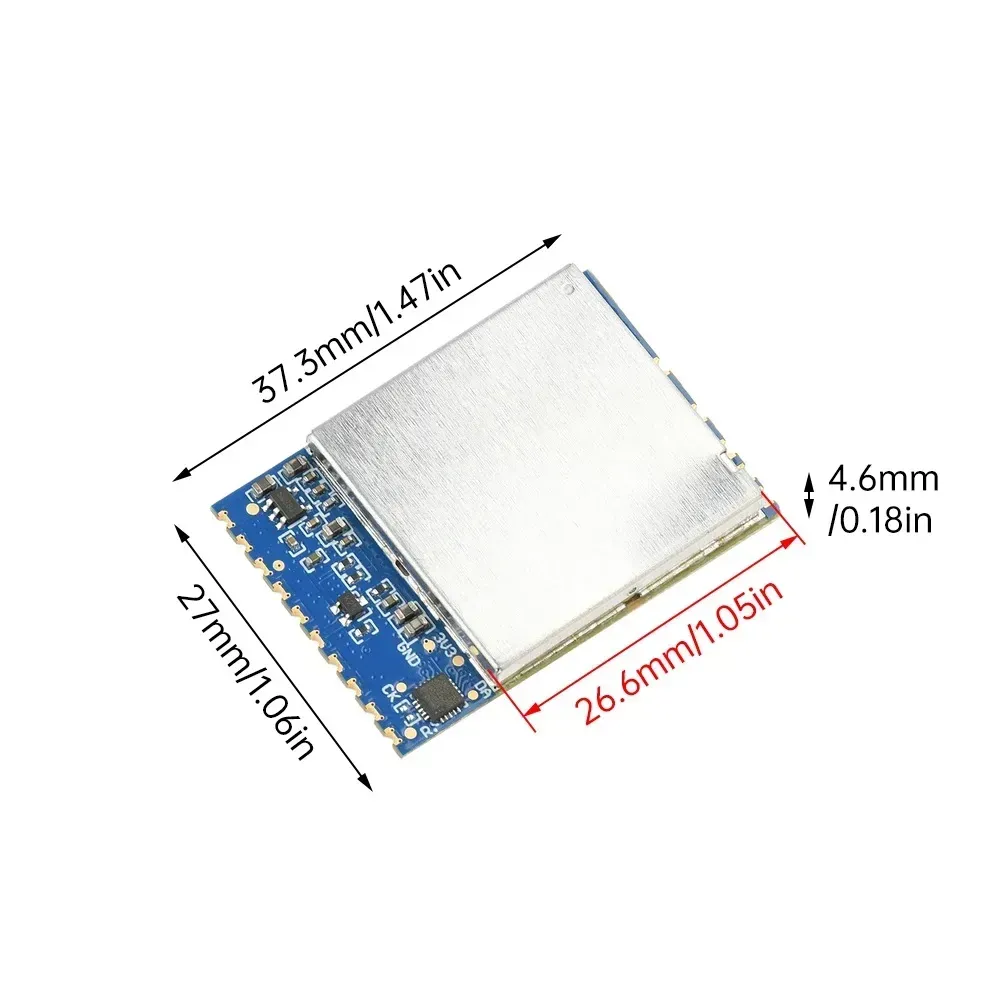
| Form Factor | Module (PCB) |
| Purpose | Long Range FPV Systems |
Tactical Combat Applications
The RX1264 1.2 GHz receiver gives the pilot a decisive advantage in scenarios where 5.8 GHz systems are ineffective:
- Operation "beyond the horizon": Due to its longer wavelength, the 1.2 GHz signal better bypasses obstacles, allowing drone to fly behind buildings or hills without completely losing video.
- Electronic warfare resistance: Most trench electronic warfare systems are designed to suppress 2.4/5.8 GHz. Using 1.2 GHz allows you to “pierce” interference and complete the mission.
- Deep reconnaissance: When using directional antennas (Yagi or Patch), the RX1264 provides a stable picture at distances of 20-40 km or more.
Engineer's tip: Due to the high sensitivity of the module, it is recommended to use high-quality filters (Low Pass / Notch Filter) and shielding to avoid interference from 868/915 MHz control systems operating nearby.
Why do professional crews choose the RX1264 SPI?
Unlike household receivers, the RX1264 SPI offers the level of reliability and control needed for specialized tasks:
- Signal stability: No flickering and quick image recovery during short-term connection losses.
- Flexibility of settings: With SPI, you can implement frequency autoscan or quick channel switching using buttons on the ground station.
- Minimal weight: Just a few grams, which helps keep the pilot's portable monitors light.
Conclusion: Your range advantage
The VRX 1.2GHz RX1264 SPI Video Receiver is the heart of your long-range video communications system. Its wide frequency range and high sensitivity ensure you get critical visual information even in the most challenging conditions. When range and stability matter, choose the RX1264.
Tactical FAQ: VRX 1.2GHz RX1264 SPI Video Receiver
1. What is the main purpose of the RX1264 SPI module?
A receiver for the 1.2 GHz band, providing communication over long distances. The SPI interface allows you to control frequencies programmatically. This is your digital "hub" for getting a stable picture from deep behind enemy lines.
2. The device's operating frequency range?
Range from 1080 MHz to 2200 MHz. You can flexibly bypass interference by choosing the cleanest frequency. It's like choosing the right filter on your camera for the perfect shot in difficult conditions.
3. What does -95 dBm sensitivity provide?
-95 dBm sensitivity allows you to “hear” the drone even when the signal almost disappears. This is your guarantee of control at extreme distances.
4. Advantages of the 1.2 GHz frequency in “green” areas?
This frequency perfectly bypasses obstacles and passes through foliage and buildings. Where 5.8 GHz produces a “black screen”, 1.2 GHz continues to transmit video. Ideal for flights in forest belts and urban areas.
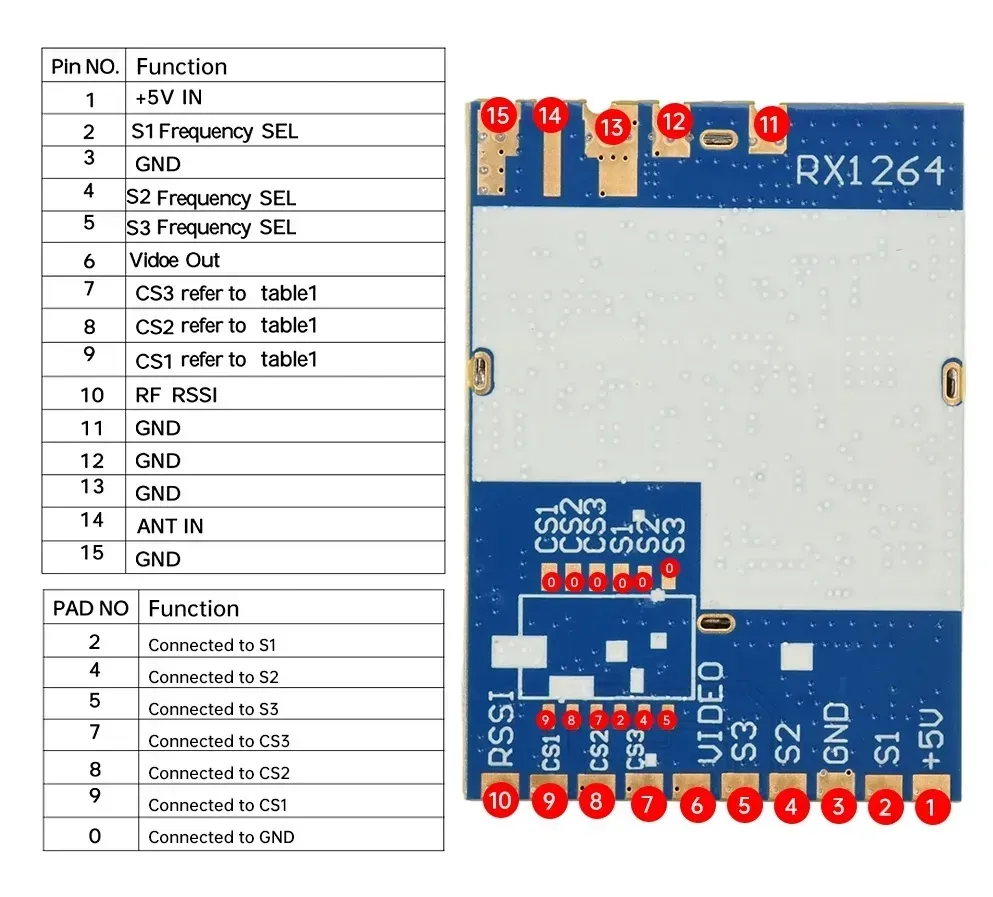
5. Connection and power requirements?
Connects to the ground via SPI. Power supply - Strictly 5V without interference. Your ASUS TUF laptop will help you configure the module management software, and EcoFlow Delta 2 will provide stable energy for long standby.
6.Choosing antennas for this VRX?
For distance records, use patch antennas or Yagi antennas. For circular flights, use circularly polarized clover antennas. The right antenna is like the right focus: without it, even the best sensor is useless.