


|
Quantity
|
Out of stock
|
||
|
|
|||
|
|
|||
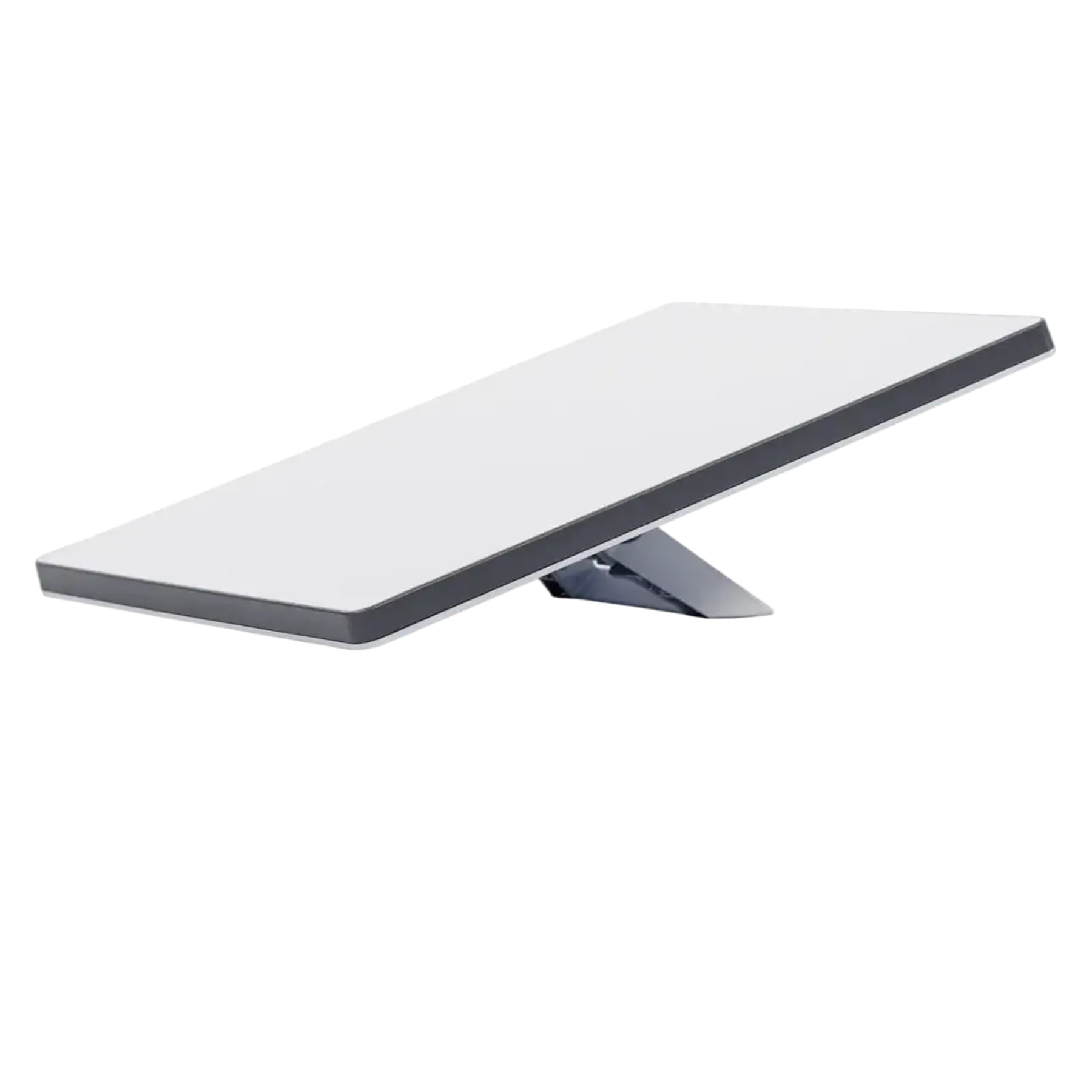
Starlink Internet Satellite 3rd generation: A new standard for operational communications for tactical missions
Reliable data transmission is the foundation of modern network-centric warfare. Starlink Internet Satellite 3rd generation (V4) is not just a product line update, but a technological leap designed to ensure stable internet in the most extreme conditions. The absence of moving mechanisms, an increased protection class, and integrated ports make this terminal the undisputed choice for command and control centers, field communication nodes, and mobile groups.
Why is Starlink 3rd generation (V4) more effective than previous versions on the front lines?
Military experts know: reliability is determined by simplicity. In the 3rd generation, Starlink abandoned motors in favor of a fixed internal antenna. This not only simplified deployment but also significantly increased resistance to mechanical damage and wind gusts.
- Speed without compromise: Download speeds of up to 300 Mbps allow you to simultaneously work with multiple UAV streams in high quality.
- Minimum latency (Ping): A latency of ~20 ms is critical for drone control and real-time video conferencing.
- Wi-Fi 6 (802.11ax): The new generation of wireless communication provides a stable connection for up to 235 devices simultaneously without packet loss.
Starlink 3gen (V4) Specifications
For communications specialists planning the network architecture in their unit, we provide detailed performance characteristics of the device:
| Feature | Parameters |
|---|---|
| Antenna Type | Internal (fixed) |
| Speed (Download/Upload) | Up to 300 Mbps / Up to 40 Mbps |
| Ping (Latency) | ~20 ms |
| Wi-Fi Standards | 802.11 a/b/g/n/ac/ax (Wi-Fi 6) |
| Antenna Configuration | Tri-band 4x4 MU-MIMO |
| Ethernet Ports | 2 LAN ports (with latches and removable cover) |
| Protection Class | IP56 (waterproof, dustproof) |
| Operating Temperature | From -30 °C to 50 °C |
| Weight set | 5.7 kg |
Key features for operation in a combat zone
1. Direct Ethernet connection without adapters
Unlike the 2nd generation, Starlink 3gen has two built-in Ethernet LAN ports directly in the router. This allows you to connect equipment (laptops, cameras, electronic warfare/SIGINT systems) directly via a cable. The ports are equipped with latches and protected by a removable cover, which prevents accidental cable disconnection and dirt ingress.
2. Weather resistance (IP56)
The terminal and router housing is designed for operation in extreme temperatures. The IP56 protection class guarantees uninterrupted operation during heavy rainfall or in highly dusty conditions. Dimensions of 43.4 x 298.6 x 120.4 mm allow for compact placement of the terminal on the roof of a car or in a camouflaged position.
3. Coverage and Scalability (Mesh)
Tri-band Wi-Fi covers an area of up to 297 m², providing communication to an entire command post or large shelter. The modem is fully compatible with Starlink mesh nodes of the 2nd and 3rd generations (up to 3 nodes), allowing you to create a single seamless network.
Important note: The Starlink 3gen system is only compatible with original Starlink mesh nodes. The use of third-party Mesh systems is not directly supported, which guarantees maximum security of data transmission protocols (WPA2).
Advantages of deploying Starlink 3gen
- LED indication: The LED indicator on the front panel allows you to instantly check the power status and operation of the router.
- Energy efficiency: The modem is optimized for operation from portable charging stations, which is critical in the absence of a fixed network.
- Network capacity: The ability to simultaneously connect up to 235 devices without signal degradation.
Conclusion
Starlink Internet Satellite 3gen is a durable and high-speed communications tool designed for missions where there is no room for error. An improved antenna, built-in ports, and IP56 protection make it ideal for the modern theater of operations.
Starlink Gen 3 (V4/Standard) Frequently Asked Questions
How is Starlink Gen 3 fundamentally different from the previous generation (Gen 2)?
The main difference is the lack of motors for automatic rotation. Gen 3 has a fixed design with a built-in kickstand. The new antenna also features a wider field of view (110°), increased protection level (IP67), and comes with a router that supports Wi-Fi 6.
Does the new router have Ethernet ports for a wired connection?
Yes, and this is a huge advantage. Unlike Gen 2, which required a separate adapter, the Gen 3 router is equipped with two built-in Ethernet ports. This allows you to connect PCs, consoles, or mesh systems directly without additional costs.
How difficult is it to set up an antenna without built-in motors?
Setup remains simple. The Gen 3 antenna is less demanding in terms of directional accuracy thanks to its wide field of view. The orientation process is done manually through the Starlink app: you simply rotate the panel on the stand, following the prompts on the smartphone screen.
What are the benefits of the new Gen 3 router with Wi-Fi 6 support?
The new router is now tri-band and supports the 802.11ax standard. This ensures stable operation with a large number of devices (up to 235 simultaneously), an increased coverage radius and higher speed within the network.
What is the power consumption of Starlink Gen 3 and is it suitable for a charging station?
Average consumption is 75-100 W (slightly higher than Gen 2). This is due to the more powerful transmitter. It is recommended to use an AC port with a power output of at least 300W to power the charging station.
Can Starlink Gen 3 be used in heavy rain or snow?
Yes, the device is protected to the IP67 standard.The Snow Melt system automatically heats the antenna surface to melt snow and ice, ensuring uninterrupted communication even in severe snowstorms.