






|
Quantity
|
Out of stock
|
||
|
|
|||
|
|
|||
10-Meter Telescopic Mast for UAV Antennas and Repeaters: Reliable Communication at Maximum Range
In modern combat, control of the radio airwaves and signal stability determine the success of an operation. A 10-meter telescopic mast is a critical element of the unmanned aerial vehicle (UAV) and ground robotic system (GRS) ecosystem. It allows remote antennas and repeaters to be raised above obstacles (trees, hills, buildings), significantly expanding the radio horizon and ensuring stable drone control over long distances.
Why is a 10-meter height critical for UAV and GRS operators?
Raising the antenna to a height of 10 meters allows one to overcome “dead zones” and minimize the influence of terrain on signal quality. This is especially important when working with repeaters, where every additional meter of altitude directly affects the flight range of a kamikaze or reconnaissance drone.
- Increased range: Raising the antenna allows operation beyond line of sight.
- Signal stability: Reduced interference from the ground and vegetation.
- Versatility: Suitable for installing dipole, panel antennas and digital repeaters.
Technical characteristics and combat stability
The mast is made of high-quality aluminum, which provides an ideal balance between strength and weight. It is designed for intensive use in the field under various weather conditions.
| Parameter | Value |
|---|---|
| Material | Aluminum (high corrosion resistance) |
| Maximum height | 10 meters |
| Height when folded 190 cm (convenient for transportation in a car) | |
| Weight of the set | 11,5 kg |
| Wind load | Up to 20 m/s (when properly secured with guy wires) |
| Coating | Powder coating (matte) |
| Color | Khaki (camouflage) |
Design features and camouflage
The mast has a matte khaki powder coating, which is critical for camouflaging its positions. The paint does not create glare in the sun and reliably protects the metal from the aggressive effects of moisture and dirt. The telescopic design allows for quick elevation adjustments to suit tactical requirements.
Ready-to-Use Configuration: Rapid Deployment
Time to deploy a position in combat conditions is critical to crew safety. Our mast comes complete, allowing two people to set it up in minutes.
The kit includes:
- Telescopic mast: Basic structure with secure section locks.
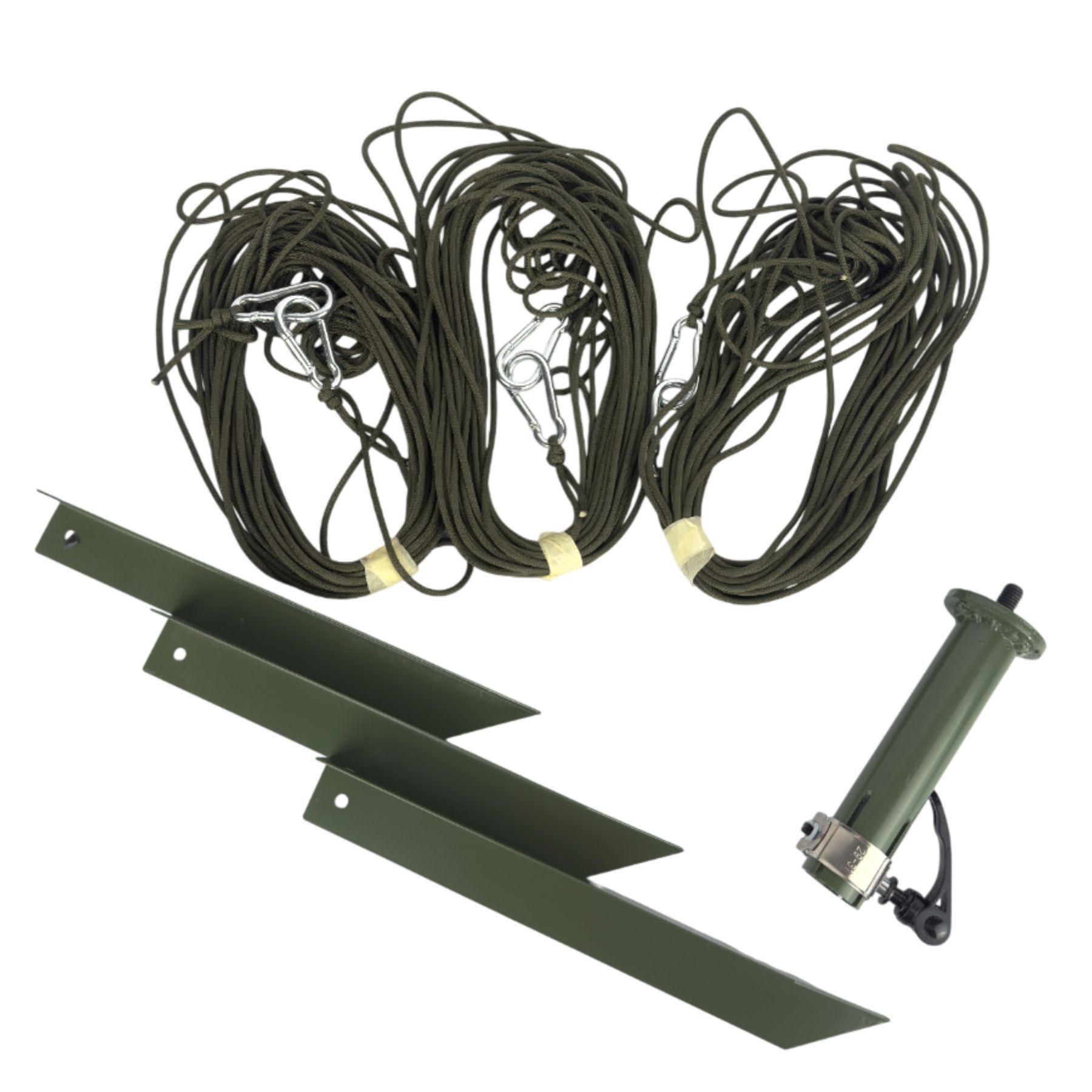
- Guy rope set: 3 strong cables providing stability in strong winds.
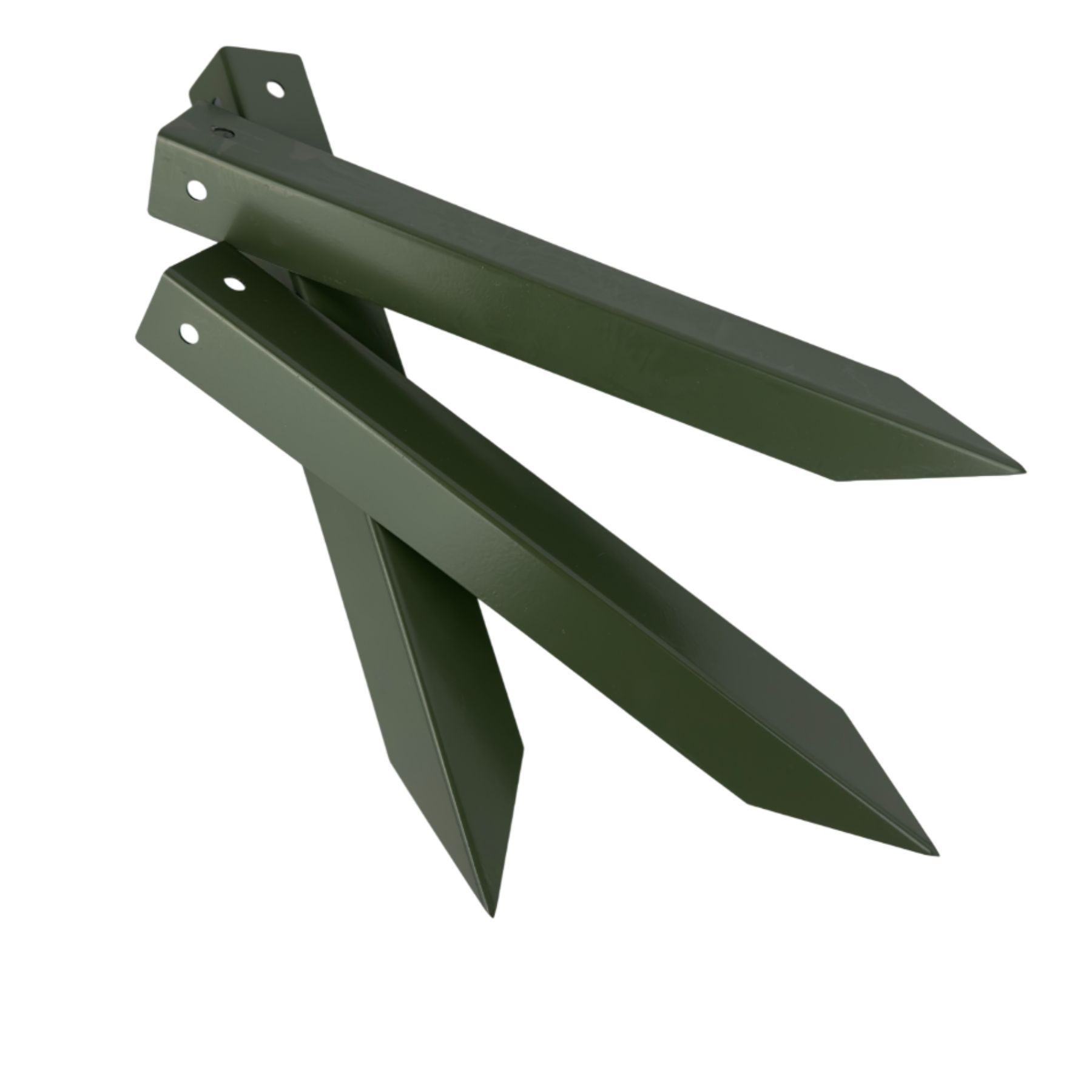
- Pegs (3 pcs): For securely fixing the guy ropes in the ground.
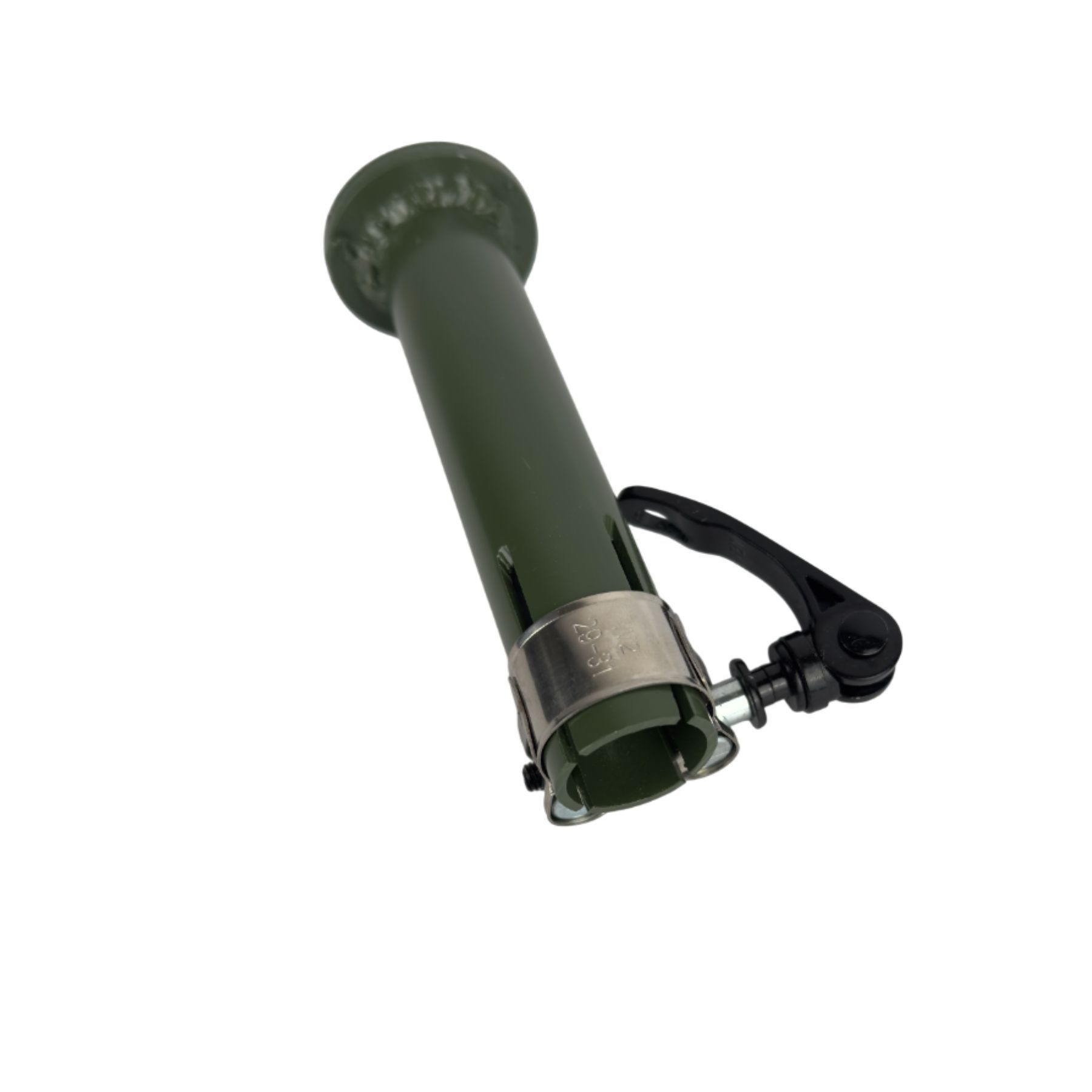
- Universal top: Equipped with a 3/8 thread, which is standard for most remote antennas and repeater mounts.
Applications in combat missions
- For aerial reconnaissance units: Raising control and video reception antennas to increase the range UAV operation.
- For FPV drone operators: Raising the antenna to a height for operation due to obstacles and difficult terrain.
- For GRUs (ground robots): Providing communication with robotic platforms at distances where conventional antennas lose signal.
- Communication relay: Installing radio bridges and amplifying the radio signal in low-lying areas.
Important: Weighing only 11.5 kg and compact dimensions when folded (190 cm), the mast easily fits into a regular pickup truck or SUV without interfering with other equipment.
Conclusion
The 10-meter aluminum mast is a professional tool that improves the efficiency of electronic warfare and reconnaissance units. Its robust design, wind resistance of up to 20 m/s, and well-thought-out configuration make it a basic element for building a remote control system for unmanned systems.
Frequently Asked Questions about the 10-meter mast for antennas and repeaters
How does a 10-meter mast height affect the communication range with UAVs?
Raising the antenna by 10 meters significantly expands the radio horizon and places the equipment beyond obstacles (trees, hills). This is critical for operation at distances of 20-40 km+, as it allows you to avoid the influence of the Fresnel zone and ensure direct visibility.
Which mast design is better for field conditions: telescopic or sectional?
For mobile UAV groups, a telescopic aluminum mast is optimal. It allows you to deploy the system in a matter of minutes. Sectional masts are more reliable for stationary objects, but telescopic ones win in terms of assembly/disassembly speed.
How is mast stability ensured in strong winds?
For a 10-meter structure, it is necessary to use a guy system (2 or 3 tiers), fixed at an angle of 120°; or 90° to the ground. This prevents the antenna from swinging in wind gusts over 15 m/s.
What is the maximum weight of equipment that can be attached to the top of the mast?
Typically, for mobile 10-meter masts, the recommended load is from 2 to 5 kg. This is enough to install Yagi antennas, collinear antennas, or a lightweight repeater with cable assembly.
How much time and people are needed for complete deployment of the system?
A trained crew of two people can deploy the mast with guys and equipment in 10-15 minutes. In critical situations, one person can handle it in 20-25 minutes.
Does the mast need grounding and how to protect equipment from lightning?
Yes, a tall metal structure is an ideal lightning rod.It is necessary to use a grounding loop and install a lightning arrester in the cable gap to protect expensive electronics from static and lightning.