


|
Quantity
|
Out of stock
|
||
|
|
|||
|
|
|||
Wired Repeater for Boosting and Extending Cables: Tactical Solution 10W (2.4/5.8 GHz)
In modern electronic warfare, the distance between the UAV operator and the emitting antenna is a key factor for survival. However, the use of long coaxial cables inevitably leads to critical signal attenuation, which reduces flight range and video quality. Wired Tactical Repeater is professional equipment designed to compensate for cable losses and re-amplify the signal, allowing the pilot to operate from deep cover without loss of power.
Why do you need a repeater in remote aviation systems?
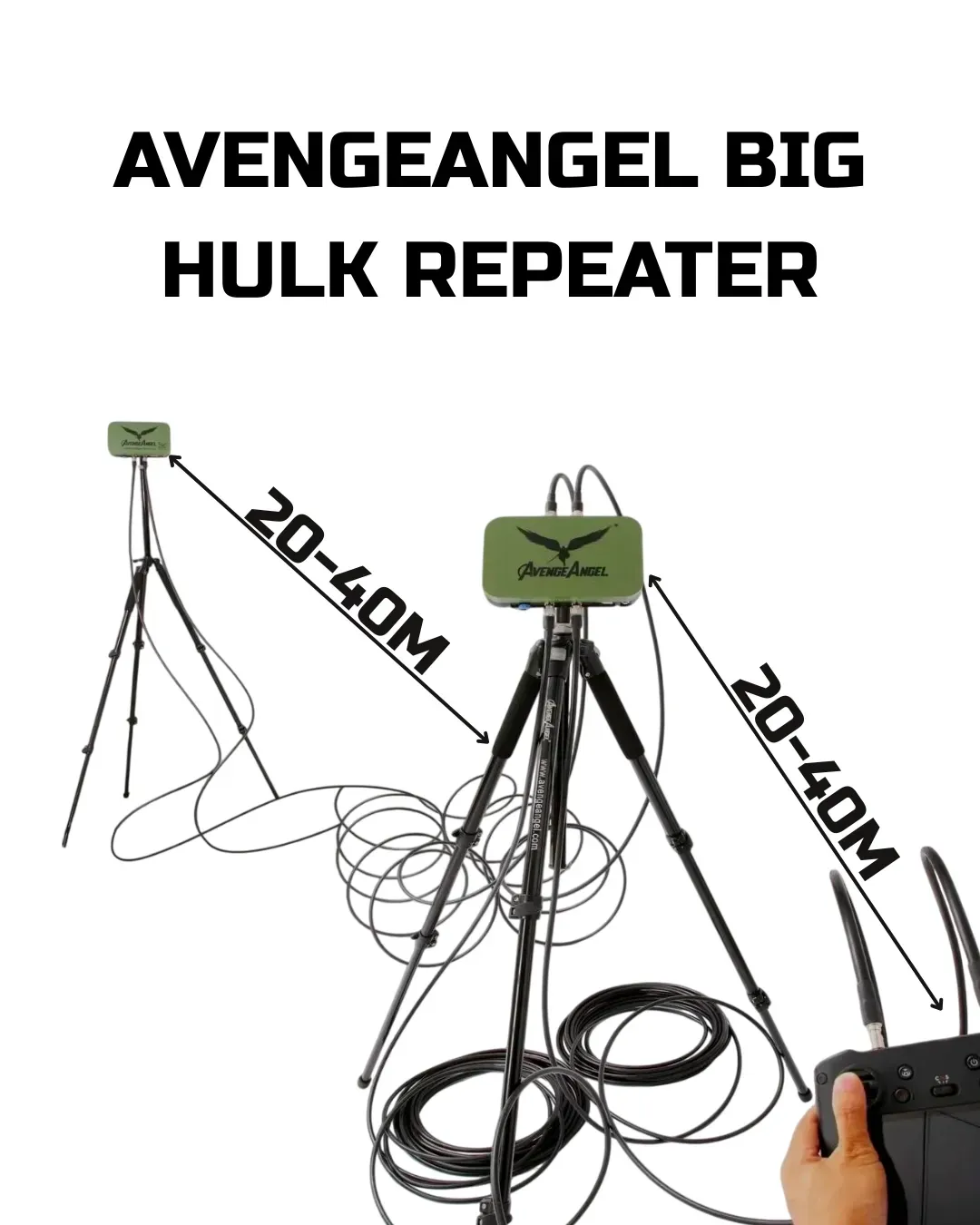
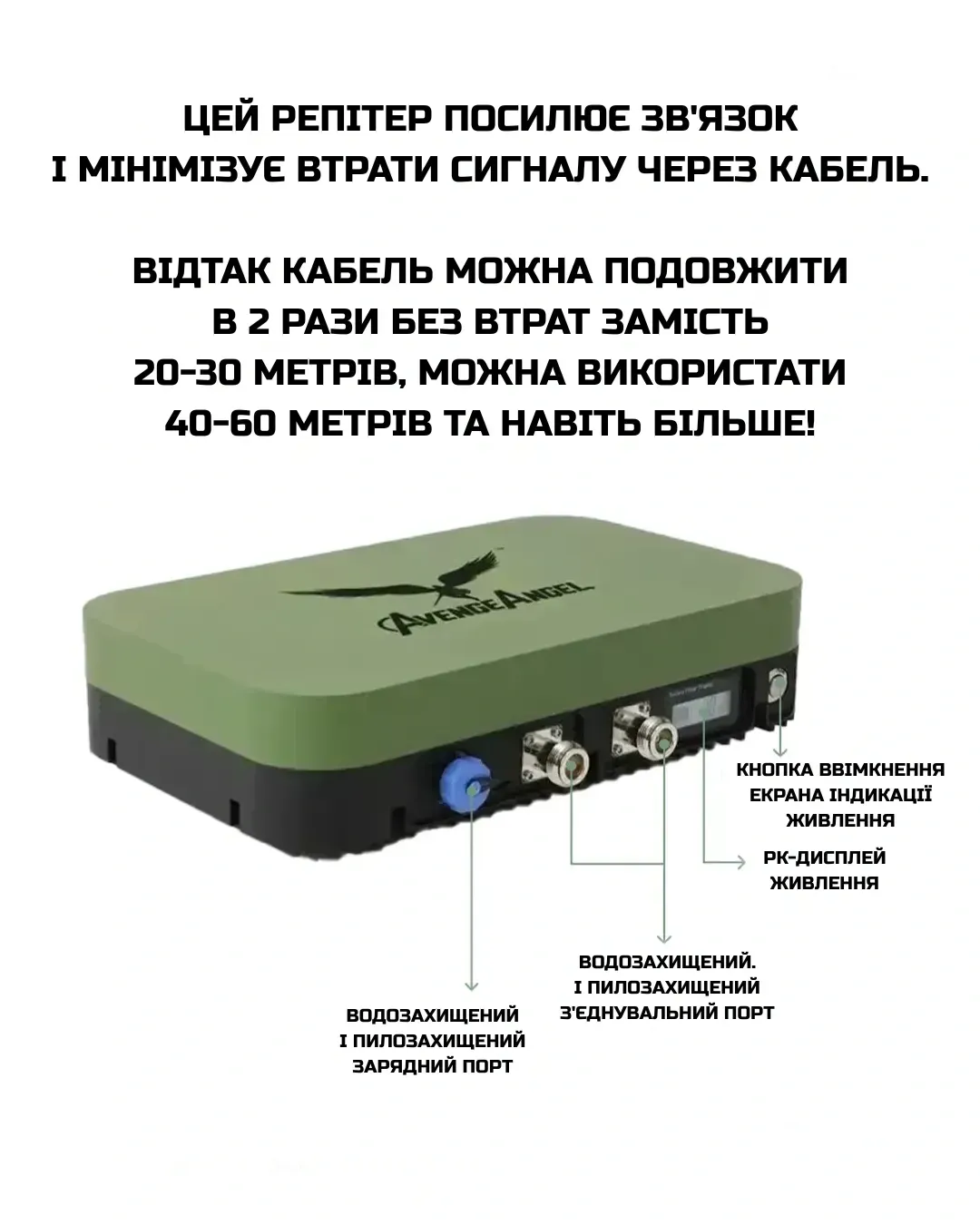
The main task of the repeater is to "pick up" signal from the control panel, passed through a long cable, and amplify it to a nominal 10 W before feeding it to the main antenna. This allows antennas to be placed on masts or roofs at a distance of up to 100 meters from the operator.
- Maximum safety: The operator can be in a dugout or armored vehicle while the antenna is operating at a remote point.
- Complete loss suppression: Active amplification compensates for signal degradation in coaxial lines.
- Electronic warfare breakthrough: High output power allows you to confidently maintain a link in the areas of action of enemy suppression systems.
- Versatility: Works in two of the most popular ranges - 2.4 GHz and 5.8 GHz.
Technical and tactical characteristics (TTX)
The device is designed according to military reliability standards, has a sealed case and a powerful component base.
| Parameter | Characteristic value |
|---|---|
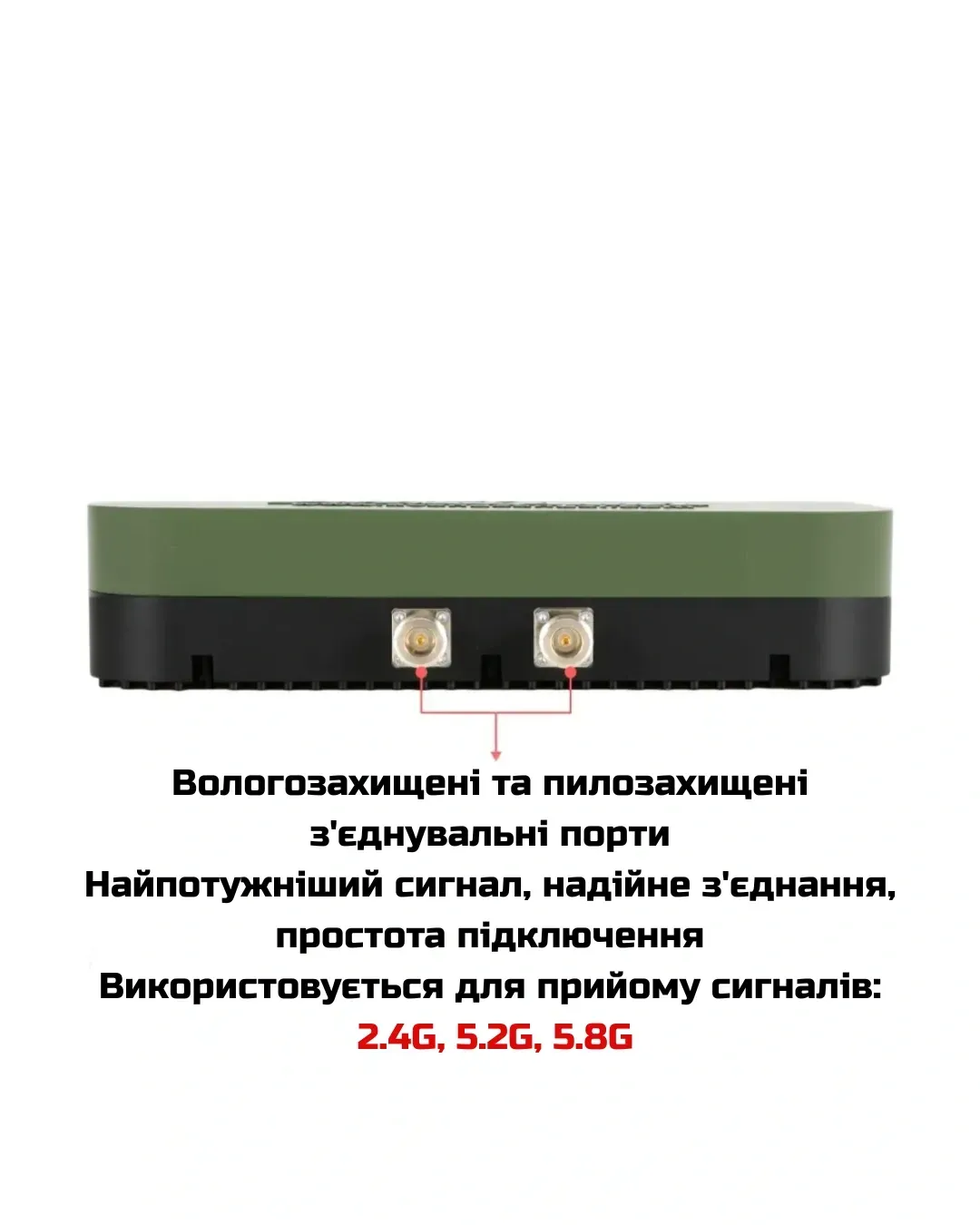
| Operating frequencies | 2.4 GHz / 5.8 GHz (Dual-Band) |
| Amplifier Power | 10 W (40 dBm) per band |
| Range | Up to 20 km (depending on antenna type) |
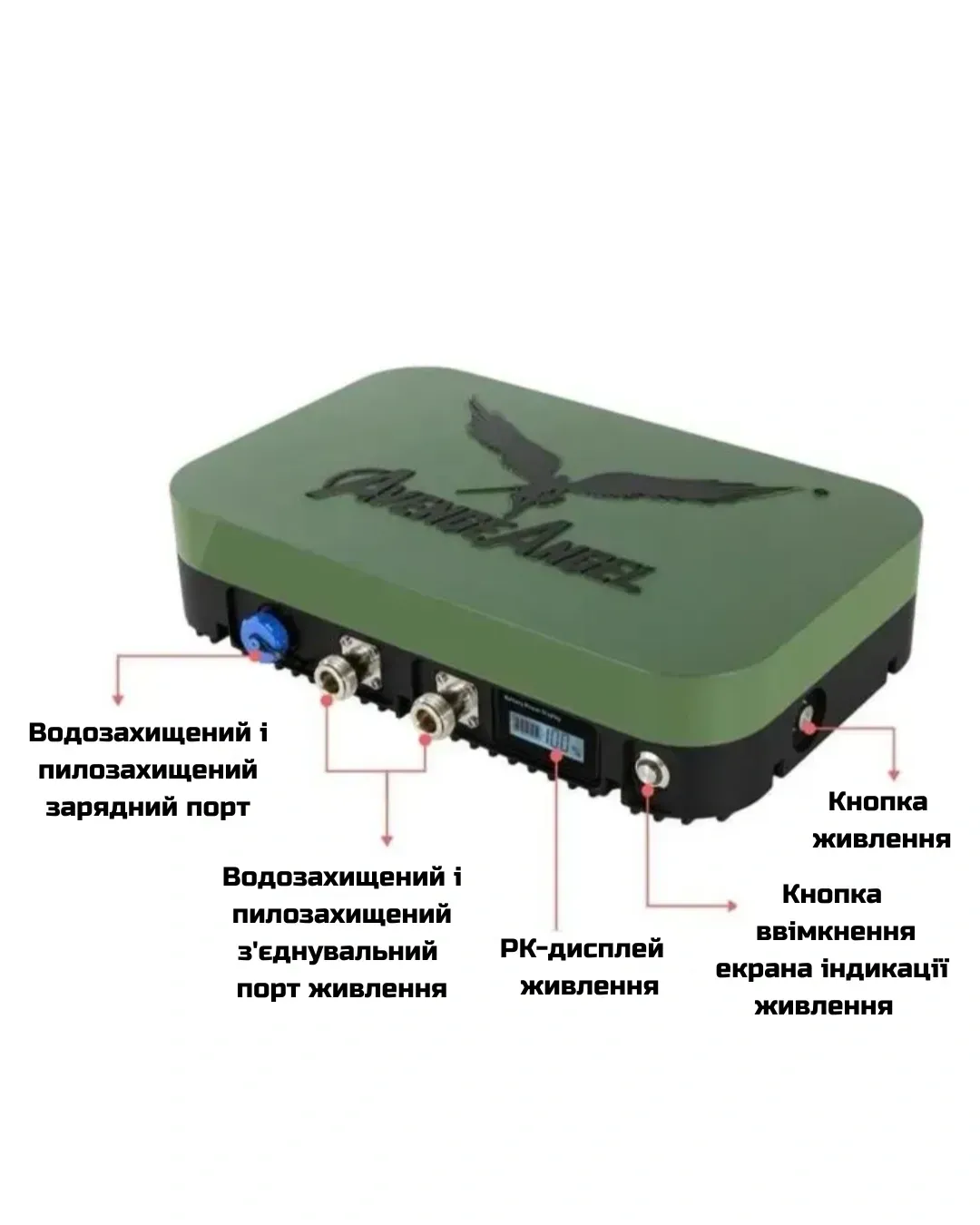
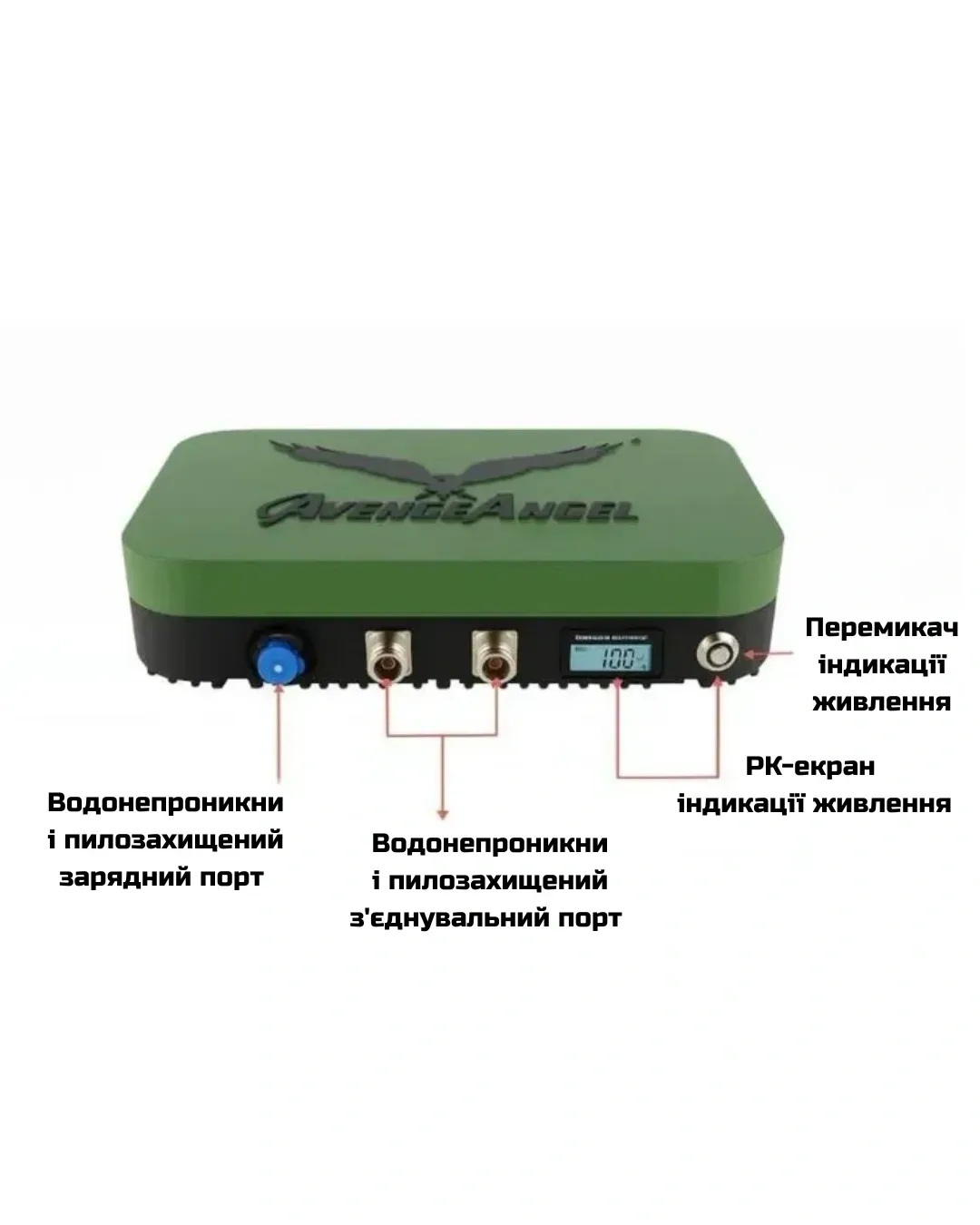
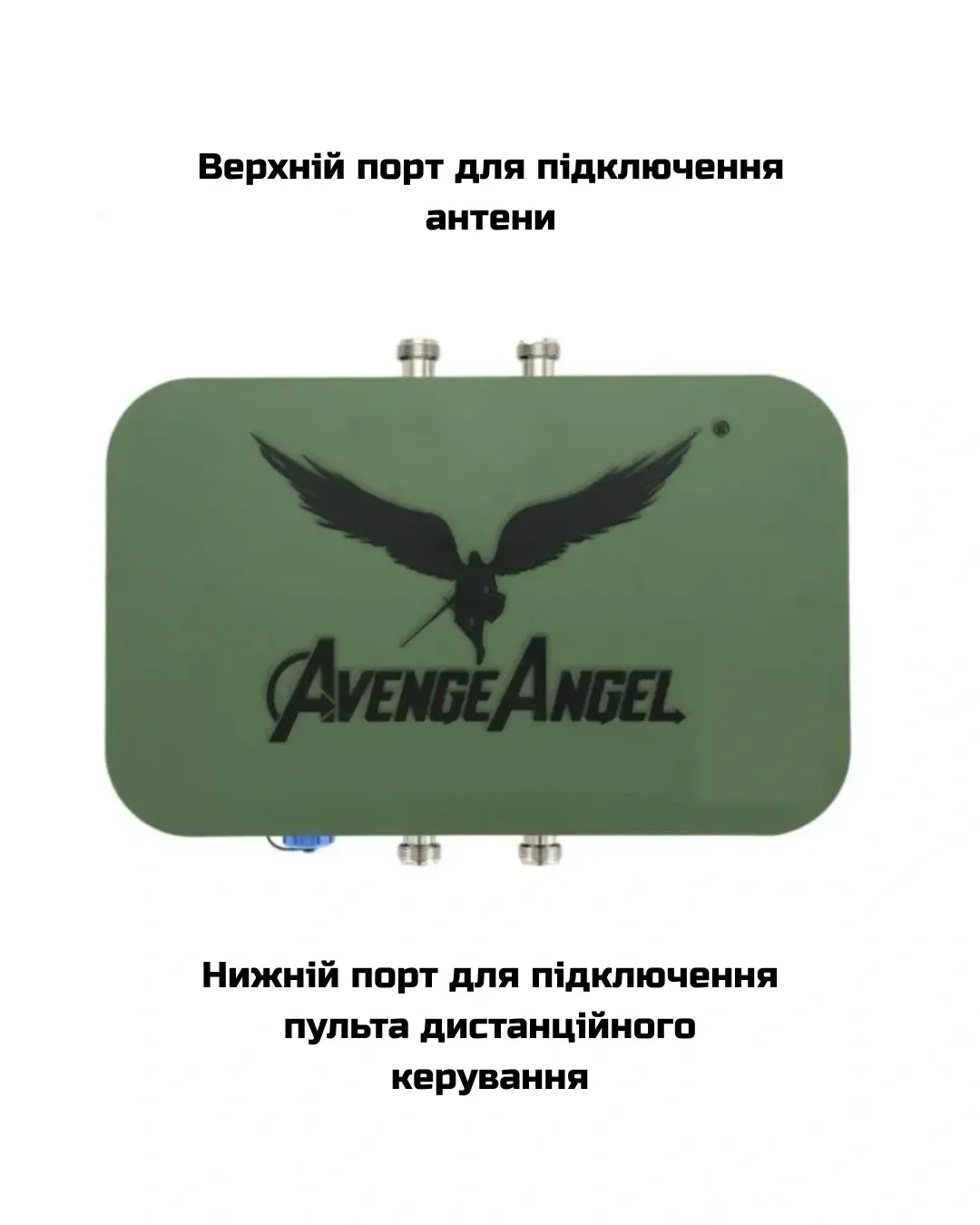
| Connector Type | NK female (professional standard) |
| Protection Class | IPX68 (fully waterproof) |
| Battery | Built-in, up to 3 hours of battery life |
| Compatibility | Wi-Fi, OcuSync (DJI Mavic 3, Matrice, Autel, FPV) |
Key operational advantages:
The repeater acts as a link between the operator’s remote control and a powerful external antenna, ensuring stability in the most difficult scenarios.
- Extreme endurance: The IPX68 protection rating allows the equipment to operate in pouring rain, dust or high humidity conditions without the risk of failure.
- Control stability: Full compatibility with OcuSync protocols guarantees no delays (input lag) and stable transmission of HD video.
- Autonomy: Built-in The battery keeps the system operational for up to 3 hours, which is critical if the external power supply is damaged.
- Professional connectivity: N-Type connectors provide minimal resistance and high mechanical strength of the connection.
Expert advice: For best results, install the repeater as close to the emitter antenna as possible. This will ensure the cleanest possible signal without extraneous noise.
Tactical applications
This device is indispensable for aerial reconnaissance units and UAV strike groups operating from fixed or camouflaged positions. The repeater allows you to create reliable communication nodes with antennas mounted on masts 10-30 meters high, which significantly expands the drone's operational horizons.
Conclusion: Your advantage on the air
Wired repeater (10 W) is a reliable tool for professionals. It guarantees reliable communication at a distance of up to 20 km, protects the operator's life and allows you to perform tasks in areas wherewhere others lose signal.
Tactical FAQ: Six Questions About a Wired Repeater
1. Why can't I just buy 30 meters of cable instead of a repeater?
At 2.4 GHz and 5.8 GHz, the signal rapidly attenuates in copper wire. Without a repeater at the end of a long cable, you only get a faint noise. A repeater is an active amplifier that "pushes" the signal through the cable, maintaining 100% of the power of your remote.
2. How far does this device allow you to "push" antenna?
With a cable like LMR-400 and a repeater, you can extend the antenna $20\text{--}50\text{ meters}$. This allows you to be in a concrete shelter or dugout while the antenna is working in an open position, mast or tree.
3. Will there be a delay (lag) in control?
For an FPV pilot, latency is critical, like ping in Bannerlord. The repeater operates at the hardware level at the speed of an electrical impulse, so the latency is zero. You will feel the drone as clearly as if you were standing directly under the antenna.
4. Powering a repeater in the field?
The device requires a stable voltage of $12\text{--}24\text{ V}$. Your EcoFlow Delta 2 station is the ideal source. Consumption is negligible, the station will hardly feel it, but the connection will be stable throughout the mission.
5. Why is a wired repeater the best protection against radio reconnaissance?
The emitting antenna is a "flashlight" for enemy SIGINT. If the antenna is on the remote control, you are a target. The repeater allows you to move the radiation point 30-50 meters. It's like remote surgery: you control the process, but you yourself are outside the risk zone of an enemy "flying in". by signal source.
6. How difficult is it to assemble such a kit?
Plug & Play system: the repeater is installed "in the gap" between the remote control and the external antenna. For a photographer, this is like connecting an extension cord for a studio flash. It is only important to ensure that the SMA or N-type connectors are clean and secure.
1. Why can't you just buy 30 meters of cable instead of a repeater?
At 2.4 GHz and 5.8 GHz, the signal rapidly attenuates in the copper wire. Without a repeater at the end of a long cable, you will only get a weak noise. A repeater is an active amplifier that "pushes" the signal through the cable, maintaining 100% of the power of your remote control.
2. How far does this device allow you to "push" antenna?
With a cable like LMR-400 and a repeater, you can extend the antenna $20\text{--}50\text{ meters}$. This allows you to be in a concrete shelter or dugout while the antenna is working in an open position, mast or tree.
3. Will there be a delay (lag) in control?
For an FPV pilot, latency is critical, like ping in Bannerlord. The repeater operates at the hardware level at the speed of an electrical impulse, so the latency is zero. You will feel the drone as clearly as if you were standing directly under the antenna.
4. Powering a repeater in the field?
The device requires a stable voltage of $12\text{--}24\text{ V}$. Your EcoFlow Delta 2 station is the ideal source. Consumption is negligible, the station will hardly feel it, but the connection will be stable throughout the mission.
5. Why is a wired repeater the best protection against radio reconnaissance?
The emitting antenna is a "flashlight" for enemy SIGINT. If the antenna is on the remote control, you are a target. The repeater allows you to move the radiation point 30-50 meters. It's like remote surgery: you control the process, but you yourself are outside the risk zone of an enemy "flying in". by signal source.
6. How difficult is it to assemble such a kit?
Plug & Play system: the repeater is installed "in the gap" between the remote control and the external antenna. For a photographer, this is like connecting an extension cord for a studio flash. It is only important to ensure that the SMA or N-type connectors are clean and secure.
1. Why can't you just buy 30 meters of cable instead of a repeater?
At 2.4 GHz and 5.8 GHz, the signal rapidly attenuates in the copper wire. Without a repeater at the end of a long cable, you will only get a weak noise. A repeater is an active amplifier that "pushes" the signal through the cable, maintaining 100% of the power of your remote control.
2. How far does this device allow you to "push" antenna?
With a cable like LMR-400 and a repeater, you can extend the antenna $20\text{--}50\text{ meters}$. This allows you to be in a concrete shelter or dugout while the antenna is working in an open position, mast or tree.
3. Will there be a delay (lag) in control?
For an FPV pilot, latency is critical, like ping in Bannerlord. The repeater operates at the hardware level at the speed of an electrical impulse, so the latency is zero. You will feel the drone as clearly as if you were standing directly under the antenna.
4. Powering a repeater in the field?
The device requires a stable voltage of $12\text{--}24\text{ V}$. Your EcoFlow Delta 2 station is the ideal source. Consumption is negligible, the station will hardly feel it, but the connection will be stable throughout the mission.
5. Why is a wired repeater the best protection against radio reconnaissance?
The emitting antenna is a "flashlight" for enemy SIGINT. If the antenna is on the remote control, you are a target. The repeater allows you to move the radiation point 30-50 meters. It's like remote surgery: you control the process, but you yourself are outside the risk zone of an enemy "flying in". by signal source.
6. How difficult is it to assemble such a kit?
Plug & Play system: the repeater is installed "in the gap" between the remote control and the external antenna. For a photographer, this is like connecting an extension cord for a studio flash. It is only important to ensure that the SMA or N-type connectors are clean and secure.
2. How far does this device allow you to "move" the antenna?
With an LMR-400 cable and a repeater, you can move the antenna 20-50 meters. This allows you to be in a concrete shelter or dugout while the antenna is working in an open position, mast, or tree.
3. Will there be a delay (lag) in control?
For an FPV pilot, latency is critical, like ping in Bannerlord. The repeater operates on the hardware level at the speed of an electrical impulse, so the latency is zero. You will feel the drone as clearly as if you were standing directly under the antenna.
4. Powering the repeater in the field?
The device requires a stable voltage of $12\text{--}24\text{ V}$. Your EcoFlow Delta 2 station is the ideal source. Consumption is negligible, the station will hardly feel it, but the connection will be stable throughout the mission.
5. Why a wired repeater is What is the best defense against radio intelligence?
The emitting antenna is a "flashlight" for enemy SIGINT. If the antenna is on the remote control, you are a target. A repeater allows you to move the emitting point 30-50 meters away. It's like remote surgery: you control the process, but you are outside the risk zone of being hit by the signal source.
6. How difficult is it to assemble such a kit?
Plug & Play system: the repeater is placed "in the gap" between the remote control and the remote antenna. For a photographer, this is like connecting an extension cord for a studio flash. It is only important to ensure that the SMA or N-type connectors are clean and secure.
2. How far does this device allow you to "move" the antenna?
With an LMR-400 cable and a repeater, you can move the antenna 20-50 meters. This allows you to be in a concrete shelter or dugout while the antenna is working in an open position, mast, or tree.
3. Will there be a delay (lag) in control?
For an FPV pilot, latency is critical, like ping in Bannerlord. The repeater operates on the hardware level at the speed of an electrical impulse, so the latency is zero. You will feel the drone as clearly as if you were standing directly under the antenna.
4. Powering the repeater in the field?
The device requires a stable voltage of $12\text{--}24\text{ V}$. Your EcoFlow Delta 2 station is the ideal source. Consumption is negligible, the station will hardly feel it, but the connection will be stable throughout the mission.
5. Why a wired repeater is What is the best defense against radio intelligence?
The emitting antenna is a "flashlight" for enemy SIGINT. If the antenna is on the remote control, you are a target. A repeater allows you to move the emitting point 30-50 meters away. It's like remote surgery: you control the process, but you are outside the risk zone of being hit by the signal source.
6. How difficult is it to assemble such a kit?
Plug & Play system: the repeater is placed "in the gap" between the remote control and the remote antenna. For a photographer, this is like connecting an extension cord for a studio flash. It is only important to ensure that the SMA or N-type connectors are clean and secure.
With a cable like the LMR-400 and a repeater, you can extend the antenna by $20\text{--}50\text{ meters}$. This allows you to be in a concrete shelter or dugout while the antenna is working in an open position, a mast or a tree.
3. Will there be a delay (lag) in control?
For an FPV pilot, lag is critical, like ping in Bannerlord. The repeater operates at the hardware level at the speed of an electrical impulse, so the latency is zero. You will feel the drone as clearly as if you were standing directly under the antenna.
4. Powering a repeater in the field?
The device requires a stable voltage of $12\text{--}24\text{ V}$. Your EcoFlow Delta 2 station is the ideal source. Consumption is negligible, the station will hardly feel it, but the connection will be stable throughout the mission.
5. Why is a wired repeater the best protection against radio reconnaissance?
The emitting antenna is a "flashlight" for enemy SIGINT. If the antenna is on the remote control, you are a target. The repeater allows you to move the radiation point 30-50 meters. It's like remote surgery: you control the process, but you yourself are outside the risk zone of an enemy "flying in". by signal source.
6. How difficult is it to assemble such a kit?
Plug & Play system: the repeater is installed "in the gap" between the remote control and the external antenna. For a photographer, this is like connecting an extension cord for a studio flash. It is only important to ensure that the SMA or N-type connectors are clean and secure.
With a cable like the LMR-400 and a repeater, you can extend the antenna by $20\text{--}50\text{ meters}$. This allows you to be in a concrete shelter or dugout while the antenna is working in an open position, a mast or a tree.
3. Will there be a delay (lag) in control?
For an FPV pilot, lag is critical, like ping in Bannerlord. The repeater operates at the hardware level at the speed of an electrical impulse, so the latency is zero. You will feel the drone as clearly as if you were standing directly under the antenna.
4. Powering a repeater in the field?
The device requires a stable voltage of $12\text{--}24\text{ V}$. Your EcoFlow Delta 2 station is the ideal source. Consumption is negligible, the station will hardly feel it, but the connection will be stable throughout the mission.
5. Why is a wired repeater the best protection against radio reconnaissance?
The emitting antenna is a "flashlight" for enemy SIGINT. If the antenna is on the remote control, you are a target. The repeater allows you to move the radiation point 30-50 meters. It's like remote surgery: you control the process, but you yourself are outside the risk zone of an enemy "flying in". by signal source.
6. How difficult is it to assemble such a kit?
Plug & Play system: the repeater is installed "in the gap" between the remote control and the external antenna. For a photographer, this is like connecting an extension cord for a studio flash. It is only important to ensure that the SMA or N-type connectors are clean and secure.
The device requires a stable voltage of $12\text{--}24\text{ V}$. Your EcoFlow Delta 2 station is the ideal source. Consumption is negligible, the station will hardly feel it, but the connection will be stable throughout the mission.
5. Why is a wired repeater the best protection against radio reconnaissance?
The emitting antenna is a "flashlight" for enemy SIGINT. If the antenna is on the remote control, you are a target. The repeater allows you to move the radiation point 30-50 meters. It's like remote surgery: you control the process, but you yourself are outside the risk zone of an enemy "flying in". by signal source.
6. How difficult is it to assemble such a kit?
Plug & Play system: the repeater is installed "in the gap" between the remote control and the external antenna. For a photographer, this is like connecting an extension cord for a studio flash. It is only important to ensure that the SMA or N-type connectors are clean and secure.
The device requires a stable voltage of $12\text{--}24\text{ V}$. Your EcoFlow Delta 2 station is the ideal source. Consumption is negligible, the station will hardly feel it, but the connection will be stable throughout the mission.
5. Why is a wired repeater the best protection against radio reconnaissance?
The emitting antenna is a "flashlight" for enemy SIGINT. If the antenna is on the remote control, you are a target. The repeater allows you to move the radiation point 30-50 meters. It's like remote surgery: you control the process, but you yourself are outside the risk zone of an enemy "flying in". by signal source.
6. How difficult is it to assemble such a kit?
Plug & Play system: the repeater is installed "in the gap" between the remote control and the external antenna. For a photographer, this is like connecting an extension cord for a studio flash. It is only important to ensure that the SMA or N-type connectors are clean and secure.