
|
Quantity
|
Out of stock
|
||
|
|
|||
|
|
|||
BendCom G.657.A2 Single-Mode Optical Fiber: Silence Technology for Complex Missions
In modern warfare, where every meter of radio airwaves is monitored by electronic intelligence (SIGINT) and jammed by electronic warfare systems, traditional communication channels become extremely vulnerable. BendCom G.657.A2 is a next-generation single-mode optical fiber designed to ensure stable data transmission under extreme bending conditions. It is this fiber standard that has become the foundation for the creation of interference-resistant FPV drones operating outside the radio frequency range.
Why BendCom G.657.A2 - Is this a strategic choice for military technologies?
The main advantage of the G.657.A2 standard is its unprecedented flexibility. Unlike standard fiber, BendCom allows for virtually lossless signal transmission even with critical cable bends, which is inevitable when unwinding a spool of fiber by a drone at high speed or laying communication lines in dense urban areas and ruins.
- Ultimate resistance to electronic warfare: Optical fiber cannot be "jammed"
- Absolute radio stealth: The optical channel does not emit radio waves, which makes the operator's position and communication line invisible to enemy direction finders.
- Extreme temperature range: Stable operation from –60°C to +80°C allows the use of fiber at any time of year and in the most difficult climatic zones.
- Zero latency: Direct transmission of the light signal provides an instant control response and high-quality video without digital delays.
Technical characteristics and attenuation parameters
BendCom demonstrates minimal attenuation at critical wavelengths, which allows operation at long distances (up to 20-50 km) without loss of quality signal.
| Parameter | Wavelength / Condition | Value |
|---|---|---|
| Attenuation (dB/km) | 1310 nm | 0,34 |
| 1383 nm | 0.32 | |
| 1550 nm | 0.20 | |
| 1625 nm | 0.22 | |
| Chromatic dispersion (ps/nm·km) | 1288–1339 nm | 3.5 |
| 1550 nm | 13.3 ÷ 18.6 | |
| 1625 nm | 17.2 ÷ 23.7 | |
| PMD (Polarization Dispersion) | — | ≤0.2 ps/√km |
Mechanical Strength and Bending Resistance
For tactical use, the fiber must withstand enormous mechanical loads during rapid deployment and abrupt maneuvers of UAVs.
| Min. bending radius (30 mm) | 10 turns | ≤0.03 dB (1550 nm) |
| Min. bending radius (20 mm) | 1 turn | ≤0.03 dB (1550 nm) |
| Min. Bending radius (15 mm) | 1 turn | ≤0.4 dB (1550 nm) |
| Ultimate tensile strength | Coated / Uncoated | 1.3-8.9 N / 1.0-5.0 N |
| Proof-test | — | ≥1.0% (0.7 N/μm²) |
Design features and reliability
The fiber is protected by a double layer acrylate, which ensures durability and stability of characteristics during long-term storage and operation in aggressive environments.
- Glass fiber diameter: 125.0 ± 0.7 µm;
- Outer diameter of the coating: 242 ± 7 µm (standard for most tactical spools);
- Aging resistance: At 23°C for 30 days, attenuation is ≤0.05 dB;
- Climate resistance: Withstands humidity up to 85% at +85°C for a month without structure degradation.
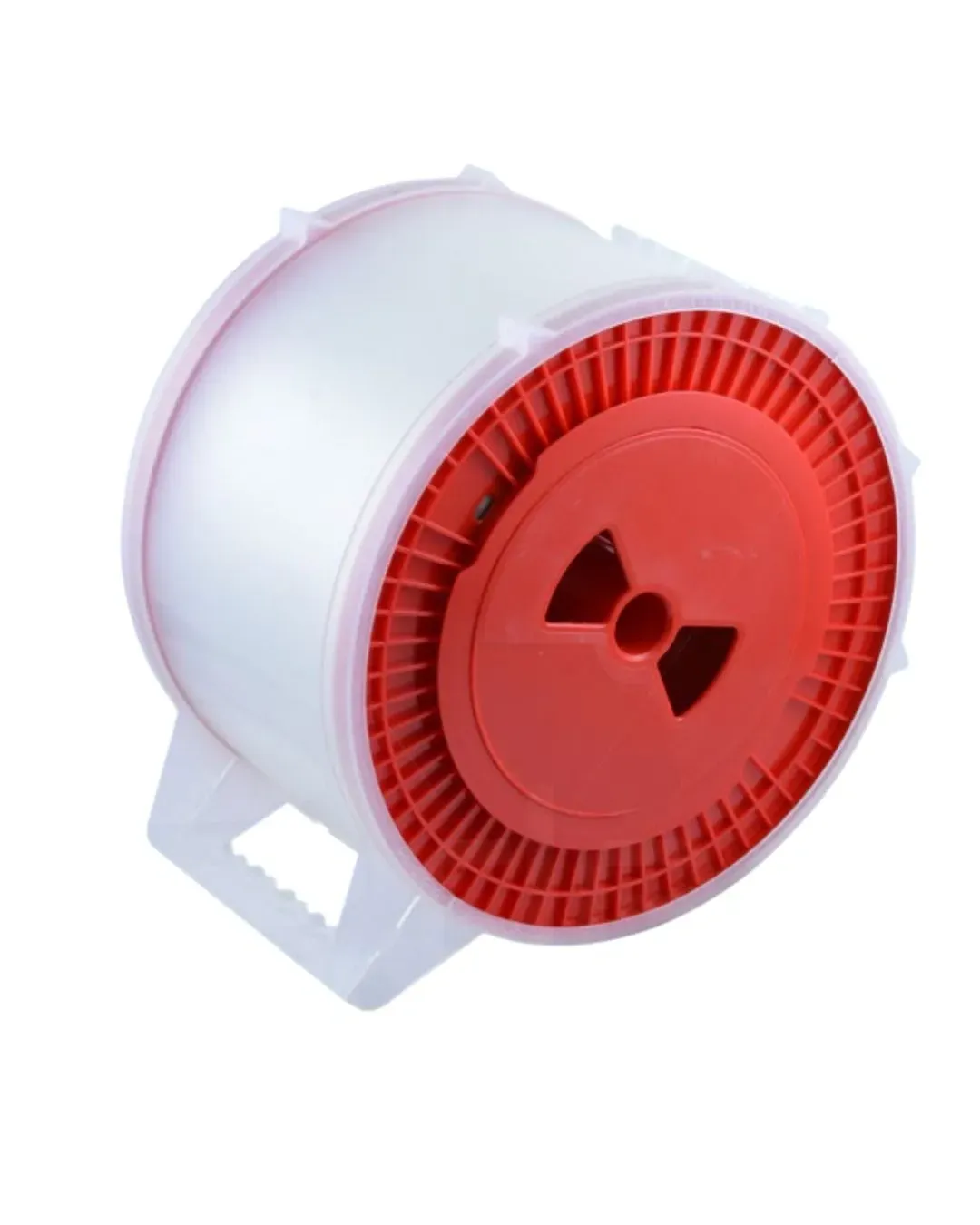
Logistics data (industrial spool):
For large projects and serial production of UAVs, fiber is supplied in high-capacity coils:
- Length on spool: 50.4 km;
- Packaging dimensions: 31 x 27 x 18 cm;
- Gross weight: 4.9 kg.
Expert opinion: BendCom G.657.A2 is the "gold standard" for modern high-tech communications. Thanks to its minimal bending radius and high tensile strength, it ensures uninterrupted operation of systems in areas where the airwaves are completely suppressed by electronic warfare.
Conclusion: Reliable communications where others are powerless
Using single-mode fiber BendCom G.657.A2 makes it possible to create communication channels that cannot be detected or interrupted remotely. This is the choice of professionals who value stealth, reliability, and data transmission quality in the most extreme conditions.
FAQ: Six Questions About BendCom G.657.A2 Fiber
What does the G.657.A2 marking mean and why is it important for FPV?
The G.657.A2 standard is a fiber with extremely low bending loss. Unlike conventional fiber, it operates stably at small bending radii. This allows the drone to perform sharp maneuvers without the risk of losing connection or image freezing.
What is the advantage of single-mode fiber?
It is ideal for transmitting a signal over distances of 10, 20, or more km. Single-mode fiber has minimal attenuation, allowing for perfect digital picture transmission with zero latency without the use of intermediate amplifiers.
Is BendCom fiber compatible with standard equipment?
Yes, it is fully compatible with the G.652.D standard. You can use standard media converters and fusion splicers. This greatly simplifies field maintenance.
Signal stability during in-flight spool unwinding?
BendCom fiber is designed to operate under tension. Even at maximum cable unwinding speed, attenuation remains minimal ($0.3\text{--}0.4\,\text{dB/km}$), ensuring a stable communication channel all the way to the target.
What is the physical durability of the fiber in the field?
High tensile strength and a special protective coating protect the "glass" from microcracks. Fiber can withstand friction and aggressive loads while remaining intact during combat missions.
Does fiber affect the quality of night or thermal video?
Fiber provides enormous bandwidth. You receive a high-resolution video stream (Full HD/4K) from any camera without artifacts or compression, which is impossible when using a radio channel in electronic warfare environments.