



|
Quantity
|
Out of stock
|
||
|
|
|||
|
|
|||
AvengeAngel Big Hulk Plus and ANTMAN Antenna Mount: Secure Fixation for a Stable Signal
In tactical aerial reconnaissance, the effectiveness of a signal booster depends not only on its power but also on the accuracy of its positioning. The professional mount for AvengeAngel Big Hulk Plus and ANTMAN antennas is a critical element of any tactical kit, ensuring the antenna remains firmly stable on a mast, tripod, or vehicle. Only a rigid fixation allows you to realize the full gain potential, avoiding signal degradation due to vibration or displacement.
This mount is designed specifically for active tri-band systems (2.4G / 5.2G / 5.8G), where precise antenna alignment to the drone is the key to a stable HD video stream and pilot safety.
Why is a reliable mount critical for Big Hulk Plus and ANTMAN systems?
When working with powerful amplifiers (up to 10W), the narrow antenna pattern requires perfect maintenance of a given angle. Even the slightest deviation due to wind or vehicle engine vibration can lead to a loss of connection at the most crucial moment of the mission.
- Ultimate compatibility: Designed specifically for the mounting locations and weight of the Big Hulk Plus and ANTMAN series antennas.
- Pattern stability: Rigid mount eliminates micro-shifts of the antenna, which allows you to keep the drone in focus at maximum distances.
- Durability of materials: The use of durable metal and composites ensures that the mount will not crack at sub-zero temperatures or mechanical shocks during transportation.
- Protection from environmental factors: A special coating protects the fixation units from corrosion, moisture and aggressive dust.
Technical and tactical characteristics (TTX)
The mount is optimized for quick deployment and long-term operation in the field without the need for constant tightening of the units.
| Parameter | Characteristic value |
|---|---|
| Device type | Professional mounting mount |
| Equipment compatibility | AvengeAngel Big Hulk Plus, ANTMAN |
| Frequency range support | 2.4G / 5.2G / 5.8G |
| Case materials | High-strength composite / hardened metal |
| Sustainability class | Resistance to vibration, moisture, dust and UV radiation |
| Type of fastening | Rigid with the possibility of adjustment (depending on the modification) |
Operational reliability in combat conditions
The tactical mount is designed for those who work "on the front lines", where every second counts. The design allows for quick installation or removal of the amplifier when changing positions.
- Anti-vibration system: Absorbs vibrations, which is especially important when installing amplifiers on the roof of operating cars or armored vehicles.
- Quick adjustment: The mechanism allows the operator to quickly align the antenna horizontally and vertically to obtain the clearest signal.
- Connection Security: The mount does not block access to the N-type or QMA connectors, providing convenient connection of feeder lines.
Expert Advice: When using remote antennas on masts over 5 meters, be sure to check the reliability of the mount before each flight. This prevents the antenna from "sailing" and ensures a stable link at distances of 20+ km.
Conclusion: The Foundation of Stable Communication
The mount for AvengeAngel Big Hulk Plus and ANTMAN is not a secondary accessory, but the foundation of your antenna and feeder system. By choosing a reliable fixation, you protect expensive equipment from falls and ensure signal quality even in the most difficult meteorological and combat conditions.
Tactical FAQ: Six questions about Mounting the Big Hulk and ANTMAN systems
1.Why can't I use regular photo tripods for these antennas?
Big Hulk Plus has enormous "windage". In a wind of 10-20 m/s, a regular tripod will simply tip over. Any micro-swing of the antenna at a distance of 20 km turns into a beam miss of hundreds of meters. The specialized mount has reinforced friction units and rigid fixation of the axes.
2. How does the mount ensure signal stability at peak distances?
Stability directly depends on immobility. The mounts have micrometric adjustment mechanisms. This allows you to set the tilt angle and azimuth (Pan) with surgical precision. Correct fixation ensures that the "lobe" signal is always aimed at the drone.
3. What role does the mount play in operator survival?
This is a remote deployment unit. You can move the transmit point 20-50 m away from you. If the enemy locates the signal, the attack will hit the antenna on the mast while you are in the safety of a deep shelter.
4. Is one mount compatible with both types of antennas?
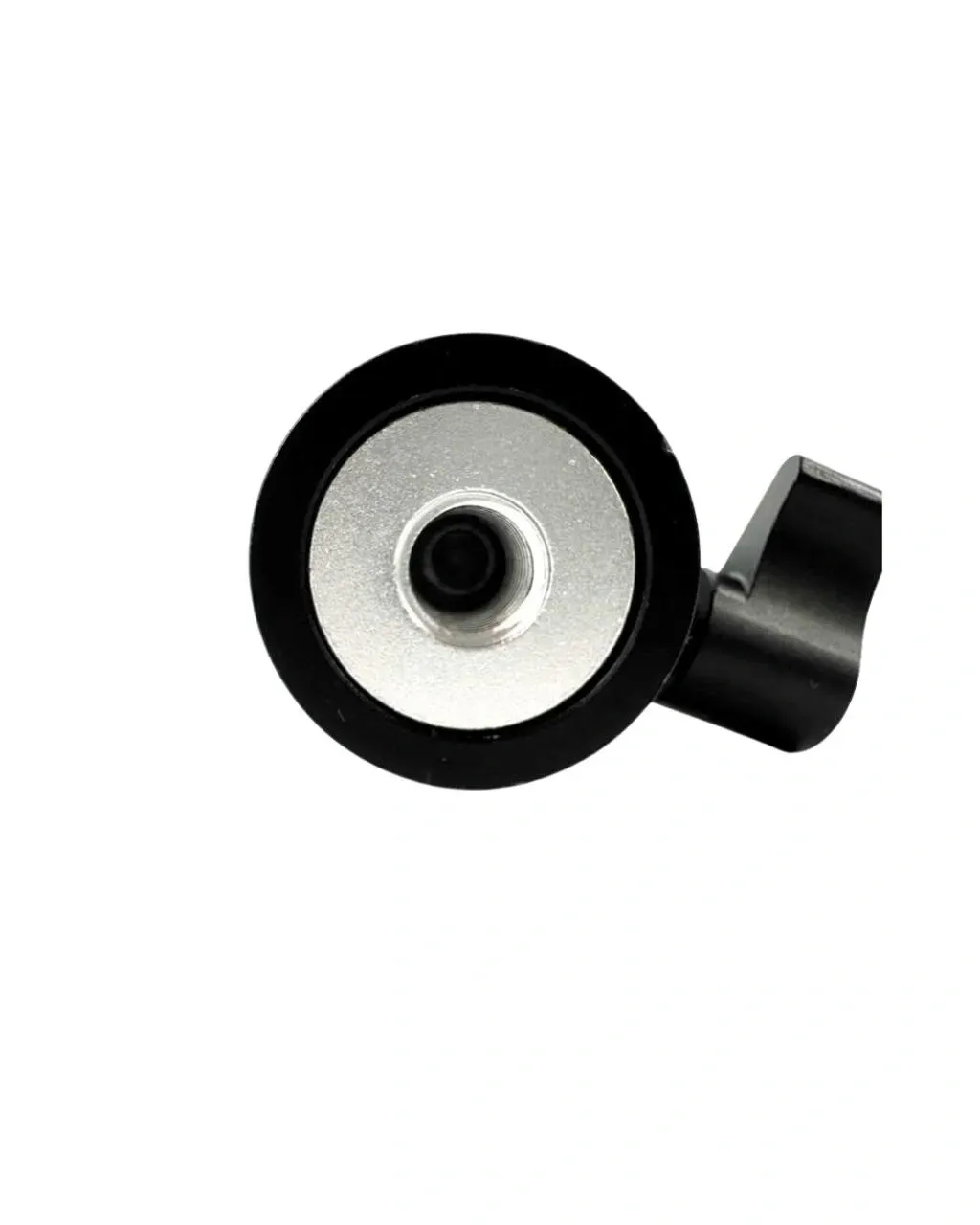
The 2026 versions have a universal plate or $5/8''$ adapter. This allows you to quickly replace the compact ANTMAN with the powerful Big Hulk Plus. Quick-Release connectors allow you to change the configuration in seconds, like a bayonet mount on a camera.
5. Materials and wear resistance in the field?
The mounts are made of anodized aluminum or stainless steel. They do not "sour" from moisture and do not crack in the cold. As a medic, you know the value of a quality tool: reliable mechanics are the guarantee that you can always adjust the antenna without effort.
6. How does the mount protect WL-400 / RG-8 cables?
A heavy 20-meter cable can tear the N-Type connector from the antenna housing. The professional mount features a Strain Relief assembly—the clamps secure the cable to the mast, transferring all the weight to the metal, not the connector.
2. How does the mount ensure signal stability at peak distances?
Stability directly depends on immobility. The mounts have micrometric adjustment mechanisms. This allows you to set the tilt angle and azimuth (pan) with surgical precision. Proper fixation ensures that the signal "lobe" is always aimed at the drone.
3. What role does the mount play in operator survival?
This is a unit for remote deployment. You can move the radiation point 20-50 m away from you. If the enemy locks onto the signal, the strike will hit the antenna on the mast while you are in the safety of a deep hole.
4. Is one mount compatible with both antenna types?
The 2026 versions have a universal plate or $5/8''$ adapter. This allows you to quickly replace the compact ANTMAN with the powerful Big Hulk Plus. Quick-Release connections allow you to change the configuration in seconds, like a bayonet mount on a camera.
5. Materials and wear resistance in the field?
The mounts are made of anodized aluminum or stainless steel. They do not "sorp" from moisture and do not crack in the cold. As a doctor, you know the value of a quality tool: reliable mechanics are the guarantee that you can always adjust the antenna without effort.
6. How does the mount protect WL-400 / RG-8 cables?
A heavy 20-meter cable can tear the N-Type connector from the antenna housing. A professional mount has a Strain Relief unit - the clamps secure the cable to the mast, transferring all the weight to the metal, not the connector.
2. How does the mount ensure signal stability at peak distances?
Stability directly depends on immobility. The mounts have micrometric adjustment mechanisms. This allows you to set the tilt angle and azimuth (pan) with surgical precision. Proper fixation ensures that the signal "lobe" is always aimed at the drone.
3. What role does the mount play in operator survival?
This is a unit for remote deployment. You can move the radiation point 20-50 m away from you. If the enemy locks onto the signal, the strike will hit the antenna on the mast while you are in the safety of a deep hole.
4. Is one mount compatible with both antenna types?
The 2026 versions have a universal plate or $5/8''$ adapter. This allows you to quickly replace the compact ANTMAN with the powerful Big Hulk Plus. Quick-Release connections allow you to change the configuration in seconds, like a bayonet mount on a camera.
5. Materials and wear resistance in the field?
The mounts are made of anodized aluminum or stainless steel. They do not "sorp" from moisture and do not crack in the cold. As a doctor, you know the value of a quality tool: reliable mechanics are the guarantee that you can always adjust the antenna without effort.
6. How does the mount protect WL-400 / RG-8 cables?
A heavy 20-meter cable can tear the N-Type connector from the antenna housing. A professional mount has a Strain Relief unit - the clamps secure the cable to the mast, transferring all the weight to the metal, not the connector.
3. What role does the mount play in operator survival?
This is a remote deployment unit. You can move the transmission point 20-50 m away from you. If the enemy locates the signal, the attack will hit the antenna on the mast while you are in the safety of a deep shelter.
4. Is one mount compatible with both types of antennas?
The 2026 versions have a universal plate or a $5/8" adapter. This allows you to quickly replace the compact ANTMAN with the powerful Big Hulk Plus. Quick-Release connections allow you to change the configuration in seconds, like a bayonet mount on a camera.
5. Materials and wear resistance in the field?
The mounts are made of anodized aluminum or stainless steel. They do not "sour" from moisture and do not crack in the cold. As a medic, you know the value of a quality tool: reliable mechanics are the guarantee that you can always adjust the antenna without effort.
6. How does the mount protect WL-400 / RG-8 cables?
A heavy 20-meter cable can tear the N-Type connector from the antenna housing. A professional mount has a strain relief assembly - the clamps secure the cable to the mast, transferring all the weight to the metal, not the connector.
3. What role does the mount play in operator survival?
This is a remote deployment unit. You can move the transmission point 20-50 m away from you. If the enemy locates the signal, the attack will hit the antenna on the mast while you are in the safety of a deep shelter.
4. Is one mount compatible with both types of antennas?
The 2026 versions have a universal plate or a $5/8" adapter. This allows you to quickly replace the compact ANTMAN with the powerful Big Hulk Plus. Quick-Release connections allow you to change the configuration in seconds, like a bayonet mount on a camera.
5. Materials and wear resistance in the field?
The mounts are made of anodized aluminum or stainless steel. They do not "sour" from moisture and do not crack in the cold. As a medic, you know the value of a quality tool: reliable mechanics are the guarantee that you can always adjust the antenna without effort.
6. How does the mount protect WL-400 / RG-8 cables?
A heavy 20-meter cable can tear the N-Type connector from the antenna housing. A professional mount has a strain relief assembly - the clamps secure the cable to the mast, transferring all the weight to the metal, not the connector.
5. Materials and wear resistance in the field?
The mounts are made of anodized aluminum or stainless steel. They do not "sour" from moisture and do not crack in the cold. As a medic, you know the value of a quality tool: reliable mechanics are the guarantee that you can always adjust the antenna without effort.
6. How does the mount protect WL-400 / RG-8 cables?
A heavy 20-meter cable can tear the N-Type connector from the antenna housing. A professional mount has a strain relief unit - The clamps secure the cable to the mast, transferring all the weight to the metal rather than the connector.
5. Materials and wear resistance in the field?
The mounts are made of anodized aluminum or stainless steel. They do not "sour" from moisture and do not crack in the cold. As a medic, you know the value of a quality tool: reliable mechanics are the guarantee that you can always adjust the antenna without effort.
6. How does the mount protect WL-400 / RG-8 cables?
A heavy 20-meter cable can tear the N-Type connector from the antenna housing. A professional mount has a strain relief unit - The clamps secure the cable to the mast, transferring all the weight to the metal rather than the connector.