




|
Quantity
|
Out of stock
|
||
|
|
|||
|
|
|||
What to Know Before Choosing
A drone detector with a spectrum analyzer is a receiving device that monitors the radio-frequency environment and displays detected activity. Depending on the model, the operator may see the frequency, signal strength, spectrum peaks, or a detected-activity indicator and receive an audible alert.
This category includes devices whose specifications confirm the presence of a spectrum analyzer. They differ in their operating frequency bands, antenna type, indication format, power supply, and claimed detection range.
A UAV spectrum analyzer detects radio emissions rather than the aircraft itself as a physical object. Before ordering, match the device’s frequency coverage to the control or video links that need to be monitored and consider the limitations of RF-based detection.
How a UAV Detector with a Spectrum Analyzer Works
The receiver scans the frequencies specified by the manufacturer and records changes in signal strength. A UAV radio-signal analyzer presents the result on its display in the format supported by the particular model: a spectrum graph, frequency value, RSSI reading, or a separate on-screen indicator. This helps distinguish new activity from the constant RF background, although correct interpretation depends on the device’s functions and operating conditions.
These detectors operate passively: they receive signals but do not generate radio interference. The device does not replace a jamming system and cannot guarantee the detection of every UAV. If a drone does not transmit a signal within the monitored bands, operates autonomously, or uses a fiber-optic link, RF analysis may not detect its presence.
Which Specifications Should Be Compared
| Parameter | What to Check | Why It Matters |
|---|---|---|
| Frequency bands | The exact scanning limits, not only the number of bands | They determine which control or video-transmission channels the device can monitor |
| Indication and alerts | Spectrum view, frequency, RSSI, on-screen indication, and audible alerts | They affect how much information the operator receives after detection |
| Antenna and amplifier | Type, directionality, replaceability, and the presence of signal amplification | These features affect sensitivity, installation options, and the intended use case |
| Power supply | Battery type, operating time, and whether the device can work while charging | This helps determine whether the detector suits mobile or extended monitoring |
| Detection range | The claimed distance and the conditions under which it was measured | Actual performance depends on transmitter power, terrain, obstacles, and the RF environment |
Spectrum Analysis, Alerts, or Video Interception
The presence of a display does not mean that every device offers the same capabilities. One UAV frequency analyzer shows spectrum activity, another displays the frequency and signal strength, while a dedicated video detector monitors an analog video channel. For example, the Teneta PRO FPV drone detector combines spectrum analysis, on-screen information, and audible alerts.
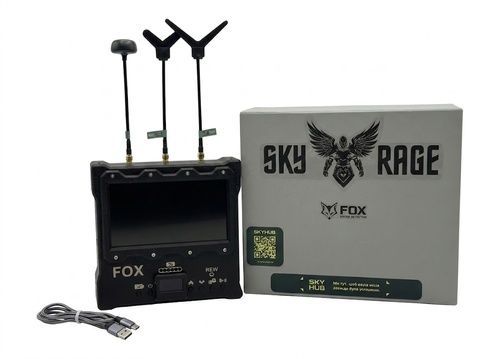
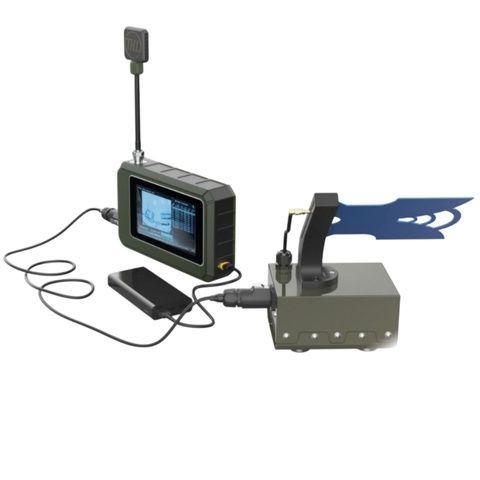
If receiving an image from an analog video channel is the priority, consider the FOX drone detector with video interception. Its specifications do not list a spectrum analyzer, so it represents a different detection format. For a remotely positioned receiving antenna and mast installation, SKYHUB offers the FOX kit with a remote mast-mounted antenna.
How to Choose a UAV Frequency Analyzer
- Choose the required format: a personal portable detector or equipment intended for another installation method.
- Match the operating frequencies to the channels that need to be monitored.
- Check exactly what information the screen displays and whether audible alerts are available.
- Verify the antenna type, whether it can be replaced, and what is included in the package.
- Compare detection ranges only together with the measurement conditions and stated limitations.
The price of a UAV spectrum analyzer depends on its frequency coverage, receiver type, display, antenna, amplifier, alert system, and included components. Check the individual product page for the current price and availability.
Selection Assistance from SKYHUB
You can compare the available formats in the main UAV analyzers and drone detectors category. Before requesting a consultation, prepare the required frequency bands, operating conditions, carrying or installation format, indication requirements, and expected battery life. SKYHUB specialists can help match these requirements to the current product specifications.
Specialized equipment must be purchased and used for its intended purpose in accordance with applicable laws and restrictions. Compatibility with other radio-monitoring or electronic-countermeasure equipment requires professional assessment.
Need to Confirm the Specifications?
Contact SKYHUB to confirm the operating frequencies, indication method, current package contents, and availability of the selected detector before placing an order.
FAQ: Common Questions About Drone Detectors with Spectrum Analyzers
What does a spectrum analyzer show in a UAV detector?
It shows radio-frequency activity within the bands monitored by the device. Depending on the model, the screen may display spectrum peaks, frequency, RSSI signal strength, or a detected-activity indicator.
Can a spectrum analyzer detect every type of drone?
No. An RF detector can only register signals within its supported frequency range. An autonomous UAV or a drone using a fiber-optic link without radio emissions may remain undetected.
How does a spectrum analyzer differ from a video detector?
A spectrum analyzer monitors radio-frequency activity and its parameters. A video detector searches for a compatible analog video signal, while certain models can also display the received image.
What determines the actual UAV detection range?
Detection range depends on transmitter power, signal frequency, antenna type and placement, terrain, buildings, and surrounding RF interference. The stated range should therefore not be treated as guaranteed under all conditions.