




|
Quantity
|
Out of stock
|
||
|
|
|||
|
|
|||
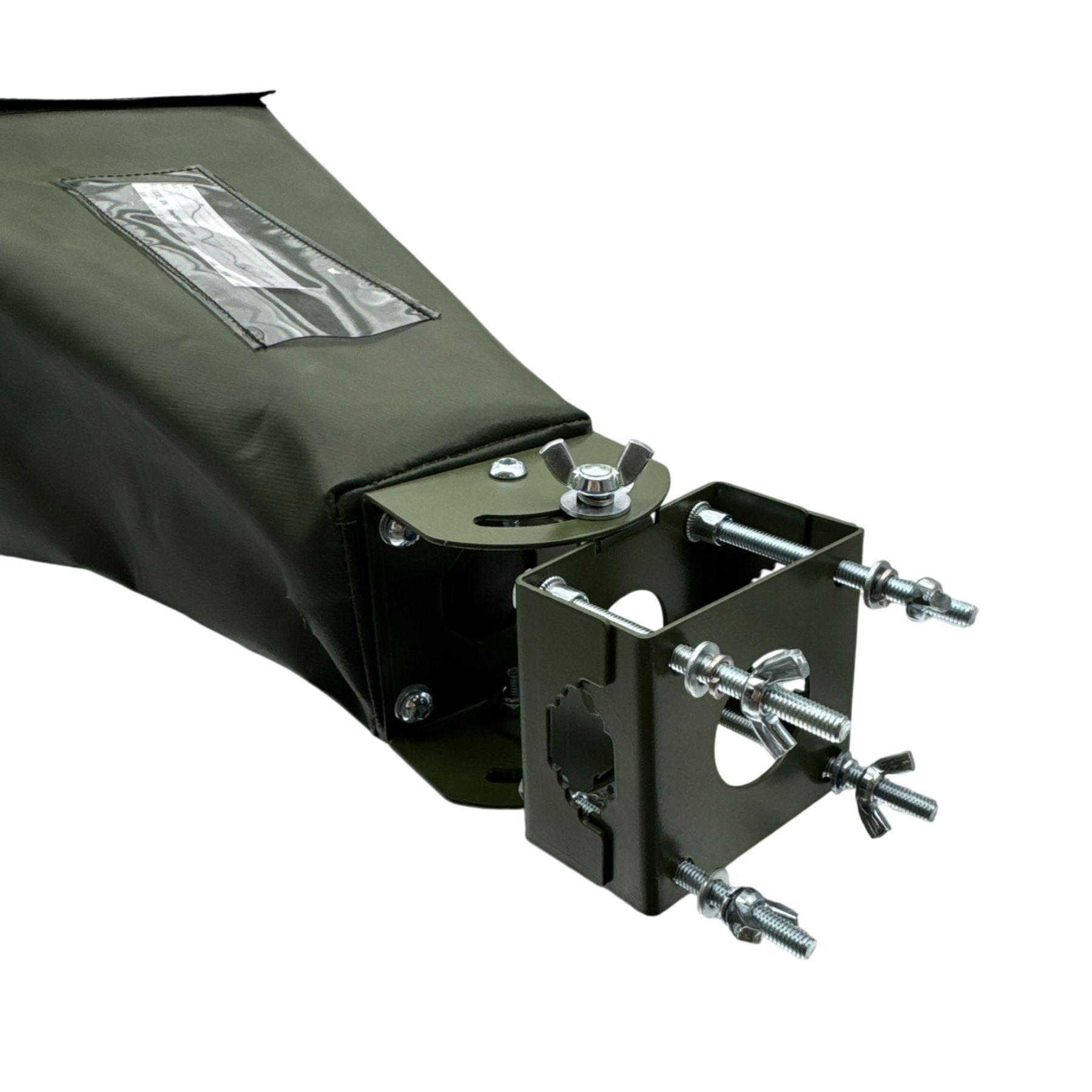
In modern aerial reconnaissance and strike missions, video link quality in the 5.8 GHz band is a critical factor. The WIMAX horn antenna (N-type) for repeaters and ground control stations is designed to operate at extreme distances. Thanks to the horn geometry, it provides high signal directivity and a minimal level of side lobes, which helps maintain operation in the presence of interference from enemy EW systems.
The antenna operates in the 5050–6000 MHz range and covers the current video transmission channels for FPV and reconnaissance UAVs.
Why Is the WIMAX Horn Antenna More Effective Than Alternatives?
Unlike panel (patch) antennas, the horn design focuses energy better. It is well suited for narrow-beam trunk communication links and for operation in dense radio-electronic noise.
- High directivity (20 dB). Delivers a stable picture at distances where ordinary antennas lose the signal.
- Narrow beam (19°). Concentrates the transmitter's power in a set direction, which makes direction finding and jamming by enemy EW systems more difficult.
- Good matching (26 dB return loss). Almost all the energy goes out over the air and is not reflected back into the transmitter, so the repeater's output stages do not overheat.
- Interference resistance. The antenna geometry attenuates interference from the rear and side hemispheres, so it works mainly in the direction of the target.
- N-type connector. A reliable, weatherproof connection with minimal losses.
Technical and Tactical Specifications
| Parameter | Value |
|---|---|
| Operating frequency range | 5050 – 6000 MHz |
| Directivity (Gain) | 20.0 dB |
| Beamwidth (−3 dB) | ≤ 19° |
| Return loss (RL) | ≥ 26 dB |
| Impedance | 50 Ω |
| Connector type | N-type |
| Dimensions | 224 × 224 × 405 mm |
| Weight | 1.2 kg |