


|
Quantity
|
Out of stock
|
||
|
|
|||
|
|
|||
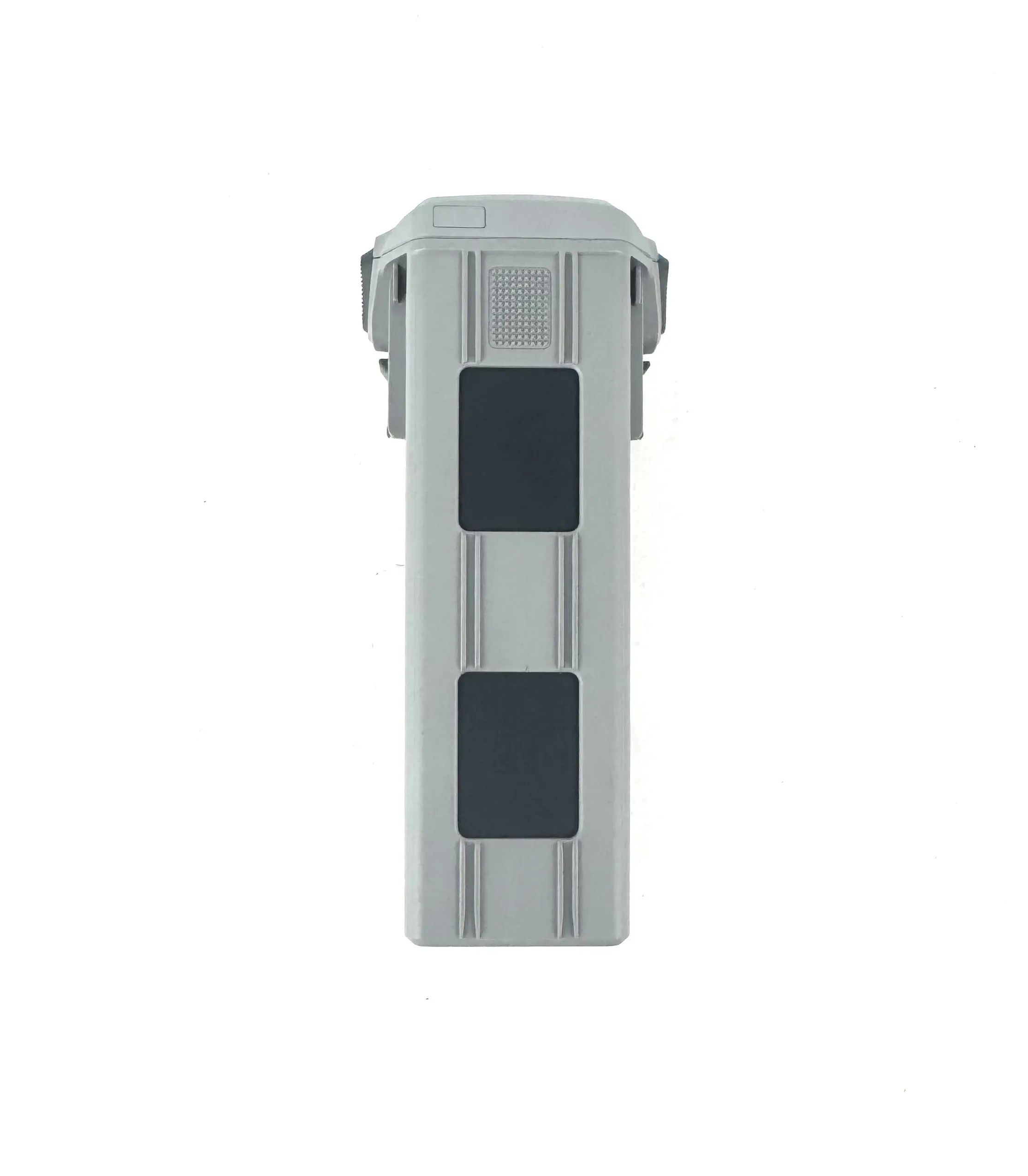
DJI Matrice 4 Series Battery (6741 mAh): Power for Long-Lasting Aerial Reconnaissance
In combat conditions, a drone's flight time is more than just a technical parameter; it's the key to mission success and personnel safety. The DJI Matrice 4 Series Battery (model BPX345-6741-14.76) is designed specifically for intensive use in challenging tactical situations. With a capacity of 6741 mAh and an advanced chemical structure, this battery ensures stable operation of reconnaissance systems and reliable aircraft stability even in high wind loads.
The original DJI architecture guarantees perfect compatibility with the Matrice 4 platform, which allows the control system to accurately predict the remaining flight time and ensure a safe return to the takeoff point (RTH).
Technological advantages of the BPX345 model
This battery is based on Li-ion 4S cells, which provides an optimal balance between weight and energy capacity. The use of industry-standard components makes it an indispensable tool for aerial reconnaissance units.
- High energy density (207 W): Maximum output power allows the drone to instantly respond to pilot commands, which is critical when maneuvering in enemy electronic warfare zones.
- LiNiMnCoO2 (NMC) chemistry: Lithium-nickel-manganese-cobalt-oxide technology ensures stable voltage throughout the discharge cycle and resistance to a large number of charge cycles.
- Smart BMS: A built-in controller monitors the health of each cell, preventing overheating, overcharging, or deep discharge in the field.
Technical and tactical characteristics (TTX)
Below are detailed battery parameters that must be considered when planning sorties and providing logistics nutrition.
| Parameter | Characteristic value |
|---|---|
| Model | BPX345-6741-14.76 |
| Battery type | Li-ion 4S (4-cell) |
| Nominal capacity | 6741 mAh |
| Output power | 207 W |
| Chemical composition | LiNiMnCoO2 (NMC) |
| Nominal voltage | 14.76 V |
| Charging temperature | from +5° to +40° C |
| Compatibility | DJI Matrice 4 Series |
Combat Operation: Tips for Pilots
To maintain maximum capacity and reliability of the BPX345 battery in frontline conditions, observe the following regulations:
- Temperature conditions: Charging NMC cells is most effective at temperatures above +5°C. In winter, it is recommended to warm up the battery in an internal pocket or thermal box before installing it in the drone.
- Storage mode: If the battery is not used for more than 7-10 days, discharge it to 50-60%. This prevents degradation of the chemical composition.
- Visual inspection: Before each flight, check the integrity of the housing and contact group for oxidation or mechanical damage after hard landings.
Important: Using original batteries with LiNiMnCoO2 chemistry ensures that the drone will not lose traction when the charge suddenly drops below 20%, which often happens with cheap analogs.
Why do professional operators choose the DJI Matrice 4 Battery?
Power stability is the foundation of aerial reconnaissance. By choosing the original 6741 mAh battery, you get:
- Data accuracy: The system knows exactly how much energy each motor and camera gimbal consumes.
- Load resistance: The 207 W power allows you to work with additional payloads (drops, speakers, spotlights).
- Durability: NMC cells have a significantly higher service life compared to conventional Li-Po batteries.
Conclusion:More time in the sky - more missions accomplished
The DJI Matrice 4 Series Battery (6741 mAh) is your drone's reliable back-up. High energy efficiency, intelligent charge management, and readiness to operate in challenging temperature conditions make it a critical piece of equipment. When the outcome of an operation depends on every minute of observation - choose a proven power supply.
Tactical FAQ: Matrice 4 Standard Battery (6741 mAh)
1. Why is 6741 mAh the "golden mean"?
This battery is lighter, which gives the drone maximum maneuverability. Less weight - less inertia. The drone responds to commands faster and escapes electronic warfare range more effectively. It's like using a lightweight prime lens instead of a heavy zoom: speed is everything.
2. Real flight time at the front?
In reconnaissance mode, you'll get $40\text{--}43\text{ minutes}$. In strong winds, aim for $32\text{--}35\text{ minutes}$. This is enough time to quickly scan a sector within a radius of $10\text{--}12\text{ km}$ and return to base.
3. Survivability under fire and battery weight?
The lightweight aircraft gains altitude faster and accelerates to 23 m/sin Sport mode. When you're under fire from small arms, those extra seconds of acceleration are your drone's lifespan. In Bannerlord, you'd call this the light cavalry's maneuvering advantage.
4. Charging from your EcoFlow Delta 2 station?
Charging to 90% takes only $35\text{--}40\text{ minutes}$. The smaller capacity allows you to squeeze more flights out of a single charge of the EcoFlow Delta 2. This is critical when there is no access to the grid or generator.
5. Self-heating during night frosts?
Heating turns on automatically below 10 degrees. As a future medic, you know that cold slows down reactions. For lithium, this is voltage drop protection. The BMS system keeps the battery "health" under control in any weather.
6. Battery controller against electronic warfare attacks?
The BMS calculates the return point in real time. If electronic warfare forces the drone to spend more energy,The Return to Home point is recalculated instantly. You'll always land the drone at your location, never in a "gray zone."