


|
Quantity
|
Out of stock
|
||
|
|
|||
|
|
|||
Bambu Lab X1 Carbon Combo 3D Printer: A Technological Advantage for Defense and UAV Production
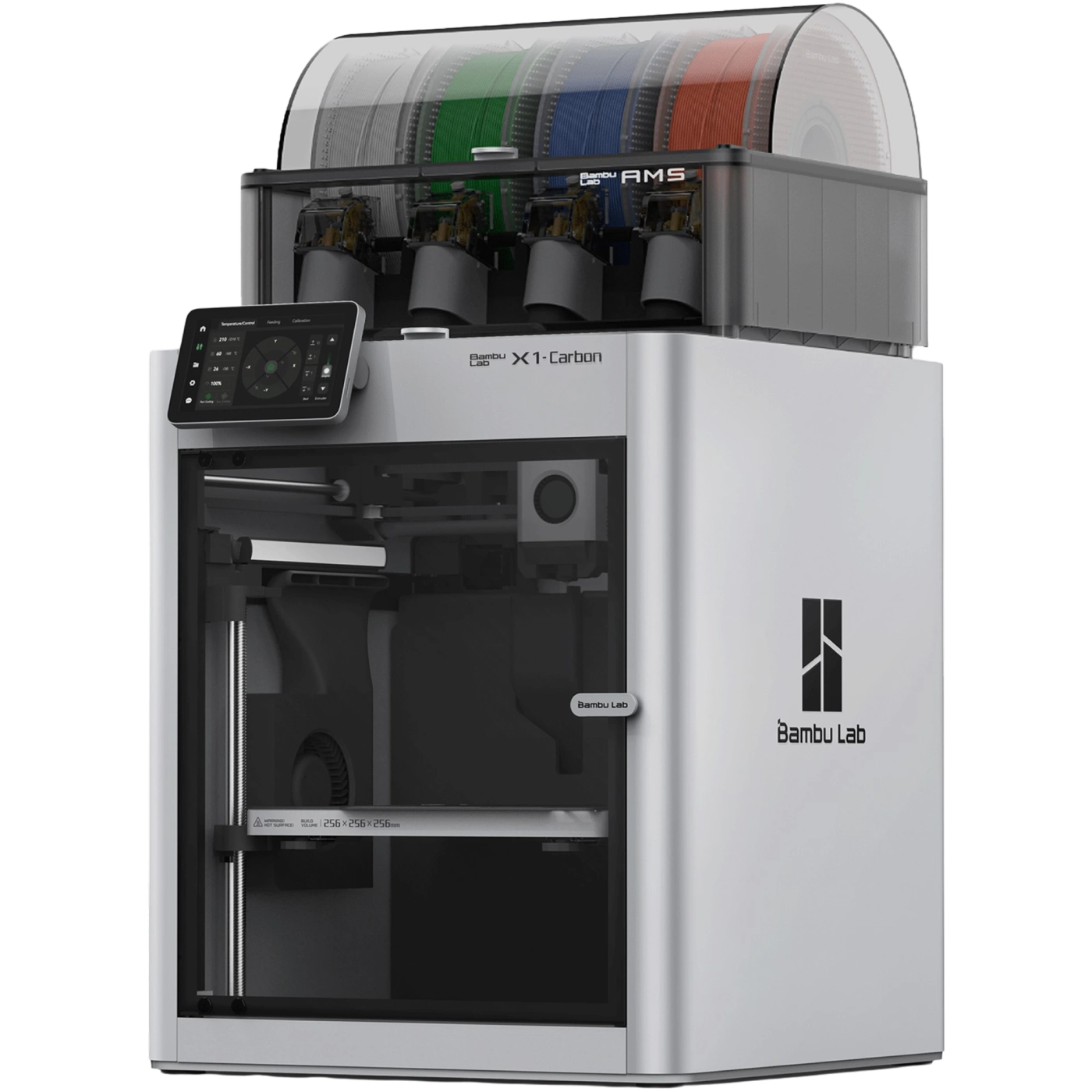
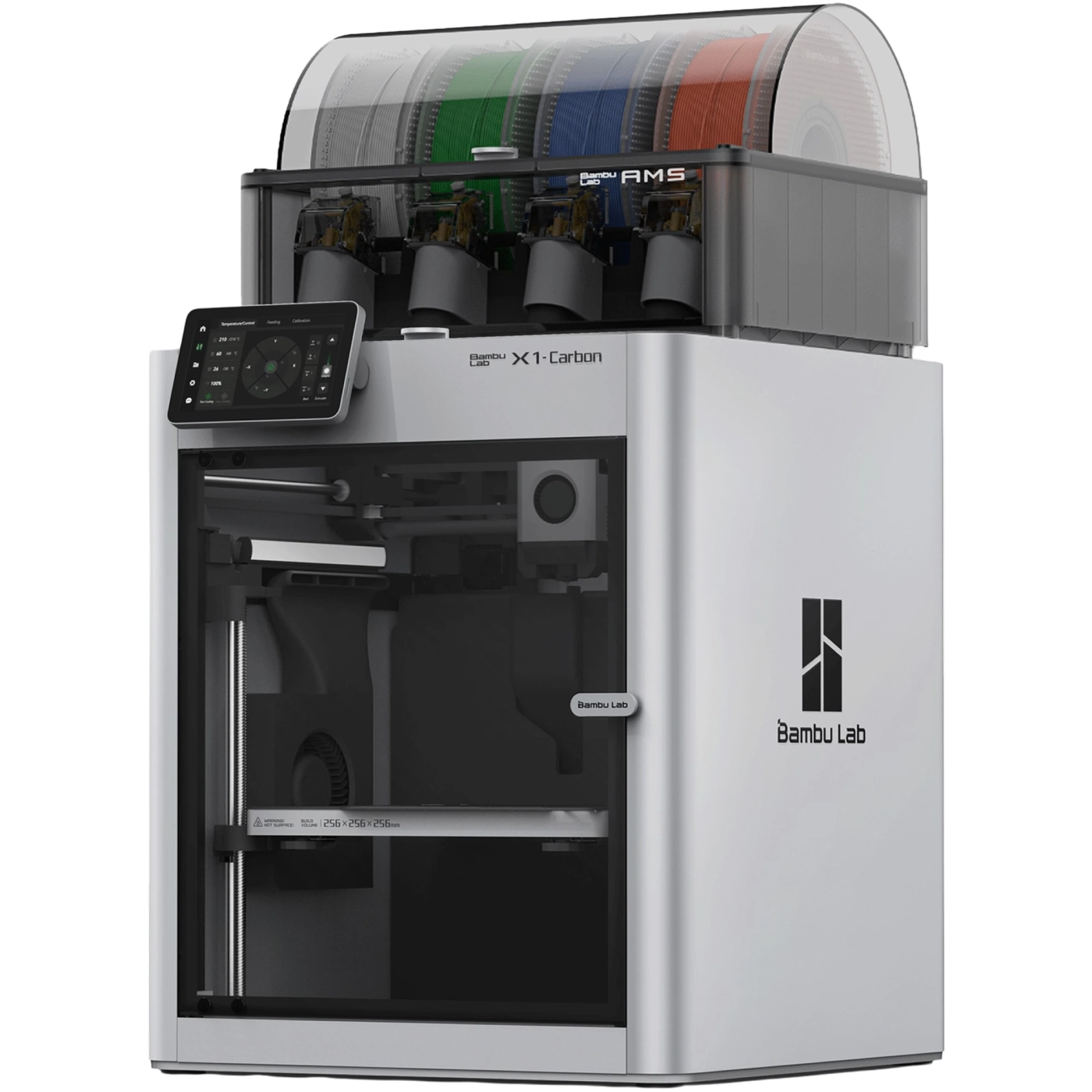
In today's technological warfare, speed and autonomy of production are decisive factors. The Bambu Lab X1 Carbon Combo 3D Printer is an intelligent system that allows you to transform a bunker, mobile workshop, or headquarters into a fully-fledged micro-production facility. With its ability to print with carbon fiber-reinforced polymers (PA-CF/GF), this printer has become the gold standard for creating reliable components for drones, drop systems, and tactical equipment.
AMS System: Continuous Production and Multi-Materiality
The Combo package includes the AMS (Automatic Material System), which dramatically expands the operator’s capabilities in the field:
- Print up to 4 materials simultaneously: Use the main material together with special supports (Support) to create complex geometric shapes.
- Automatic switching: When the spool runs out, the printer automatically switches to the next one, allowing you to print large parts 24/7 without constant supervision.
- Sealed and moisture-resistant: The AMS is equipped with desiccants, which is critical for hygroscopic materials such as Nylon (PA) or PA-CF, which are most in demand in the defense sector.
Technical specifications (TTX) Bambu Lab X1 Carbon Combo
This printer is designed to operate at extreme speeds without losing the strength of the finished product:
| Parameter | Value |
|---|---|
| Print technology | FDM (Fused Deposition Modeling) |
| Print area | 256 x 256 x 256 mm |
| Maximum speed | Up to 500 mm/s |
| Maximum acceleration | Up to 20,000 mm/s² |
| Nozzle temperature / Table | Up to 300 °C / Up to 120 °C |
| Nozzle Material | Hardened steel (resistant to abrasive composites) |
| Control Sensors | Lidar (first layer control), AI camera (error detection) |
| Device Weight | ≈ 14.1 kg (mobility during transportation) |
Professional Materials: From Prototypes to Combat Parts
Bambu Lab X1 Carbon Combo supports a wide range of filaments, allowing us to cover any unit needs:
- PA-CF and PA-GF (Nylon with carbon/fiberglass): Creation of ultra-strong UAV frames, antenna mounts, and parts subject to high mechanical loads.
- ABS / ASA: Manufacturing of housings resistant to UV and temperature changes.
- TPU (Flexible plastic): Printing dampers for cameras, spacers, protective covers, and seals.
- PLA-CF: Rapid production of mock-ups and training aids with increased rigidity.
Intelligent control and reliability in the field
In frontline conditions, time is a resource. X1 Carbon uses an AI camera and Lidar to Automatic calibration and print quality checking. The system detects "spaghetti" (print failures) early and stops the process, saving expensive materials and your time. Built-in Full HD monitoring allows you to monitor the process remotely via Wi-Fi or LAN.
Expert opinion: The Bambu Lab X1 Carbon Combo is the perfect combination of mobility (weight 14 kg) and power. The ability to print composites at 500 mm/s makes it a staple for any engineering team.
Conclusion
The Bambu Lab X1 Carbon Combo 3D printer is an investment in the survivability of equipment and the effectiveness of unmanned systems. The ability to produce industrial-strength parts with minimal operator intervention makes it an indispensable tool for the modern defense sector.
Frequently Asked Questions about the Bambu Lab X1 Carbon (AMS Combo)
Why is this printer called "Carbon" and what specific materials can it print?
The name indicates the printer's readiness to work with carbon fiber-reinforced plastics and fiberglass. The X1 Carbon features a hardened steel all-metal hotend and the same extruder gears. This allows for wear-free printing with abrasive materials such as PA-CF, PET-CF, PPA-CF, as well as polycarbonate (PC) and nylon.
What is Micro-LiDAR and how does it help avoid defects?
This is a unique laser sensor that scans the print bed surface with micrometer accuracy. It automatically performs Flow Calibration and inspects the first print layer. If the laser detects an error or delamination at the beginning of a job, the printer will stop and send a notification.
What advantages does the AMS Combo system provide in this model?
The AMS system in the Combo version is hermetically sealed, has built-in humidity sensors and containers for desiccant. This is critical for storing nylon and other hygroscopic plastics. Up to 4 AMS units can be connected to the printer, giving access to 16 spools simultaneously.
How effective is the artificial intelligence (AI) in the X1 Carbon camera?
The camera is connected to an AI processor that recognizes the "spaghetti effect" (tangled strands of plastic). AI also monitors nozzle cleanliness and detects foreign objects on the table before starting work, minimizing the risk of mechanical failure.
How does the X1 Carbon control interface differ from the P1 or H2 series?
The X1 Carbon is equipped with a large 5-inch color touchscreen. Unlike the younger models, it has a full graphical interface,Color previews of models and the ability to view time-lapses directly on the printer screen.
How is the camera's cooling and temperature control system implemented?
The printer is equipped with a powerful system of three fans. The X1 Carbon is equipped with a chamber temperature sensor that automatically adjusts the exhaust fan to maintain the ideal microclimate when printing with demanding plastics such as ABS or ASA.