


|
Quantity
|
Out of stock
|
||
|
|
|||
|
|
|||
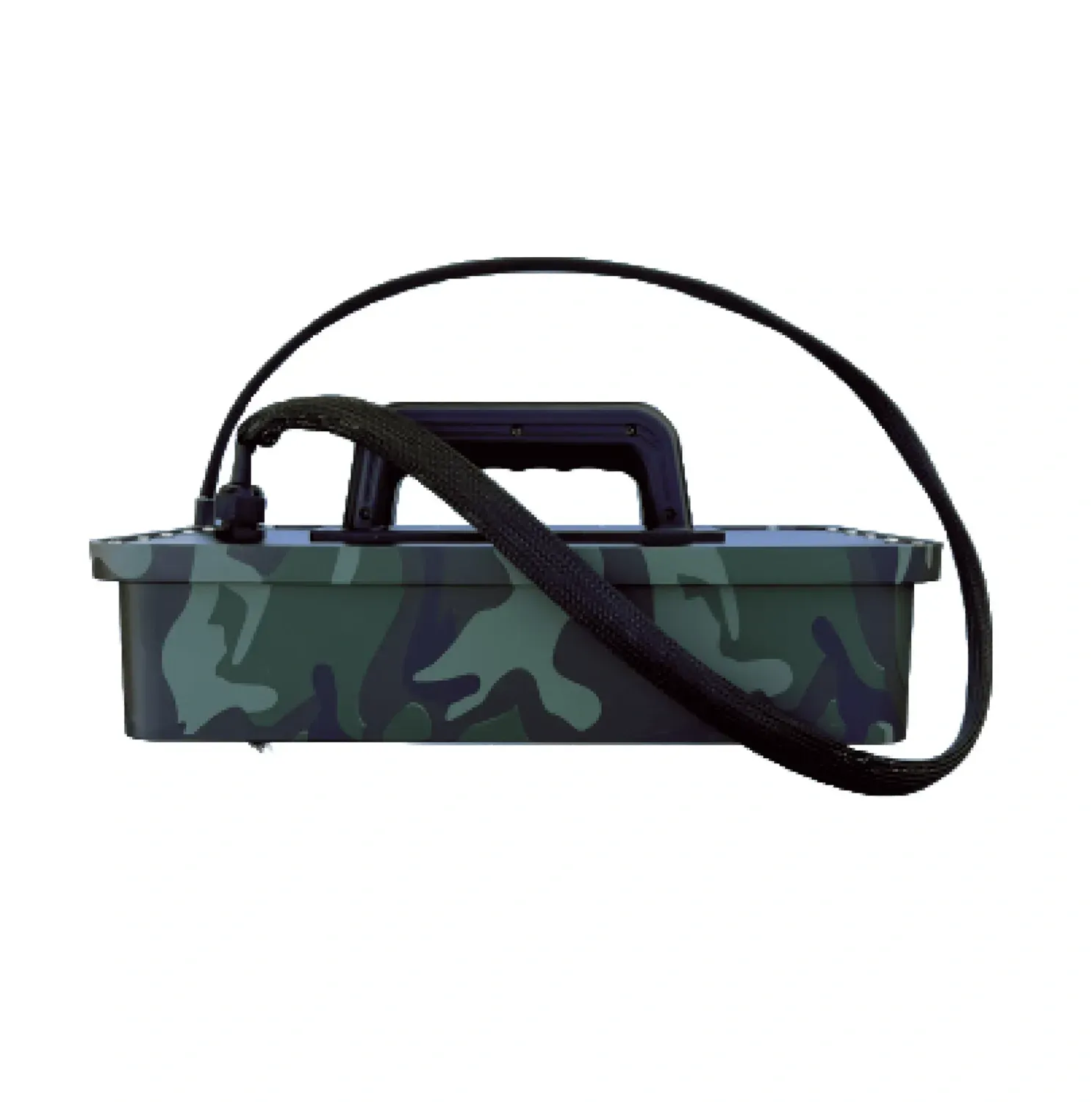
Universal compact directional antenna (800-950 MHz): Signal accuracy and power
In the conditions of modern electronic warfare and aerial reconnaissance, the quality of communication and the accuracy of the signal direction are decisive factors for success. Universal compact directional antenna for the frequency 800-950 MHz is a highly effective solution designed for tasks that require maximum signal gain while maintaining a compact size. It is ideal for use in UAV control systems, electronic warfare systems and mobile communication nodes.
Why is the 800-950 MHz band critical?
The 800-950 MHz band is today the main operating spectrum for most attack FPV drones (ELRS, Crossfire protocols) and telemetry systems. The use of a directional antenna allows for a significant increase in the operating range and stability of the communication channel, focusing all energy in a specific direction and cutting off unnecessary radio interference from the flanks and rear.
- Signal concentration: The directional pattern allows for a “breakthrough” jamming enemy electronic warfare at ranges where conventional omnidirectional antennas fail.
- Small form factor: Its compact size makes the antenna ideal for installation on portable control panels, remote masts, or mobile platforms.
- High gain: Ensures stable data transmission even in poor line-of-sight conditions.
- Mounting versatility: Easily integrates into existing systems thanks to standard connectors and secure mounting.
Technical and tactical characteristics (TTX)
The antenna parameters are optimized to achieve the best SWR (standing wave ratio) in the specified range, which minimizes transmitter power loss.
| Parameter | Characteristic Value |
|---|---|
| Operating Frequency Range | 800 - 950 MHz |
| Antenna Type | Directional |
| Gain | High (optimized for long distances) |
| Standing Wave Ratio (SWR) | < 1.5 (over the entire range) |
| Polarization | Vertical / Horizontal (depending on mounting) |
| Connector Type | SMA / N-type (depending on configuration) |
| Housing Material | Radio-transparent plastic, resistant to UV and precipitation |
| Temperature Range | from -40°C to +70°C |
Key Applications on the Battlefield:
- UAV Control: Amplifying the control signal on FPV operator consoles for increasing the flight radius.
- Repeaters: Use as part of ground and airborne signal re-reception stations.
- Mobile electronic warfare: Directional suppression of signals in a narrow sector to protect a specific direction.
- Radio reconnaissance: Accurate determination of the direction of the radiation source in a given frequency spectrum.
Expert advice: To achieve maximum efficiency of the directional antenna, use low-attenuation cables (such as LMR-400 or WL-240) and ensure that there are no metal obstructions directly in front of the antenna panel.
Reliability in extreme conditions
The antenna is designed for operation in harsh field conditions. The compact design has a low windage, which allows it to be installed on high masts even in strong winds. The sealed housing reliably protects the active elements from corrosion, moisture and dust, which is critical for long-term combat duty.
Conclusion:A professional tool for confident communication
The universal compact antenna for 800-950 MHz is a combination of compactness and high technical performance. It provides the necessary advantage in range and communication stability, which is a key factor in today's technological confrontation.
FAQ: Six questions about the 900 MHz directional antenna
Why 800-950 MHz and why is it the "gold standard"?
This is the main range for controlling FPV drones. This is where the ELRS 868 and Crossfire 915 protocols work. A directional antenna in this spectrum is English: an ideal tool for both enhancing electronic warfare and for early detection of drones by a detector.
What is the advantage of a directional antenna over a "whip"?
A conventional antenna (Omni) shines in all directions at once. A directional antenna works like a searchlight: it focuses the energy into a narrow beam. This provides significant gain, increasing the operating range from 300 meters to 1-1.5 km.
Dimensions and mobility of the device?
Thanks to the 900 MHz frequency, the antenna is compact - about 20-30 cm. It easily fits into a backpack or camera bag. This is the best solution for mobile groups that value stealth and rapid deployment.
Is it difficult to connect to equipment?
The antenna is universal thanks to the SMA/N-type connectors. It's like changing a lens: you connect it to a detector or EW module and start "seeing" or "jamming" at much greater distances.
How to properly "aim" the antenna at a drone?
The antenna has a "viewing angle" (30-60 degrees). When searching for a drone with the detector, rotate the antenna until the signal is maximum - This will be the direction (azimuth) from which the threat is approaching.
What is polarization and why is it important?
If the antenna on the drone is vertical, you need to keep yours vertical too. Rotating it 90° (horizontally) will dramatically reduce its effectiveness. It's like taking a portrait: the orientation of the device directly affects the quality of the result.